
Enhancing After-Hours Security for Dallas Office Buildings
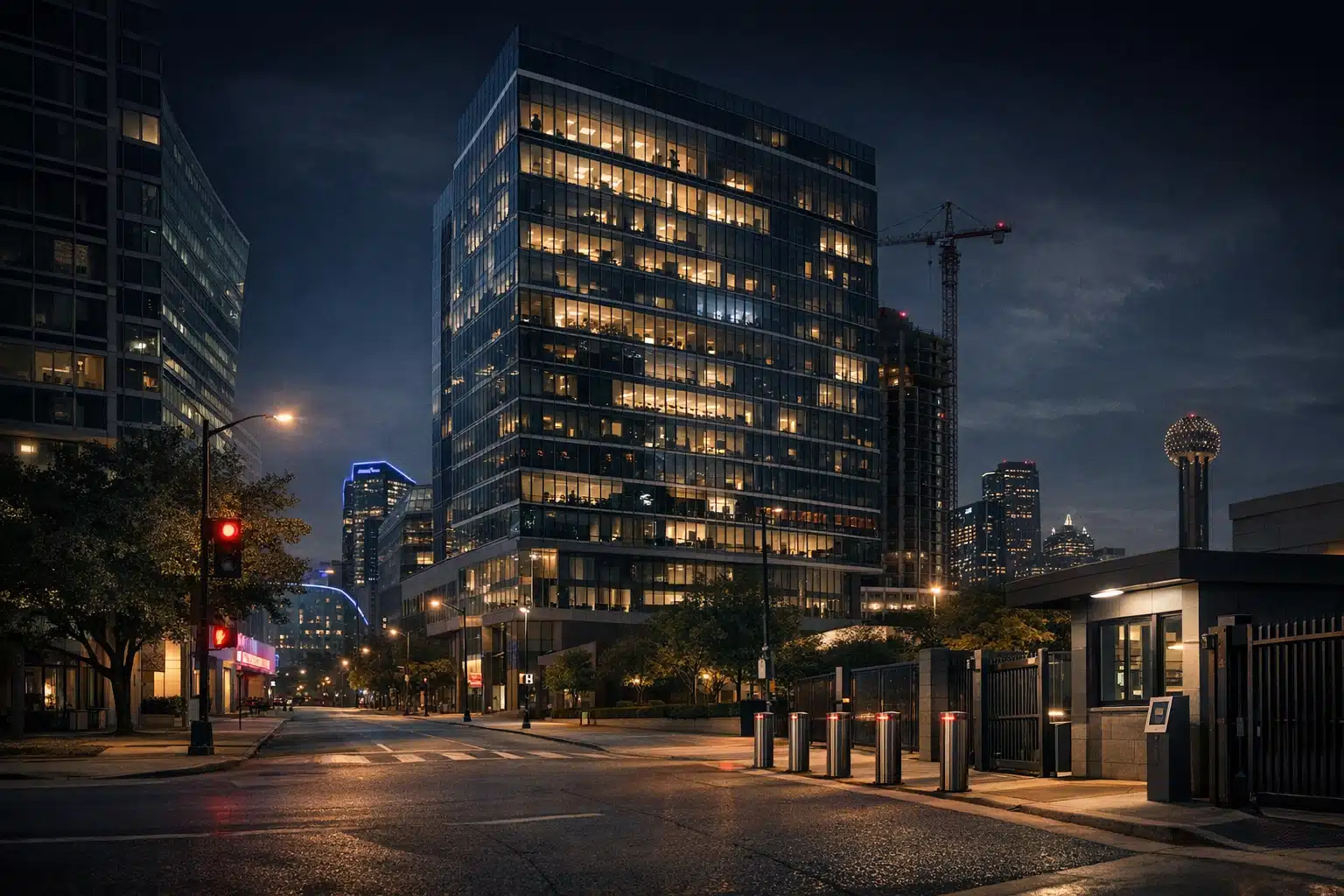
After-hours security is important for Dallas office buildings because 73% of commercial break-ins occur between 6 PM and 6 AM when buildings are empty. High-density areas like Deep Ellum, Victory Park, and the Arts District face significant exposure during these hours. Effective security measures protect assets, sensitive data, and help maintain business continuity.
Dallas Police Department data shows that 73% of commercial break-ins occur between 6 PM and 6 AM when most office buildings sit empty. This vulnerability window creates significant exposure for Dallas businesses, particularly in high-density areas like Deep Ellum, Victory Park, and the Arts District. Implementing effective after-hours security measures becomes critical for protecting assets, sensitive data, and maintaining business continuity.
The challenge extends beyond simple theft prevention. Modern office buildings house expensive technology, confidential client information, and specialized equipment that criminals specifically target during off-hours.
Why Dallas Offices Face Unique After-Hours Security Risks
Dallas’s rapid commercial growth creates specific vulnerabilities that property managers must address. The city’s construction boom means many office areas experience frequent foot traffic during day shifts but become isolated after standard business hours.
High-value targets in Dallas offices include:
- Computer equipment and servers
- Medical devices in healthcare offices
- Cash handling equipment in financial services
- Copper wiring and HVAC components
- Client files and proprietary business data
The downtown corridor between McKinney Avenue and Commerce Street sees particularly high after-hours incident rates. Thieves often scout buildings during business hours, then return when security presence drops.
Peak Risk Hours for Dallas Commercial Properties
Security incidents cluster around specific timeframes. The highest risk period runs from 10 PM to 4 AM, when most cleaning crews finish and before early morning staff arrive.
Weekend vulnerabilities increase significantly. Many Dallas offices operate skeleton crews on Saturdays and remain completely empty on Sundays, creating 48-hour exposure windows.
On-Site Security Guards vs Remote Monitoring for After-Hours Protection
Dallas business owners must choose between physical security presence and technology-based monitoring. Each approach offers distinct advantages depending on building size, location, and risk profile.
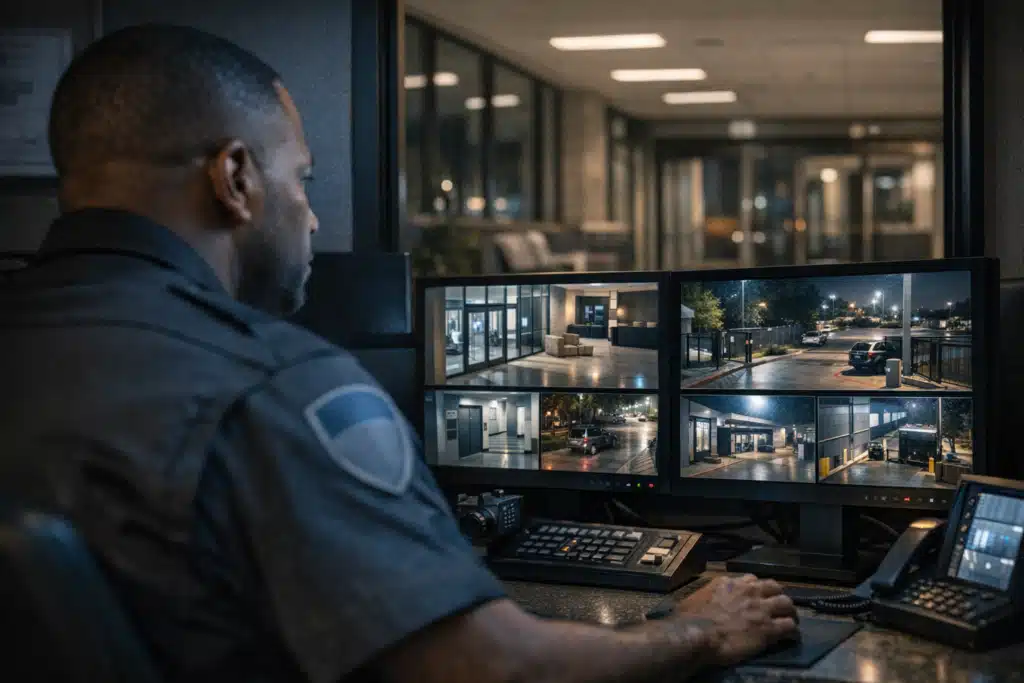
On-Site Security Guard Benefits
Physical deterrence remains the most effective crime prevention method. Visible security presence immediately signals active protection to potential intruders.
Guards provide immediate response capability. When incidents occur, on-site personnel can assess situations, contact emergency services, and preserve evidence before police arrival.
Dallas response times vary significantly by neighborhood. Downtown areas typically see 8-12 minute police response times, while suburban office parks may wait 15-20 minutes.
Remote Video Surveillance Advantages
Modern surveillance systems monitor multiple locations simultaneously from central command centers. This approach reduces costs while maintaining comprehensive coverage.
Key remote monitoring capabilities include:
- Motion-activated alerts with instant notification
- Two-way audio communication to deter intruders
- Integration with access control systems
- Cloud-based video storage for evidence preservation
- Mobile app access for real-time viewing
Remote systems eliminate guard fatigue issues that can compromise security effectiveness during overnight shifts.
Implementing Layered After-Hours Security Systems
Effective protection combines multiple security elements rather than relying on single solutions. This layered approach addresses different threat vectors and provides backup when individual components fail.
Perimeter Security Foundation
Secure building entry points first. Electronic access control systems log all entries and exits, creating audit trails for security reviews.
Motion sensors at key entrances trigger immediate alerts when unauthorized access occurs. Position sensors to avoid false alarms from cleaning staff or maintenance workers with legitimate access.
Interior Monitoring Zones
Divide office spaces into security zones based on value and risk. Executive offices, server rooms, and areas containing sensitive equipment require enhanced protection.
Camera placement should cover cash handling areas, equipment storage, and main corridors. Avoid positioning cameras where they might capture confidential documents or screens.
Integration with Building Systems
Modern security platforms integrate with HVAC, lighting, and fire safety systems. This connectivity enables automated responses like activating lights when motion is detected or shutting down specific systems during security breaches.
Cost Analysis: Security Investment vs Potential Losses
Dallas commercial property theft averages $15,000 per incident according to local insurance claims data. This figure includes direct theft, property damage, and business disruption costs.
Monthly security costs typically break down as follows:
- On-site guard coverage: $3,200-$4,800 per month
- Remote video monitoring: $800-$1,500 per month
- Hybrid approach (weekend guards + weeknight monitoring): $2,000-$2,800 per month
Many Dallas businesses discover that two months of security service costs less than recovering from a single break-in incident.
Insurance Premium Considerations
Commercial insurance providers often reduce premiums for properties with documented security measures. Premium reductions of 10-25% are common when businesses maintain professional security services.
Some insurers require specific security measures for coverage in high-risk Dallas areas. Properties near Deep Ellum or Fair Park may face coverage restrictions without adequate protection.

 Posted on Google
Emergency Response Protocols for Dallas Offices
Security systems are only effective when paired with clear response procedures. Develop protocols that account for Dallas-specific factors like traffic patterns and emergency service locations.
Immediate Response Steps
When alarms activate, security personnel should verify the threat level before dispatching emergency services. False alarms strain police resources and may result in delayed responses to actual emergencies.
Standard response protocol includes:
- Video verification of the security breach
- Attempt to establish two-way communication with intruders
- Contact Dallas Police Department if criminal activity is confirmed
- Notify property management and business owners
- Secure evidence and prepare incident reports
Coordination with Dallas Emergency Services
Establish relationships with local police districts before emergencies occur. Dallas Police Department’s Central Business District has specific protocols for commercial security calls that differ from residential response procedures.
Provide first responders with building layouts, access codes, and contact information for key personnel. This preparation reduces response time and improves incident resolution.
Technology Integration for Modern Office Security
Today’s security systems leverage artificial intelligence and cloud computing to provide smarter protection. These technologies reduce false alarms while improving threat detection accuracy.
AI-powered analytics can distinguish between:
- Authorized personnel and potential intruders
- Normal cleaning activity and suspicious behavior
- Weather-related motion and human movement
- Vehicle traffic and pedestrian activity
Cloud-based systems ensure video evidence remains secure even if on-site equipment is damaged or stolen during break-ins.
Mobile Management Capabilities
Property managers can monitor security status from anywhere using smartphone apps. Real-time alerts enable immediate decision-making regardless of location.
Mobile access proves particularly valuable for Dallas businesses with multiple office locations. Centralized monitoring reduces the need for individual security staff at each property.
Compliance and Legal Considerations
Dallas businesses must balance security needs with employee privacy rights and legal requirements. Security cameras cannot monitor areas where employees have reasonable privacy expectations.
Maintain clear policies about security system operation, data retention, and access permissions. Employees should understand what areas are monitored and how security footage is used.
After-hours security becomes a critical investment for protecting Dallas office buildings from the significant risks that emerge when properties sit unattended. The combination of professional security services and modern technology creates comprehensive protection that prevents losses and ensures business continuity.
Twin City Security Dallas provides customized security solutions that address the unique challenges facing Dallas office buildings. Contact our team at 972-385-1144 to discuss your property’s specific security needs and receive a detailed protection assessment.
Sources
- Dallas OpenData – Police Incidents
- Bureau of Justice Statistics – Commercial Victimization Survey
- Security.org – Commercial Crime and Security Statistics
Dallas Police Department data shows 73% of commercial break-ins happen between 6 PM and 6 AM, making after-hours security a key investment for office buildings in high-risk areas like Deep Ellum and Victory Park.
- The highest risk period runs from 10 PM to 4 AM, with weekends creating 48-hour exposure windows when offices sit empty. High-value targets include computer equipment, servers, medical devices, and client files.
- On-site guards provide physical deterrence and immediate response, while remote video monitoring offers cost-effective coverage with motion alerts and two-way audio communication. A layered approach combining both methods works best.
- Monthly security costs range from $800 to $4,800 depending on the approach, while average theft incidents cost Dallas businesses $15,000. Insurance providers often reduce premiums 10-25% for properties with documented security measures.