The Importance of Security for Dallas’s Temporary Pop-Up Shops
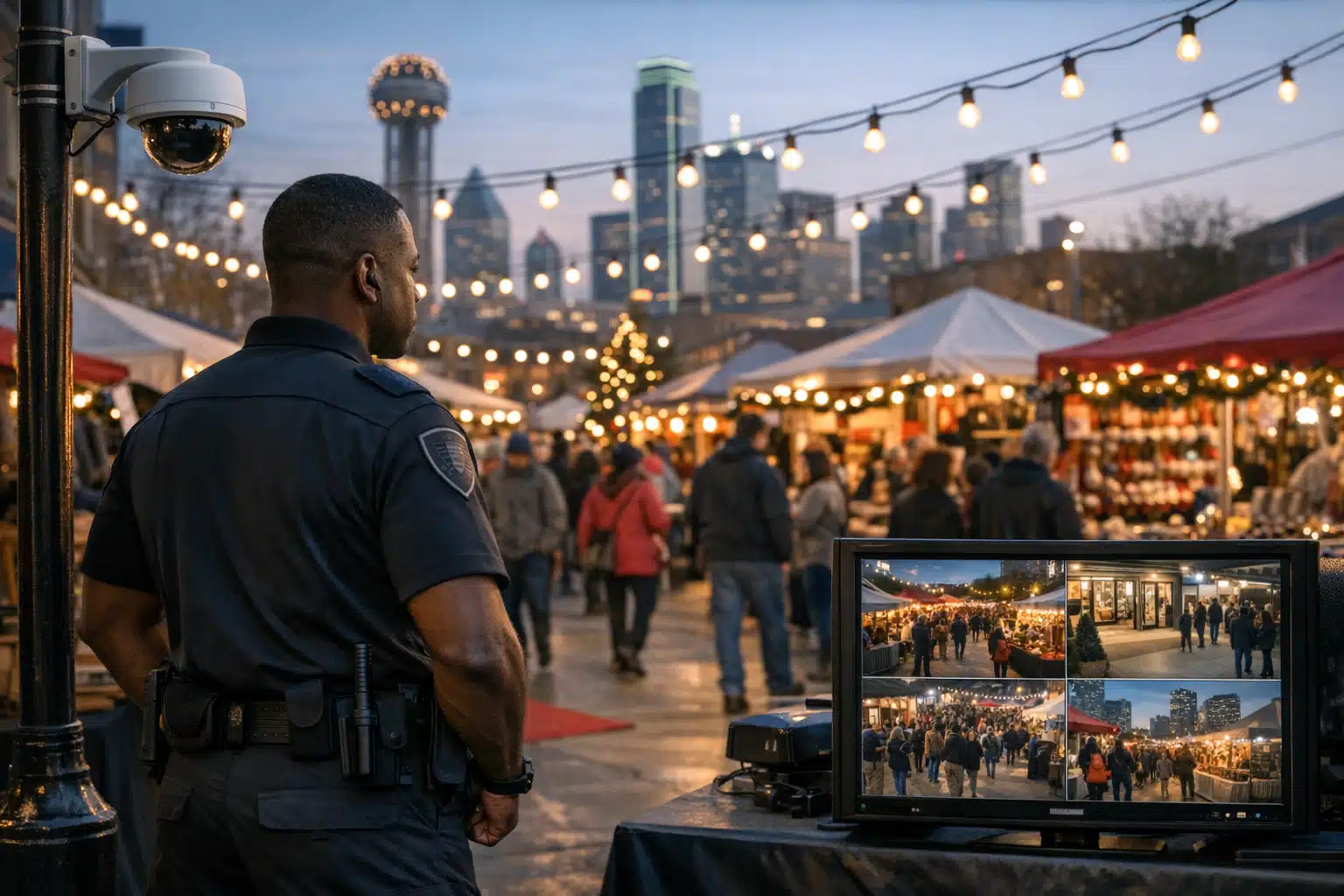
Pop-up shops protect merchandise through temporary security solutions designed for short-term retail spaces. Since these locations lack permanent alarm systems or established camera networks, operators use portable surveillance equipment, mobile monitoring services, and on-site security personnel. These flexible approaches provide effective protection during brief lease periods without requiring investment in fixed infrastructure that would be impractical for temporary setups.
Dallas hosts hundreds of temporary retail setups each year, from holiday markets in Deep Ellum to seasonal boutiques inside NorthPark Center. Each one faces a specific problem: pop-up shop security must protect valuable merchandise in a space with no permanent alarm system, no established camera network, and a lease measured in days or weeks. This post breaks down how Dallas operators protect short-term retail without overpaying for fixed infrastructure.
Dallas reported over 50,000 property crimes in recent years, according to local police data. Temporary retail sits at higher risk because thieves know these sites lack permanent defenses.
Why Pop-Up Shop Security Needs a Different Playbook
Permanent stores invest in hardwired alarms, reinforced doors, and long-term camera contracts. Pop-up operators cannot. Your space might be a vacant storefront on Elm Street one month and a mall kiosk the next.
Temporary retail security has to move with you. The protection you install must set up fast, work for a short window, and break down without wasted cost.
The Specific Risks Dallas Pop-Ups Face
- No baseline infrastructure: Vacant spaces frequently have disabled alarms and no working cameras.
- High inventory density: Pop-ups pack premium goods into small footprints, raising theft value per square foot.
- Cash-heavy sales: Markets and events draw cash buyers, making registers a target.
- Unfamiliar surroundings: Operators rarely know the block, the foot traffic patterns, or the local crime history.
- Setup and teardown exposure: Merchandise sits unprotected during load-in and load-out.
A clothing pop-up near Lower Greenville learned this when thieves hit during a two-hour teardown window. No cameras were running. No guard was posted. The loss was total.
On-Site Guards vs. Remote Surveillance for Temporary Retail
Dallas pop-up operators have two main protection methods. Each fits different budgets and risk levels.
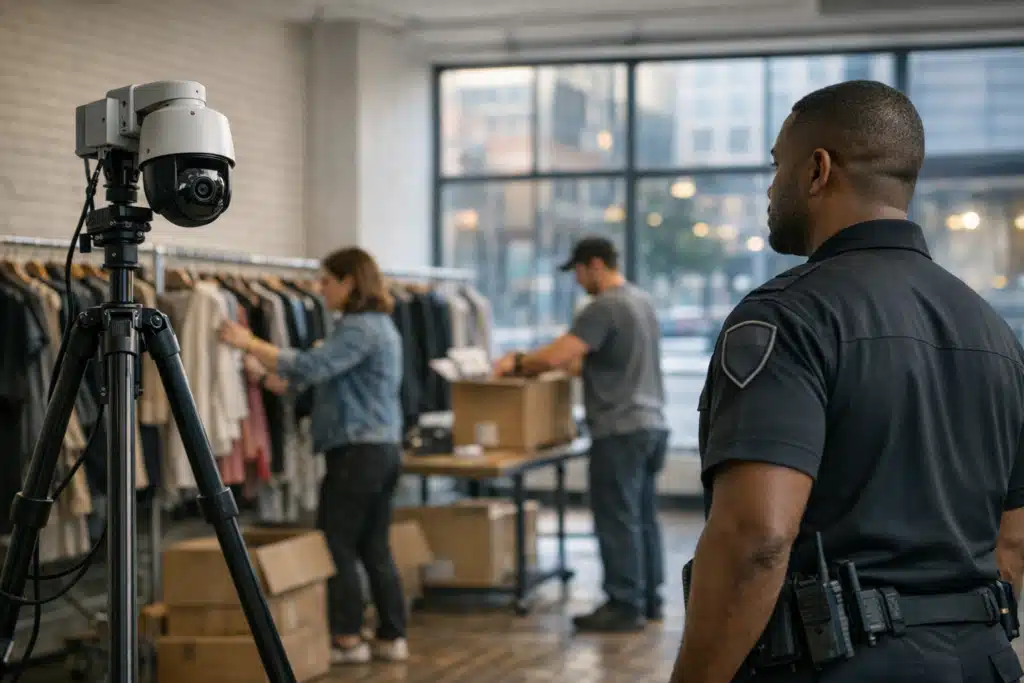
On-Site Security Guards
A posted guard gives visible deterrence and immediate response. Shoppers see uniformed staff and think twice. A guard can also manage crowd flow at busy market booths.
Guards work best for:
- High-value inventory like jewelry, electronics, or designer goods
- Cash-heavy sales environments
- Events with large crowds and single entry points
- Overnight coverage of unsecured storefronts
The cost runs higher per hour than cameras. For a weekend market or a flagship holiday launch, that cost buys real peace of mind.
Remote Video Surveillance
Remote video surveillance is a camera system monitored live by trained agents off-site. Cameras mount quickly, feed to a monitoring center, and agents respond when they spot a threat.
Agents can trigger audio warnings, alert police, and keep recorded evidence. This method covers more hours at lower cost than a full guard shift.
Remote monitoring fits:
- Overnight coverage of a closed pop-up
- Perimeter watch during setup and teardown
- Multiple small sites that share one monitoring budget
- Operators who want evidence and deterrence without full guard rates
Many Dallas operators combine both: a guard during open hours, remote cameras overnight.
How to Secure a Dallas Pop-Up Shop: A Step-by-Step Plan
To protect a temporary retail site in Dallas, follow these steps in order.
- Assess the space before signing the lease. Check for working locks, existing camera mounts, and lighting. Walk the block after dark.
- Research the location’s crime history. The Dallas Police Department publishes crime data by district. Pull it for your address.
- Map your high-risk hours. Setup, teardown, and overnight carry the most exposure. Plan coverage around them.
- Choose your coverage method. Match guards or remote cameras to your inventory value and hours of risk.
- Secure the perimeter. Add temporary locks, lighting, and signage warning that the site is monitored.
- Protect cash handling. Set register limits and schedule frequent drops to a safe or bank.
- Document everything. Photograph inventory before opening. Keep records for insurance claims.
Signage matters more than many expect. A visible “Monitored by Security” sign cuts opportunistic theft before it starts.
Dallas Response Times and Why Local Coverage Wins
Local matters for temporary retail security. A Dallas-based monitoring center knows the neighborhoods, the police precincts, and the fastest dispatch routes.
When an agent spots a break-in at a Bishop Arts pop-up, they know which Dallas PD division responds. That local knowledge shaves minutes off response.
For a pop-up with no permanent alarm, those minutes decide whether you lose a display case or your whole inventory.
Holiday Season Carries the Highest Risk
November and December bring the most pop-ups to Dallas and the most theft attempts. Seasonal markets, gift boutiques, and mall kiosks all spike at once.
Book coverage early. Guard and monitoring capacity fills fast during peak weeks across the metroplex.
Common Mistakes Dallas Pop-Up Operators Make
Several errors show up again and again in temporary retail settings.
- Assuming the landlord’s old alarm works. Many vacant-space systems are disconnected. Verify before you trust them.
- Skipping teardown coverage. The final hours are when guards leave and thieves watch.
- Underlighting the exterior. Dark entries invite break-ins. Temporary flood lights help.
- Leaving cash on-site overnight. Never store register cash in a temporary space.
- Waiting until opening week to arrange security. By then, the good coverage slots are booked.
A food-and-gift pop-up in the Dallas Farmers Market avoided losses by scheduling remote monitoring before load-in started. The cameras caught two after-hours trespassers in week one.

Matching Your Budget to Your Risk
You do not need maximum coverage everywhere. Match your spend to your actual exposure.
A low-value craft booth at a daytime market may need only locks, lighting, and signage. A designer sneaker drop needs on-site guards and live camera monitoring.
The right pop-up shop security plan reflects three things:
- The dollar value of your inventory
- Your hours of operation and exposure
- The crime history of your specific Dallas block
A short walkthrough with a local security team sets the right level fast. Over-buying wastes money. Under-buying costs inventory.
Insurance and Documentation for Temporary Retail
Security also strengthens your insurance position. Many short-term retail policies require proof of reasonable protection.
Recorded video and guard logs support faster claims if theft happens. Photograph your inventory before opening and keep timestamped records.
A documented security plan can lower your premium and speed any payout. Ask your insurer what coverage standard applies to temporary sites.
Conclusion
Pop-up shops in Dallas carry real risk because they hold valuable goods in spaces without permanent defenses. The fix is matching the right mix of on-site guards and remote monitoring to your inventory value, your hours, and your block’s crime history.
Twin City Security Dallas builds short-term coverage plans for pop-ups, markets, and seasonal retail across the metroplex. Call or text 972‑385‑1144, email Dallas@twincitysecurity.com, or visit https://www.twincitysecuritydallas.com for a Dallas security assessment.
Sources
- Dallas Police Department – Crime Statistics and Data
- FBI – Uniform Crime Reporting Program
- National Retail Federation – Retail Security and Loss Prevention
Dallas hosts hundreds of temporary pop-up shops annually, and each faces unique security challenges due to lack of permanent alarm systems, cameras, and short lease terms. Operators must balance on-site guards and remote video surveillance based on inventory value, hours of operation, and local crime history.
- Pop-ups face higher theft risk because they lack baseline infrastructure, pack high-value goods into small spaces, handle cash-heavy sales, and have vulnerable setup and teardown periods.
- On-site guards provide visible deterrence and immediate response for high-value inventory, while remote video surveillance offers cost-effective overnight and perimeter coverage with live monitoring.
- Common mistakes include trusting disconnected landlord alarms, skipping teardown coverage, underlighting exteriors, leaving cash on-site overnight, and waiting too long to arrange security during peak holiday season.