
Key Considerations for Choosing Security for Dallas’s Historic Buildings
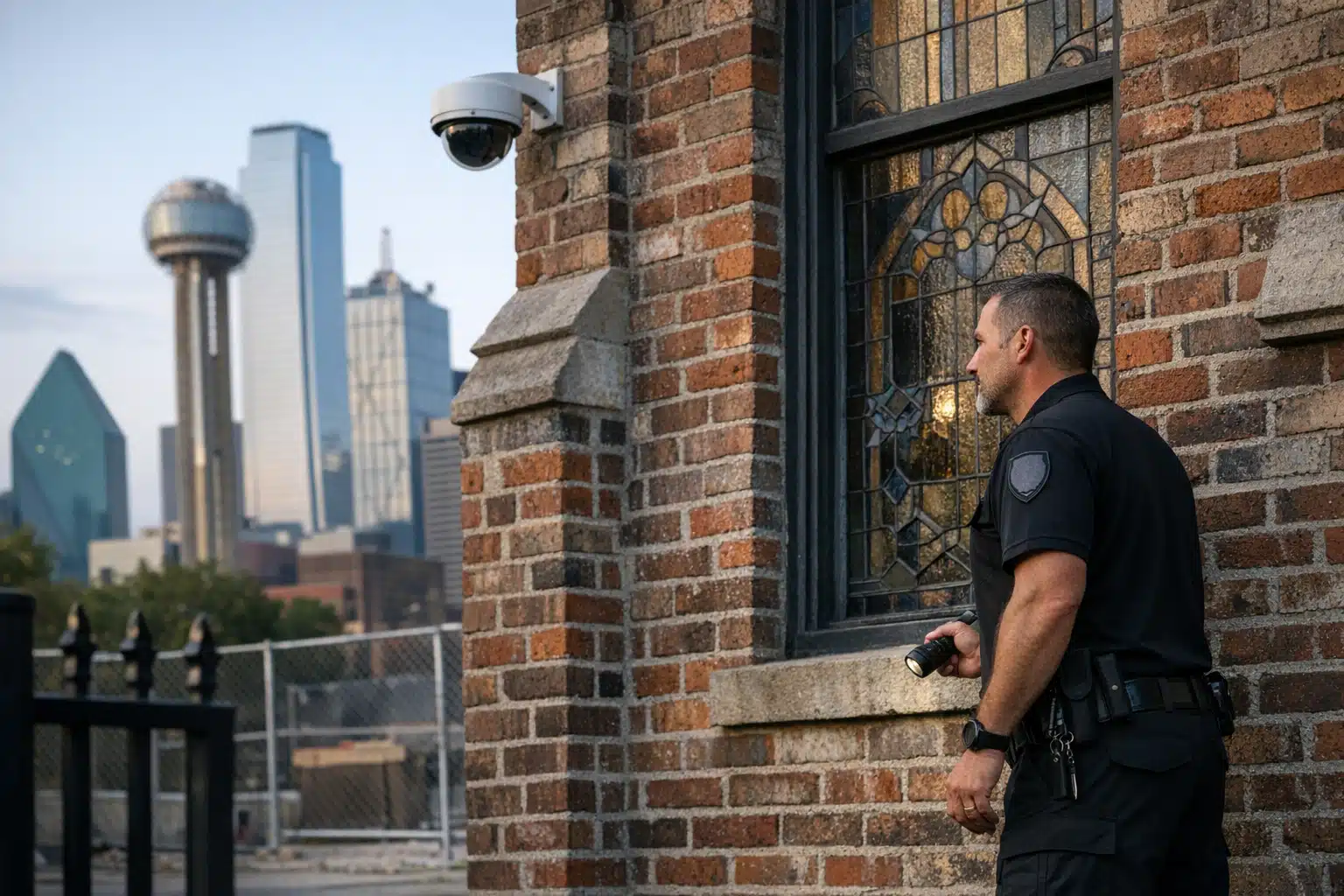
Historic building security in Dallas requires specialized approaches that differ from modern structures. Key considerations include strategic surveillance placement that respects architectural features, fire-aware monitoring systems, protection against copper theft and vandalism, and methods suited to century-old construction. Property managers must balance preservation requirements with effective security measures to protect landmarks in areas like Deep Ellum and Oak Cliff.
Dallas lost more than 70 historic structures to demolition and neglect over the past two decades, according to local preservation records. Fire, vandalism, and copper theft remain constant threats to century-old buildings downtown and in neighborhoods like Deep Ellum and Oak Cliff. Historic building security demands methods that modern office towers never face. This article explains the practical security considerations for property managers protecting Dallas landmarks, from surveillance placement to fire-aware monitoring.
Why Historic Buildings Need Different Security Than Modern Properties
Historic buildings carry risks that newer construction does not. Dallas structures built before 1940 use materials and layouts that complicate standard security planning.
The main differences include:
- Irreplaceable materials — original brickwork, stained glass, and copper fixtures cannot be restored identically.
- Preservation restrictions — city landmark rules limit how you mount cameras and wiring.
- Fire vulnerability — old timber framing and outdated wiring raise fire risk sharply.
- Theft targets — copper gutters, bronze plaques, and antique hardware attract metal thieves.
A broken window in a new office means a repair bill. A shattered 1920s stained-glass panel means a permanent loss.
Dallas Landmark Rules Shape Your Security Choices
Buildings in Dallas historic districts fall under Certificate of Appropriateness review. Any exterior change may require city approval first.
This affects where you place cameras, conduit, and lighting. Surface-mounted equipment on a protected facade can draw a violation notice.
Plan security hardware placement with preservation rules in mind from the start. Retrofitting after a rejection wastes both time and budget.
Security Considerations for Dallas’s Aging Architecture
Effective historic building security balances protection with minimal physical impact. The security considerations below apply to most Dallas landmark properties.
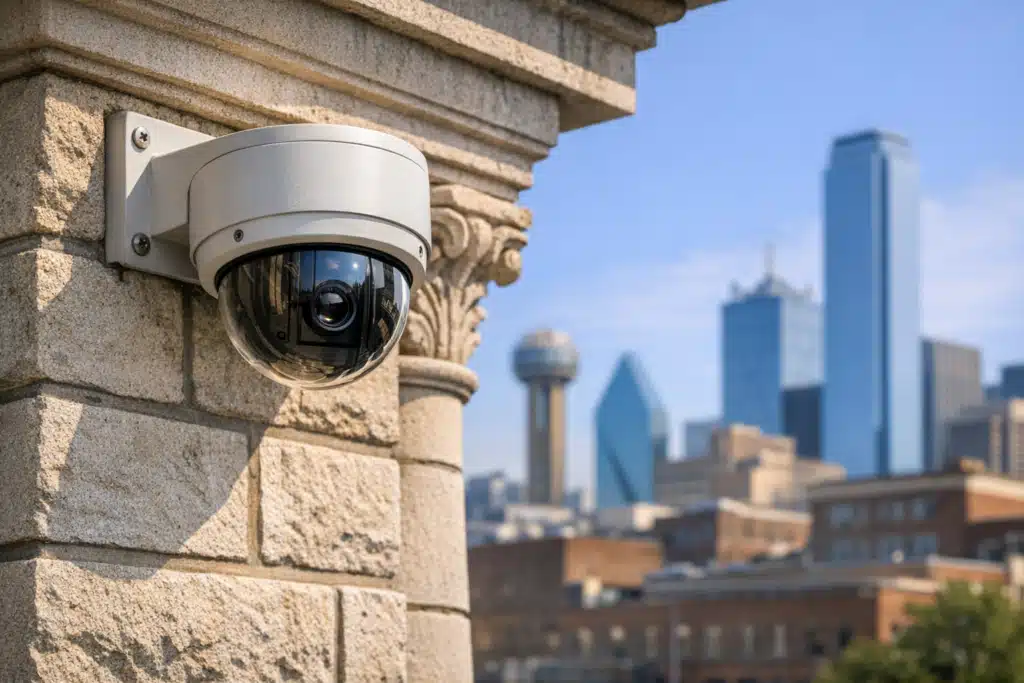
1. Protect the Exterior Without Altering It
Thieves target exterior metal on older Dallas buildings. Copper downspouts and bronze dedication plaques sell quickly at scrap yards.
Use remote cameras positioned on nearby poles or existing structures. This avoids drilling into protected masonry.
Motion-triggered lighting deters after-hours theft without permanent facade changes.
2. Monitor Interiors Prone to Fire and Water Damage
Old wiring and dry timber make interior fire a leading loss cause. Smoke events in vacant historic buildings spread fast.
Pair security cameras with environmental sensors where allowed. Early detection of smoke or water intrusion saves original features that fire cannot replace.
Remote operators can alert fire crews within minutes of an alarm.
3. Control Access to Fragile Areas
Not every area of a historic building should allow foot traffic. Deteriorating floors and roofs pose safety and liability concerns.
Access control with discreet readers limits entry to approved staff. Keep original doors intact by using low-profile hardware.
On-Site Guards vs. Remote Video Surveillance for Historic Sites
Both methods protect Dallas landmarks, but each fits different conditions. Cost, building size, and occupancy drive the choice.
When On-Site Guards Make Sense
On-site guards suit occupied historic buildings with public foot traffic. Think event venues, museums, and converted office lofts.
Guards handle:
- Visitor screening at entrances
- Rapid response to fire or water alarms
- Deterrence during public events
- Physical patrols of multi-floor interiors
A trained guard spots a frayed wire or propped fire door that a camera may miss.
When Remote Surveillance Fits Better
Remote video surveillance is live camera monitoring handled by off-site operators. It works best for vacant or after-hours historic properties.
Remote monitoring costs less than round-the-clock guards. It covers large exterior footprints without staffing every corner.
For a vacant Oak Cliff building awaiting renovation, remote cameras watch for trespassers and metal thieves at a fraction of guard cost.
Combining Both for Full Coverage
Many Dallas landmark owners use both. Guards cover public hours, and remote surveillance watches overnight.
This keeps staffing costs down while protecting the building around the clock.
How Remote Surveillance Prevents Copper Theft in Dallas Historic Buildings
Copper theft spikes when scrap prices rise. Vacant historic buildings in transitional Dallas neighborhoods are frequent targets.
To protect a vacant landmark from metal theft, follow these steps:
- Map vulnerable points — identify copper downspouts, HVAC units, and wiring access.
- Position cameras for full exterior view — cover alleys, rooftops, and side entries.
- Add motion-activated lighting — sudden light disrupts thieves mid-act.
- Use live monitoring with voice-down capability — operators warn intruders in real time.
- Coordinate with Dallas police dispatch — verified alarms get faster response.
Voice-down warnings stop many thefts before they start. An operator speaking over a loudspeaker ends most trespass attempts fast.

 Posted on Google
Local Response Time Matters for Dallas Landmarks
Response speed decides how much damage a historic building suffers. A delayed response to a fire or break-in can mean total loss.
Dallas-based monitoring teams know local street layouts and police precincts. Faster coordination with first responders protects fragile structures.
A Deep Ellum building with a verified alarm gets priority dispatch. That speed can save original architecture from fire or flooding.
Building a Security Plan for Your Historic Dallas Property
Start your security plan with an on-site assessment. A walkthrough reveals theft points, fire risk, and preservation limits.
A sound plan for a Dallas landmark covers:
- Preservation-compliant camera placement
- Fire and water sensor integration
- Access control for fragile zones
- After-hours remote monitoring
- Coordination with local police and fire
Review the plan yearly. Occupancy changes, renovation phases, and crime patterns shift over time.
Questions to Ask Before Hiring Security
Before you sign a contract, ask any Dallas security provider:
- How do you install equipment without damaging protected surfaces?
- Can you integrate fire and water detection with cameras?
- What is your average verified-alarm response time in Dallas?
- Do your guards receive fire-awareness training for old structures?
The right answers show real knowledge of historic property protection.
Conclusion
Protecting Dallas historic buildings means guarding irreplaceable architecture against fire, theft, and damage without harming the structure itself. The strongest plans combine preservation-aware camera placement, environmental sensors, and fast local response. Twin City Security Dallas provides on-site guards and remote video surveillance built for the demands of historic Dallas properties.
Request a site assessment or monitoring quote today. Call or text 972‑385‑1144, email Dallas@twincitysecurity.com, or visit https://www.twincitysecuritydallas.com.
Sources
- City of Dallas – Historic Preservation
- National Park Service – Standards for Rehabilitation
- National Fire Protection Association – Historic Buildings
- FBI – Uniform Crime Reporting
Historic buildings in Dallas face unique security challenges including copper theft, fire risks from old wiring, and preservation rules that limit how equipment can be installed. Effective protection requires methods that safeguard irreplaceable materials without altering protected structures.
- Dallas lost over 70 historic structures in two decades, with fire, vandalism, and copper theft posing constant threats to century-old buildings in areas like Deep Ellum and Oak Cliff.
- Security planning must account for Certificate of Appropriateness rules that restrict exterior changes, requiring cameras on nearby poles rather than drilling into protected masonry.
- Property managers should combine remote video surveillance for after-hours monitoring with on-site guards during public hours, plus environmental sensors for early fire and water detection.