
The Role of Security in Supporting Dallas’s Growing Tech Startups
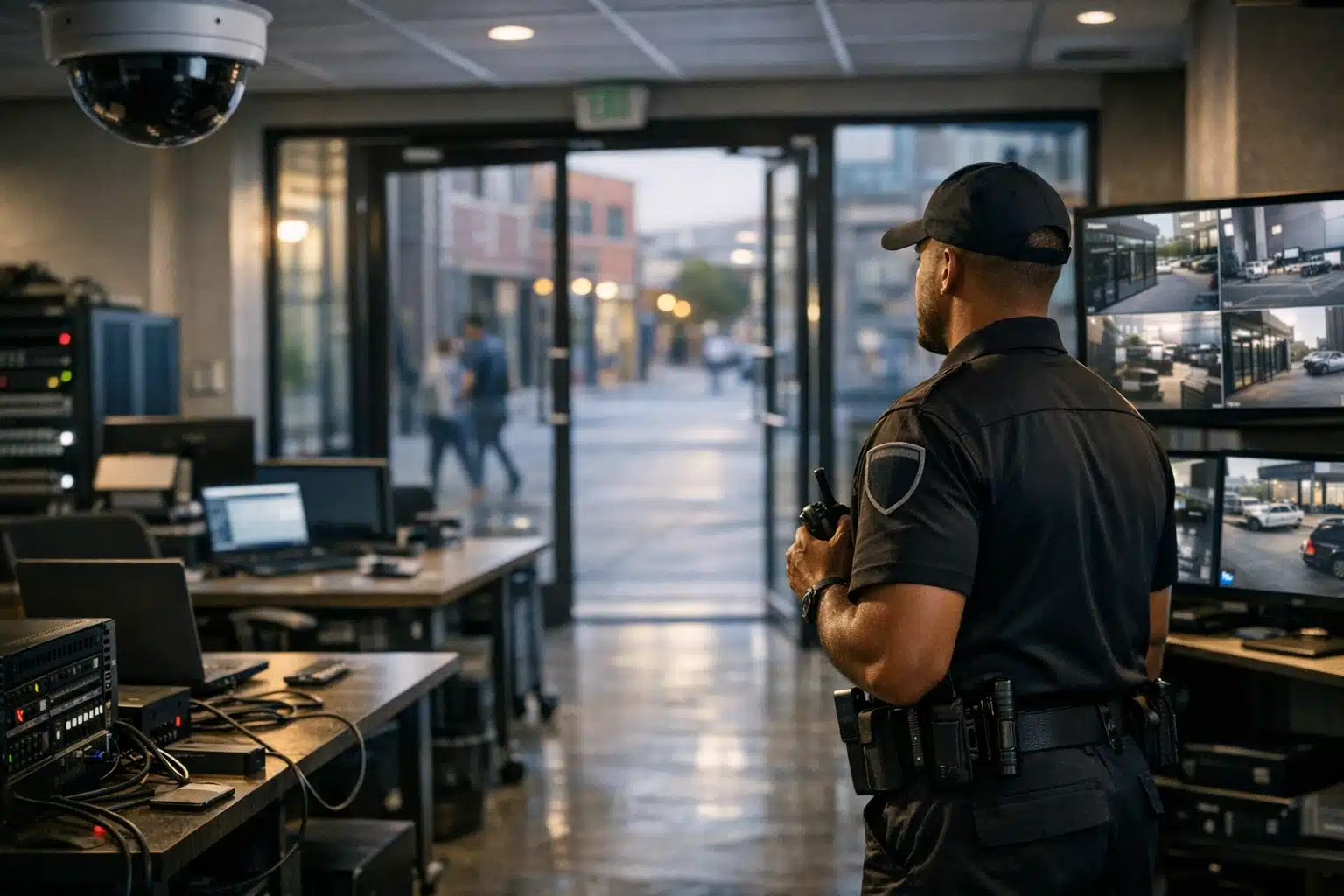
Dallas tech startups need specialized security because the city's rapid growth - adding over 50,000 tech jobs in five years - creates gaps most founders overlook. Strong security protects intellectual property, expensive hardware, and employees in startup hubs like Deep Ellum and the Design District before incidents occur, helping companies avoid costly lessons that could derail their growth.
Dallas added more than 50,000 tech jobs over the past five years, with startups clustering in Deep Ellum, the Design District, and near the Dallas Innovation District. That fast pace creates a security gap most founders overlook. Strong tech startups security protects intellectual property, hardware, and employees before a single incident forces a hard lesson.
This post breaks down the specific risks young Dallas tech companies face. It compares on-site guards with remote video monitoring. It gives you a checklist you can act on this week.
Why Tech Startups Security Looks Different in Dallas
Tech startups store value in places a burglar can carry out the door. Laptops, prototype hardware, and server equipment sit in open floor plans with glass doors.
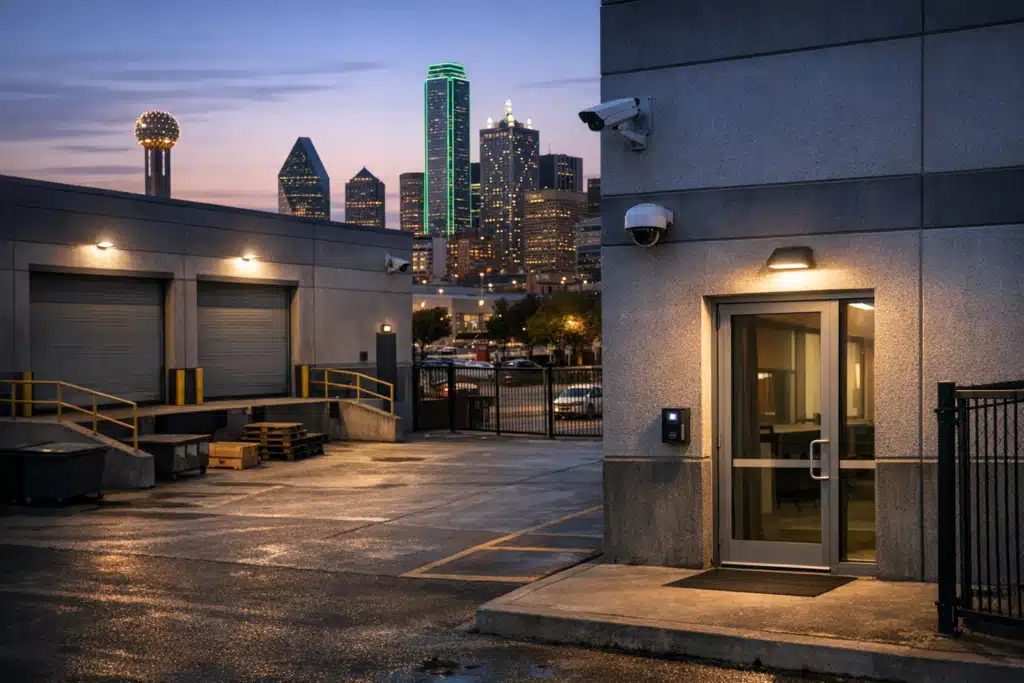
Most Dallas startups lease space in shared or converted buildings. Loading docks, shared lobbies, and unmanned side entrances multiply weak points.
Three patterns show up again and again with local tech tenants:
- After-hours theft. Founders and engineers work late, then the office sits empty from 2 a.m. to 8 a.m.
- Tailgating. Someone walks in behind a badged employee and reaches sensitive areas.
- Equipment loss during moves. Rapid growth means frequent office changes and exposed inventory.
Dallas police data shows theft from buildings and vehicles ranks among the most reported property crimes citywide. Tech-heavy corridors near downtown see steady incident volume.
The Real Cost of a Security Gap for a Growing Startup
A stolen laptop costs more than its replacement price. It can expose source code, customer records, and unreleased product plans.
One breach can stall a funding round. Investors ask about data protection during due diligence.
Downtime hurts too. A vandalized server closet or cut network line can shut operations for days.
For a company protecting momentum, security is part of steady Dallas business growth, not an afterthought once headcount hits 50.
What Founders Underestimate
Many founders assume building management handles security. In shared buildings, coverage usually stops at the main lobby.
Your suite, your server room, and your after-hours risk fall on you. That distinction matters when an incident happens at 3 a.m.
On-Site Guards vs. Remote Video Monitoring: A Cost Comparison
Both approaches work. The right choice depends on your space, hours, and budget.
On-Site Security Guards
An on-site guard gives a physical presence. A guard checks badges, escorts visitors, and responds to problems in real time.
Best fits for on-site coverage:
- Offices with heavy foot traffic or public-facing lobbies
- Buildings hosting demo days, investor events, or hiring fairs
- Sites with valuable hardware and no reliable access control
Guards cost more per hour than cameras. The tradeoff is human judgment and immediate physical response.
Remote Video Monitoring
Remote video monitoring uses live cameras watched by trained operators off-site. Operators watch feeds, verify threats, and dispatch help.
Best fits for remote monitoring:
- After-hours coverage when the office is empty
- Loading docks, parking areas, and side entrances
- Startups that want wide coverage at lower cost than 24/7 guards
Remote monitoring costs less per covered hour than a full-time guard. It scales as you add locations or cameras.
A Blended Setup Many Dallas Startups Choose
Plenty of local tech companies mix both. A daytime guard covers the lobby, and remote monitoring watches the property overnight.
This keeps a human presence during business hours. It cuts overnight costs without leaving the building unwatched.
How Remote Monitoring Stops Incidents Before They Escalate
Remote monitoring works because operators act during the attempt, not after. Live intervention changes the result.
A typical overnight sequence looks like this:
- Motion triggers a camera at a rear entrance after hours.
- A live operator reviews the feed and confirms a person on-site.
- The operator uses a speaker to issue a voice-down warning.
- Most intruders leave once they hear a live voice.
- If they stay, the operator dispatches police with a real-time description.
Verified alarms get faster police response than standard alarms. A confirmed human on camera moves the call up the priority list.
A Security Checklist for Dallas Tech Startups
Use this list to find gaps before you sign a monitoring or guard contract.
- Map your entrances. List every door, dock, and window an intruder could use.
- Identify high-value zones. Server rooms, storage, and hardware labs need extra coverage.
- Audit access control. Track who holds badges and revoke access for departed staff same-day.
- Set after-hours rules. Decide who can be on-site late and how they check in.
- Cover blind spots. Place cameras at loading areas and dim parking sections.
- Plan for events. Add guard coverage for demo days and open houses.
- Test your response chain. Confirm who gets called when an alarm fires at night.
Run this review before your next office move. Growth stages are when gaps open widest.

 Posted on Google
Security That Grows With Your Startup
Your security needs at 10 employees differ from your needs at 60. A flexible setup scales without a full rebuild each year.
Add cameras as you take more square footage. Shift from part-time to full-time guard hours as foot traffic climbs.
A local provider based in Dallas gives you faster on-the-ground response than a national call center three states away. Regional teams know the corridors, the buildings, and the police districts.
Protecting People, Not Just Property
Late-night work is standard startup culture. Engineers leave the building at odd hours and walk to garages alone.
Guard escorts and monitored parking lots keep staff safer. Retention improves when employees feel secure after dark.
Safety is part of how you recruit and keep technical talent in a competitive Dallas market.
Conclusion
Dallas tech startups hold high-value assets in spaces with real physical gaps. On-site guards, remote video monitoring, or a mix of both close those gaps and protect your people and IP. The right setup scales as your headcount and square footage grow.
Twin City Security Dallas builds coverage plans around your building, hours, and budget. Call or text 972-385-1144, email Dallas@twincitysecurity.com, or visit https://www.twincitysecuritydallas.com for a Dallas security assessment.
Sources
- Dallas Police Department – Crime Statistics
- Dallas Regional Chamber – Economy and Tech Growth Data
- FBI – Uniform Crime Reporting Program
Dallas has added over 50,000 tech jobs in five years, but rapid startup growth creates security gaps that founders often overlook. Protecting intellectual property, hardware, and employees requires proactive measures before incidents occur.
- Tech startups face specific risks including after-hours theft, tailgating through secured doors, and equipment loss during office moves. Shared buildings often leave suite-level security to tenants rather than management.
- On-site guards provide physical presence and real-time response for high-traffic areas, while remote video monitoring offers cost-effective after-hours coverage. Many Dallas startups use a blended approach with daytime guards and overnight monitoring.
- A security checklist should include mapping all entrances, auditing badge access, covering blind spots with cameras, and testing response chains. Security setups should scale as headcount and office space grow.