
How to Choose the Right Security Measures for Dallas Art Galleries
Choosing the right security measures for Dallas art galleries requires matching protection layers to real threats. Start by assessing your collection's value and vulnerability, then implement a layered approach combining physical barriers, electronic surveillance, access control systems, and trained personnel. Consider each asset's irreplaceable nature and insurance gaps when budgeting, as galleries holding high-value collections face elevated property crime risks.
Dallas recorded more than 55,000 property crimes in a recent year, and galleries holding six-figure collections sit squarely in that risk pool. Art gallery security is a distinct discipline because the assets are irreplaceable, fragile, and frequently uninsured against the full market value. This post breaks down how Dallas galleries and cultural institutions protect their collections, what each layer of protection costs, and how to match coverage to real threats.
Whether you run a private showroom in the Design District or manage rotating exhibits near the Dallas Arts District, the right plan starts with knowing your weak points.
Why Art Gallery Security Demands a Different Playbook
A retail store loses inventory it can reorder. A gallery loses a one-of-a-kind canvas worth more than the building’s monthly lease.
That difference changes everything about how you plan protection. The goal is not just deterrence. It is preventing irreversible loss.
The Specific Threats Dallas Galleries Face
- After-hours break-ins targeting high-value pieces identified during public viewing hours.
- Daytime theft of smaller sculptures, prints, or jewelry-scale works during busy openings.
- Vandalism during controversial exhibits or public events.
- Insider risk from contractors, movers, and temporary event staff.
- Handling damage during installs and de-installs when pieces are most exposed.
Opening nights create the sharpest spike. Crowds, alcohol, and distracted staff give thieves cover.
Step-by-Step: Building Art Gallery Security That Fits Your Space
Follow these steps to match protection to the actual value and layout of your gallery.
- Inventory by risk tier. List each piece with its market value, portability, and location.
- Map entry and sightline gaps. Identify doors, loading docks, skylights, and camera blind spots.
- Set coverage for three windows: public hours, private events, and overnight.
- Decide on-site, remote, or both. Base this on crowd size and asset value.
- Test response timing. Confirm how fast an alarm reaches a live operator and police.
Galleries that skip step one almost always overspend on low-risk zones. A tiered inventory tells you where guards and cameras earn their keep.
On-Site Guards vs. Remote Video Monitoring for Galleries
Both work. The right mix depends on when your collection is most exposed.
When On-Site Guards Make Sense
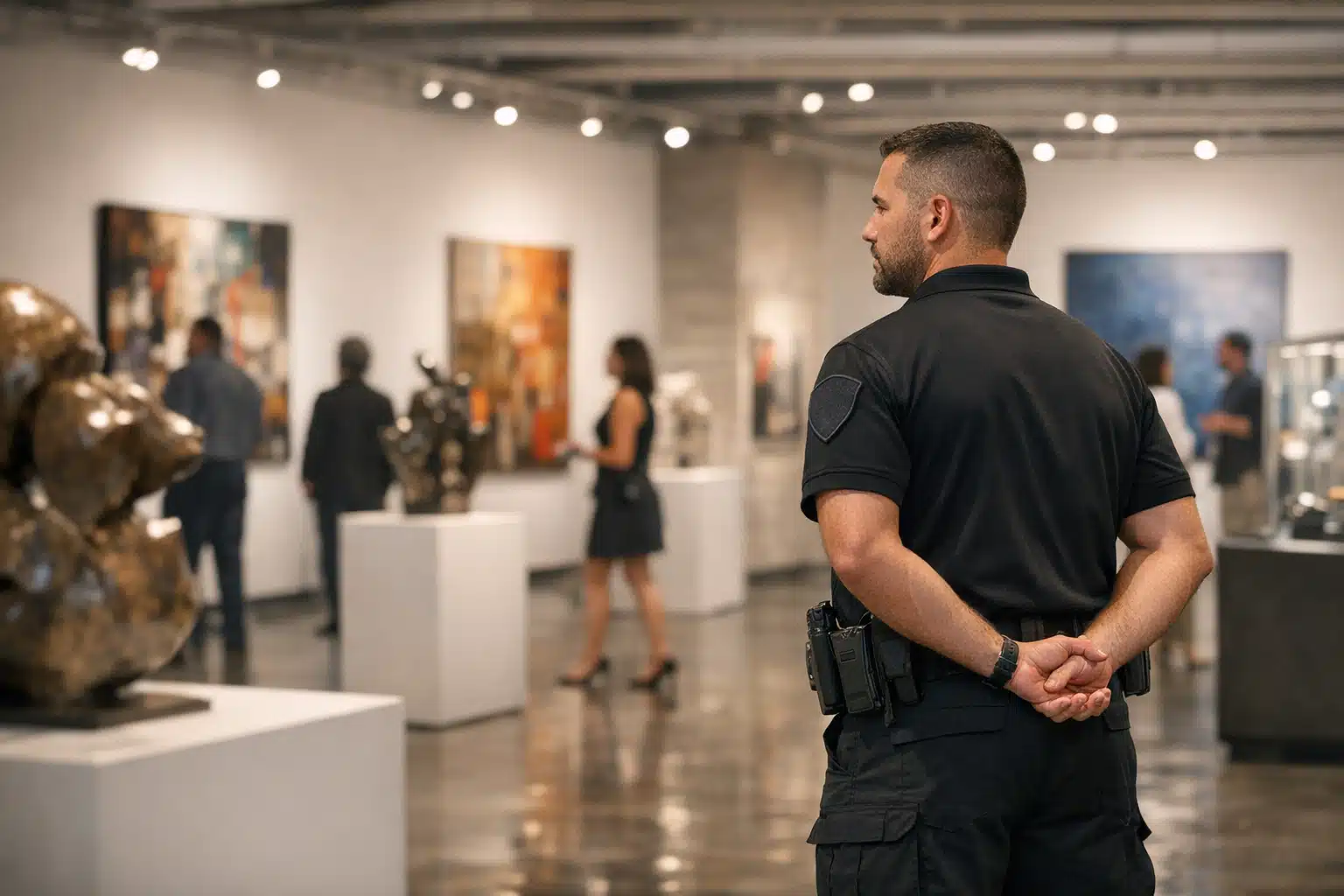
A uniformed guard on the floor deters grab-and-run theft during openings. People behave differently when watched by a person, not a lens.
On-site coverage fits best during:
- Opening receptions and ticketed events with 50-plus guests.
- High-value loans where the lender requires a physical presence.
- Install and de-install days when crates move in and out.
Expect on-site guard rates in Dallas to run roughly to per hour depending on training and event risk.
When Remote Video Monitoring Wins
Remote video monitoring is a system where trained operators watch live camera feeds offsite and respond to triggers in real time. It covers your gallery overnight at a fraction of standing-guard cost.
Operators can issue live voice warnings over speakers, verify alarms, and dispatch police with eyes already on the scene. That cuts false-alarm delays that plague motion-only systems.
Remote monitoring fits best for:
- Overnight and closed-hour coverage.
- Loading docks and back entrances during off-peak times.
- Multi-room galleries where one guard cannot watch every wall.
The Combined Model Most Dallas Galleries Use
Many galleries pair a floor guard for events with remote monitoring overnight. You get human presence when crowds are present and continuous eyes when the building is empty.
This split controls cost without leaving a gap in any of your three risk windows.
Camera Placement Rules for Protecting High-Value Pieces
Where you point cameras matters more than how many you own. Focus coverage on the assets, not just the perimeter.
- Cover each high-value piece with a dedicated angle that captures faces, not just backs.
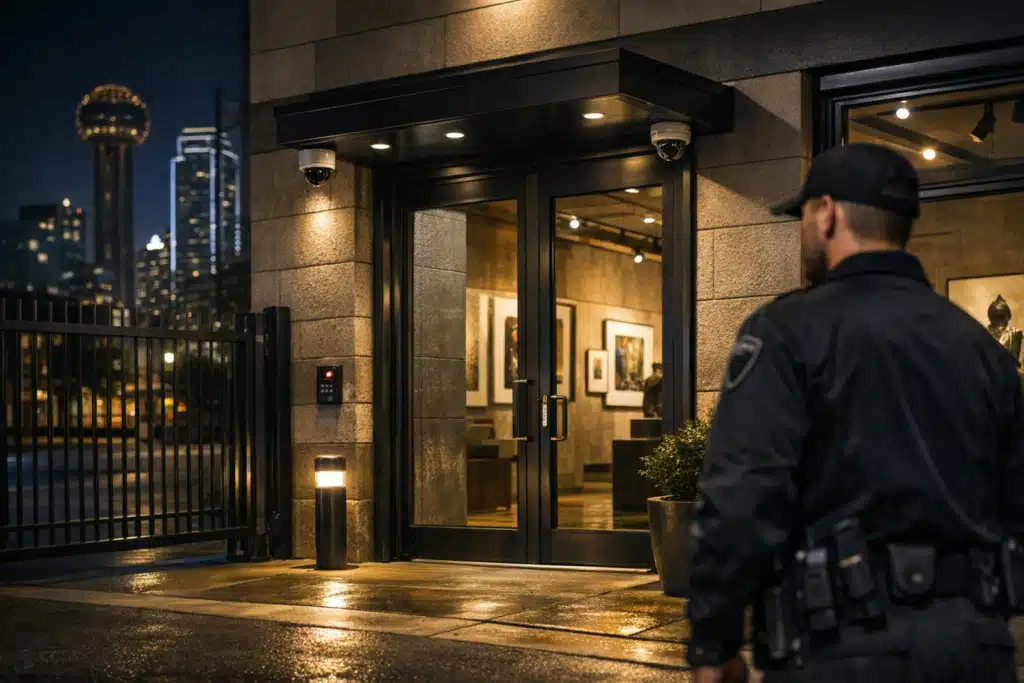
- Light every entry point. Loading docks and rear doors are the most exploited.
- Record the dwell zones where visitors linger near portable works.
- Protect skylights and roof access in standalone Design District buildings.
- Avoid blind corners created by movable display walls.
Pair cameras with motion-triggered alerts tied to a monitoring operator. A recording you review the next day does not stop a theft in progress.
Layered Security Measures Beyond Cameras and Guards
Strong protection stacks several measures so one failure does not expose the collection. Add these layers based on your risk inventory.
- Access control on storage rooms and back-of-house areas.
- Glass-break and door sensors wired to the monitoring center.
- Individual piece anchoring for sculptures and framed works.
- Visitor logs and staff badging during installs and private showings.
- Climate and water alarms that protect against non-theft loss.
Layered security measures also help with insurance. Many fine-art underwriters lower premiums when monitored systems and documented protocols exist.

 Posted on Google
How Local Response Time Protects Dallas Collections
Response speed decides whether a break-in becomes a loss or a near miss. A monitored alarm with live video verification moves police faster than an unverified trip.
Dallas police prioritize calls confirmed by an operator watching the intrusion. That verification removes the false-alarm doubt that slows dispatch.
A local Dallas monitoring team knows the area, the cross streets, and the fastest routes for responders. That familiarity shortens the gap between trigger and arrival.
What to Ask Any Security Provider
- How fast does a live operator see and verify an alarm?
- Can operators issue real-time voice warnings on site?
- Do you staff monitoring locally or route it out of state?
- What is your documented false-alarm rate?
- How do you handle event-night staffing versus overnight coverage?
Matching Your Budget to Your Collection’s Value
Right-size spending against what you stand to lose, not against square footage. A gallery with one $200,000 piece needs different coverage than one with fifty $4,000 prints.
Use this rough framework:
- Entry level: Remote monitoring overnight plus sensors. Fits lower-value rotating shows.
- Mid level: Remote monitoring plus guards for all public events.
- High value: Dedicated guards, full camera coverage, access control, and monitoring combined.
A walkthrough assessment pins down your tier faster than any online estimate. Threats differ building to building across Dallas neighborhoods.
Protect Your Gallery With a Dallas-Based Team
Art gallery security works best when guards, cameras, and live monitoring cover every risk window from opening night to lights-out. Start with a risk inventory, match coverage to asset value, and confirm how fast a real operator responds.
Twin City Security Dallas builds gallery protection plans around your collection and your floor plan. Call or text 972‑385‑1144, email Dallas@twincitysecurity.com, or visit https://www.twincitysecuritydallas.com for a Dallas security assessment or monitoring quote.
Sources
- FBI – Uniform Crime Reporting Program
- Dallas Police Department – Official Site
- FBI – Art Theft Program
Dallas galleries face unique security challenges due to irreplaceable, fragile assets that are often underinsured. This guide explains how to build layered protection by matching coverage to actual threats and asset value.
- Dallas had over 55,000 property crimes recently, putting galleries with six-figure collections at risk. Opening nights create peak vulnerability as crowds and distractions give thieves cover.
- On-site guards work best during events and high-value loans, while remote video monitoring provides cost-effective overnight coverage. Most Dallas galleries combine both approaches.
- Effective protection includes tiered asset inventory, strategic camera placement on high-value pieces, access control, and verified alarm response. Local monitoring teams can speed police dispatch by confirming intrusions in real time.