
How to Optimize Your Security Budget for Dallas Office Buildings

To optimize your security budget for Dallas office buildings, focus on balancing guard coverage with camera systems based on your building's specific risks. Identify high-threat areas like parking garages and lobbies, eliminate redundant spending on overlapping coverage, and redirect funds toward targeted protection in zones prone to after-hours break-ins and theft.
Dallas reported over 50,000 commercial and property crime incidents in recent years, according to city police data. Office buildings in areas like Uptown, the Telecom Corridor, and Downtown face after-hours break-ins, parking garage theft, and lobby trespassing. Building your security budget around the wrong mix of guards and cameras drains money fast. This post breaks down where Dallas property managers waste spend, and how to redirect it for stronger protection.
Why Office Security Spending Goes Wrong in Dallas
Many Dallas office buildings overpay for round-the-clock guard coverage they do not need. Others underspend and leave loading docks and garages exposed at 2 a.m.
Both mistakes come from one error: treating office security as a flat monthly line item instead of matching protection to risk hours.
A 12-story building near the North Dallas Tollway does not face the same overnight threat as a ground-floor suite in Deep Ellum. Spending should reflect that difference.
The Three Most Common Budget Leaks
- Static guard posts during low-risk hours. Paying a guard to sit at a lobby desk from midnight to 5 a.m. when no tenants are present.
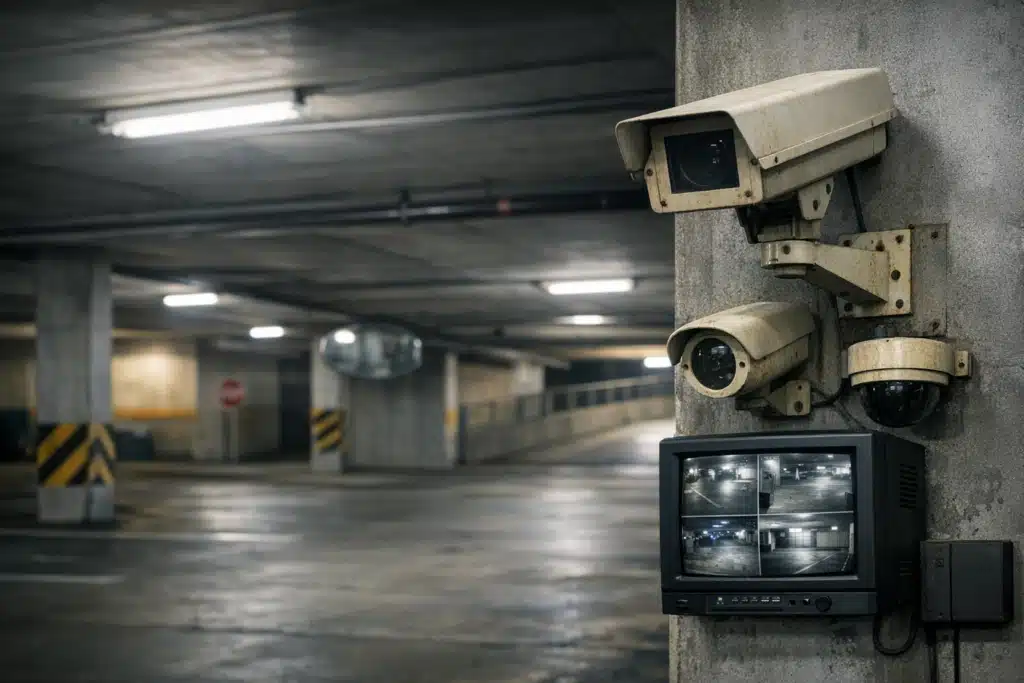
- Outdated camera systems nobody watches. Footage that only gets reviewed after a crime already happened.
- Duplicate coverage. Both a roving guard and a stationary guard patrolling the same garage level on the same shift.
Each leak adds thousands per month without reducing actual risk.
How to Map Your Security Budget to Real Risk
To allocate your security budget effectively in Dallas, match every dollar to a specific threat window. Start with a 30-day incident and access review.
Step-by-Step Risk Mapping
- Log every entry point. Count lobby doors, garage gates, loading docks, and stairwell exits.
- Track tenant hours. Note when the building is occupied versus empty.
- Pull local crime patterns. Request precinct data for your ZIP code from Dallas PD.
- Mark your high-risk windows. For most office buildings, that means 8 p.m. to 6 a.m. and weekends.
- Rank each entry point by exposure. A street-level garage ramp ranks higher than a sealed rooftop door.
Once you have this map, you can stop paying for blanket coverage. You pay for the hours and points that carry real threat.
On-Site Guards vs. Remote Surveillance: Cost Breakdown
On-site guards and remote video monitoring solve different problems at different price points. The smartest Dallas budgets use both, in proportion.
What On-Site Guards Cost and When They Pay Off
A staffed guard post in Dallas runs roughly $22 to $35 per hour, depending on training and armed status. Around-the-clock coverage means well over $15,000 monthly.
Guards earn that cost during peak hours. They handle tenant access, deter loitering in lobbies, and respond to medical or confrontation events in person.
A guard standing post is the right call for:
- Lobby and front desk control during business hours
- High-traffic tenant move-ins or large meetings
- Buildings with frequent walk-in disputes or homeless encampment pressure
What Remote Surveillance Costs and Where It Wins
Remote video surveillance is live monitoring of camera feeds by trained operators off-site. They watch in real time and respond to triggers instantly.
It costs a fraction of a staffed post, because one operator covers multiple zones and multiple properties at once.
Remote monitoring wins for:
- Overnight garage and perimeter coverage
- Loading docks after delivery hours
- Weekend and holiday vacancy
- Catching trespassers before they enter, with live voice warnings
An operator can issue a verbal warning over a speaker the moment someone crosses a fence line. That stops most intruders before any loss occurs.
The Hybrid Model That Stretches Your Dallas Security Budget
The most cost-effective setup for a Dallas office building combines daytime guards with overnight remote monitoring. This is where budget optimization happens.
A Real-World Allocation Example
Take a mid-size Uptown office building with a parking garage and two lobby entrances. Here is one way to split coverage:
- Guard post, 7 a.m. to 7 p.m., weekdays. Covers tenant access and lobby control during occupied hours.
- Remote video monitoring, 7 p.m. to 7 a.m. plus weekends. Covers garage, docks, and perimeter when the building empties.
- On-call mobile patrol dispatched only when an operator flags activity.
This structure can cut overnight labor cost by more than half compared to a 24-hour guard post. Protection during high-risk hours stays stronger, not weaker.
Why Local Response Time Changes the Math
Dallas covers a wide service area, and police response to non-emergency commercial alarms can stretch past 30 minutes. A remote operator verifies a real threat and dispatches in seconds.
That verified alarm gets a faster law enforcement response than a generic motion trip. It also reduces false alarm fines from the City of Dallas, which charges for repeat false alerts.

 Posted on Google
Five Ways to Cut Waste Without Cutting Protection
You can lower your spend and improve coverage at the same time. Apply these moves to your Dallas office building.
- Shift overnight guard hours to remote monitoring. Keep human presence for occupied hours only.
- Consolidate camera feeds into one monitored platform. Stop paying for recorded footage nobody watches live.
- Add speaker-based voice-down deterrence. A live warning prevents incidents that a passive camera only records.
- Use access control at garage gates. Cut tailgating and reduce the guard hours spent checking vehicles.
- Review your plan every quarter. Crime patterns shift by season; construction nearby changes foot traffic.
Each step removes cost or adds coverage. Together they reshape a flat budget into a precise one.
Watch for Seasonal Risk Shifts
Dallas office vacancy rises during summer and the December holidays. Empty buildings draw copper theft and vandalism.
Scale remote monitoring up during these windows and scale guard hours down. Your budget flexes with the actual threat instead of staying fixed year-round.
Questions to Ask Before You Sign a Security Contract
Before committing your security budget, press any provider on these points:
- Do your remote operators issue live voice warnings, or only record?
- What is your average verified-dispatch time in Dallas?
- Can you adjust guard hours month to month without penalty?
- Are your guards licensed under Texas DPS Private Security regulations?
- Will you provide monthly incident reports tied to my entry-point map?
Clear answers separate a real protection partner from a vendor selling flat hours.
Conclusion
Smart Dallas office security spending matches coverage to risk hours, pairs daytime guards with overnight remote monitoring, and reviews the plan each quarter. This approach lowers cost and tightens protection at the same time.
Twin City Security Dallas builds risk-mapped plans for office buildings across the metro. Call or text 972‑385‑1144, email Dallas@twincitysecurity.com, or visit https://www.twincitysecuritydallas.com for a Dallas security assessment.
Sources
- Dallas Police Department – Crime Statistics and Reports
- Texas Department of Public Safety – Private Security Program
- U.S. Bureau of Labor Statistics – Security Guards Occupational Data
This guide explains how Dallas office building managers can optimize security budgets by matching coverage to actual risk hours rather than paying for blanket protection. The recommended approach combines daytime guards with overnight remote monitoring to reduce costs while improving safety.
- Many buildings waste money on 24-hour guard posts or outdated camera systems that no one monitors live. Common budget leaks include static guards during low-risk hours and duplicate coverage in the same areas.
- A hybrid model using guards from 7 a.m. to 7 p.m. on weekdays and remote video monitoring overnight can cut labor costs by more than half. Remote operators can issue live voice warnings to stop intruders before incidents occur.
- Property managers should map entry points to threat windows using local crime data and adjust coverage quarterly. Seasonal shifts like summer and holiday vacancies often require increased remote monitoring as empty buildings attract theft.