
How to Upgrade Security for Dallas’s Expanding Retail Districts
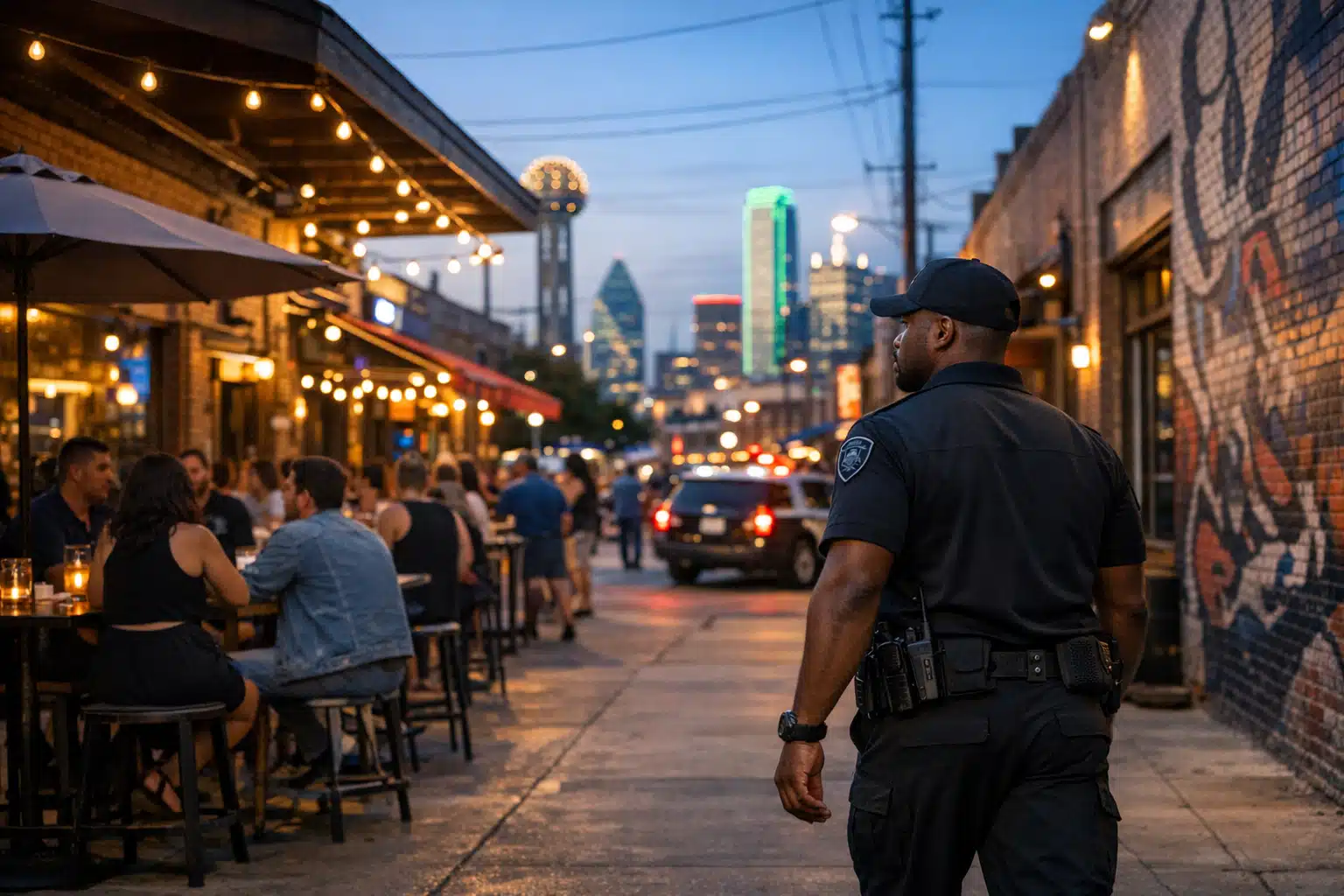
To upgrade security for expanding retail districts, property managers should scale protection by addressing increased entry points, parking lot coverage, and after-hours risks. This involves assessing current vulnerabilities, adding surveillance systems, increasing patrol presence during peak hours, implementing access control measures, and coordinating with local law enforcement as foot traffic and store counts grow.
Retail district security in Dallas faces pressure as shopping corridors like Bishop Arts, Deep Ellum, and Preston Center add stores, restaurants, and foot traffic. More customers mean more entry points, more parking lots, and more after-hours risk. This post breaks down how property managers can scale protection as their districts grow.
Dallas reported over 50,000 property crime offenses in recent years, according to city crime data. Retail corridors absorb a large share of those incidents. When a district doubles its storefronts, old coverage plans stop working.
Why Retail District Security Must Scale With Growth
A single-building security plan does not protect a six-block district. As tenants multiply, so do blind spots, foot-traffic patterns, and theft targets.
Growth changes three things fast:
- Coverage area expands beyond what one patrol can cover on foot.
- Peak hours shift as nightlife and dining extend operating windows.
- Parking volume rises, creating more vehicle burglaries and loitering.
A Deep Ellum block that worked with one evening guard in 2019 may need three plus camera coverage after adding a dozen bars and eateries.
Signs Your Current Coverage No Longer Fits
Watch for these warning signs that your retail district security has fallen behind:
- Theft reports climbing in newer tenant spaces.
- Guards unable to respond across the full property in under five minutes.
- Camera footage with gaps at new entrances or alleys.
- Tenant complaints about loitering in parking structures.
- Rising after-hours vandalism on exterior walls and glass.
Any two of these points to a coverage gap worth addressing before losses mount.
On-Site Guards vs. Remote Video Surveillance for Dallas Retail
Both methods protect Dallas retail districts, but they solve different problems. The right mix depends on your layout, hours, and budget.
What On-Site Guards Do Best
On-site guards provide visible deterrence and immediate human response. They handle confrontations, escort staff, and manage crowds during events.
Guards work best for:
- High-traffic entrances during peak dining hours.
- Districts with frequent customer disputes or intoxicated patrons.
- Parking garages where a physical presence stops break-ins.
What Remote Video Surveillance Does Best
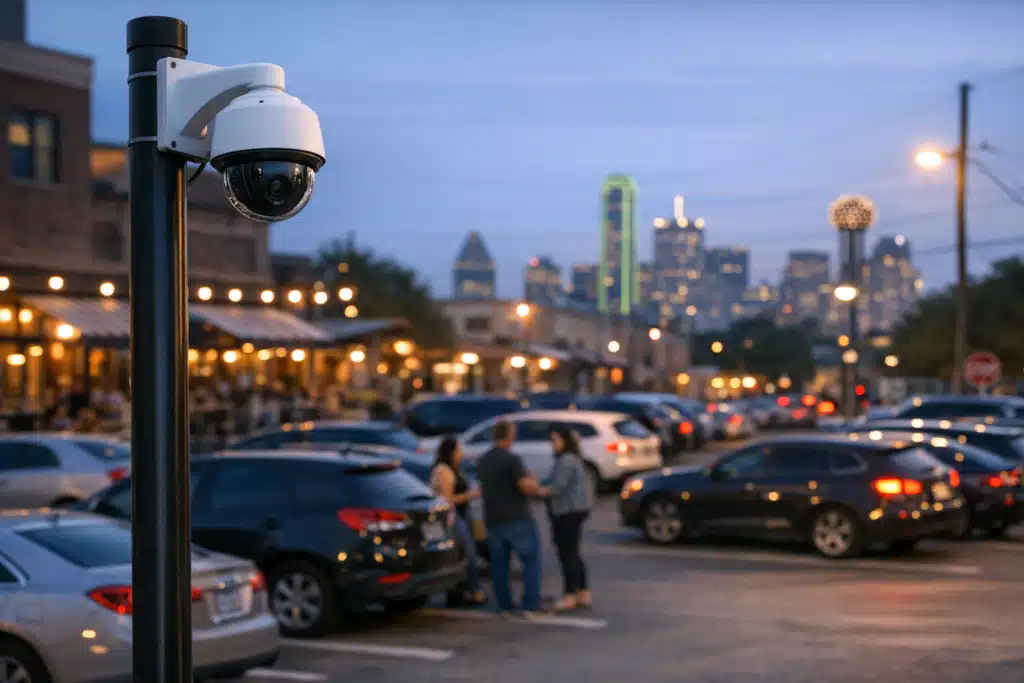
Remote video surveillance uses cameras monitored by trained operators off-site. Operators watch live feeds, speak through on-site speakers, and alert police.
Remote monitoring works best for:
- Covering wide areas like loading docks and back alleys at once.
- Overnight hours when foot traffic drops but theft risk climbs.
- Budgets that need wide coverage without staffing every corner.
Comparing Cost and Coverage
A single guard covers roughly one zone at a time. A remote operator can watch a dozen camera views across your whole district.
For most growing Dallas corridors, a layered plan wins:
- Guards at peak hours and high-contact points.
- Remote surveillance for overnight and perimeter coverage.
This pairing cuts cost while closing the gaps that pure guard coverage leaves open.
How to Plan Security Upgrades as Your District Grows
Smart security upgrades follow your growth rather than reacting to loss. Plan them in phases tied to tenant additions and seasonal traffic.
Step 1: Map Your Current and Future Footprint
Mark every entrance, alley, dock, and parking area. Flag spaces slated for new tenants in the next year.
This map shows where coverage gaps will open before they cost you.
Step 2: Rank Zones by Risk
Not every area needs the same protection. Rank zones high, medium, or low based on:
- Cash handling and high-value merchandise.
- History of break-ins or vandalism.
- Low visibility from the street.
- Late operating hours.
High-risk zones get guards or active camera monitoring first.
Step 3: Match Methods to Each Zone
Assign coverage based on each zone’s rank and hours:
- Storefronts and entrances: guards during business hours.
- Alleys and docks: monitored cameras with speaker warnings.
- Parking structures: a mix of patrols and fixed cameras.
Step 4: Build in Scalability
Choose camera systems that add feeds without full replacement. Pick a security partner who can staff more guards as you add blocks.
Scalable plans save money when your district adds its next phase.
Response Time Advantages in Dallas Retail Corridors
Fast response separates a stopped crime from a loss report. In dense Dallas corridors, minutes decide the result.
Remote operators act the moment they spot trouble:
- Spot a person entering a restricted dock after hours.
- Issue a live voice warning over the on-site speaker.
- Alert nearby guards and Dallas police with a location.
Many intruders leave the moment a voice addresses them directly. That voice-down tactic stops crimes that cameras alone only record.
Why Local Coordination Matters
A security team familiar with Dallas corridors knows which blocks draw repeat offenders. Local knowledge speeds the right response.
Operators who recognize patterns at a Bishop Arts garage respond faster than a distant call center reading a map.

 Posted on Google
Common Mistakes When Scaling Retail District Security
Avoid these errors as your district adds tenants and traffic:
- Adding cameras without monitoring. Unwatched footage only helps after a loss.
- Staffing one guard for too large an area. Response times suffer and deterrence drops.
- Ignoring parking areas. Vehicle break-ins hit district reputation fast.
- Waiting until after a theft spike. Reactive upgrades cost more and move slower.
Each mistake creates a gap that offenders find quickly in growing corridors.
Building a Security Plan That Grows With Your Dallas District
Your protection plan should change every time your tenant roster does. Review coverage each quarter and before major seasonal events.
A workable review checklist:
- Confirm every new tenant space has camera or patrol coverage.
- Check guard response times across the full footprint.
- Review incident logs for new hot spots.
- Adjust overnight monitoring as hours shift.
This habit keeps your retail district security matched to its current size, not last year’s.
Conclusion
Dallas retail corridors grow fast, and protection must grow with them. A layered plan of on-site guards and remote video surveillance closes the gaps that expansion opens. Rank your zones, match methods to risk, and review coverage each quarter.
Twin City Security Dallas helps property managers plan security that scales with their districts. For a Dallas security assessment or a monitoring quote, call or text 972‑385‑1144 or email Dallas@twincitysecurity.com.
Sources
- Dallas Police Department – Crime Statistics and Reports
- FBI – Uniform Crime Reporting Program
- ASIS International – Security Management Standards
Dallas retail districts like Bishop Arts, Deep Ellum, and Preston Center face growing security challenges as they expand, with more entry points, parking lots, and after-hours risks requiring scaled protection plans.
- Property managers should map current and future footprints, rank zones by risk level, and match security methods to each area - guards for high-traffic entrances and remote video surveillance for overnight perimeter coverage.
- Warning signs that coverage has fallen behind include rising theft in newer spaces, guard response times over five minutes, camera gaps at new entrances, and increased after-hours vandalism.
- A layered approach combining on-site guards during peak hours with remote monitored cameras for wide areas and overnight coverage cuts costs while closing gaps that single-method plans leave open.