
How to Implement Layered Security for Dallas Office Buildings
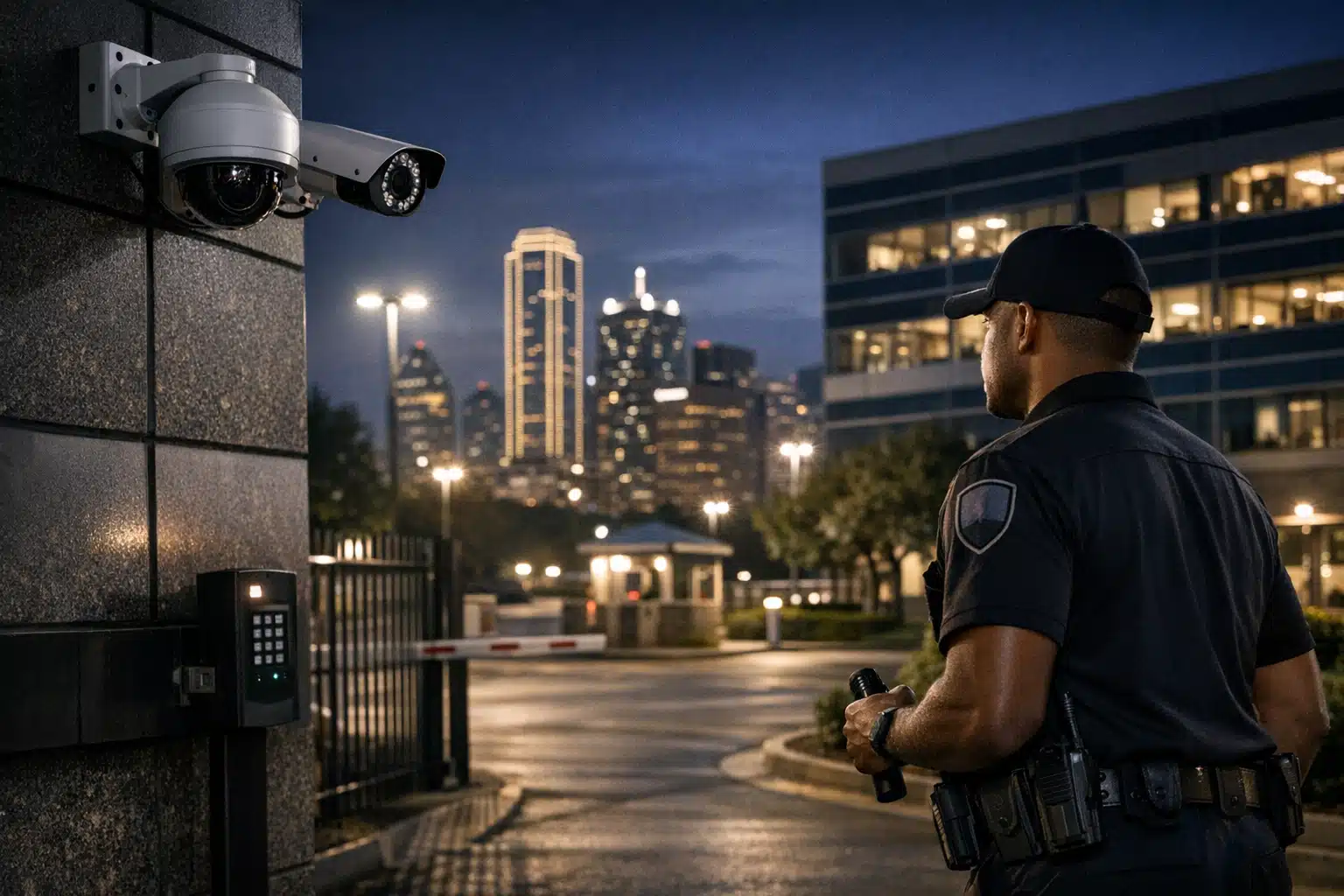
Implementing layered security for Dallas office buildings involves creating multiple defensive barriers. Start with perimeter controls like fencing and access gates, then add building entry systems such as key cards and visitor management. Interior layers should include surveillance cameras, motion sensors, and secured zones. Finally, integrate alarm monitoring with local response services to address the area's high property crime rates.
Why Dallas Office Buildings Need Layered Security
Dallas recorded more than 35,000 business property crimes in a recent year, according to Dallas Police Department data. Office parks along the LBJ Freeway and Uptown corridors see steady break-in attempts after hours.
Layered security protects Dallas office buildings by stacking multiple defenses that work together. If one layer fails, the next one catches the threat.
This post walks property managers through building that defense step by step. You will learn how access control, guards, surveillance, and lighting fit together for real Dallas threats.
What Layered Security Means for Office Buildings
Layered security is a defense model that uses several independent barriers to protect people and property. Each layer slows an intruder and increases the chance of detection.
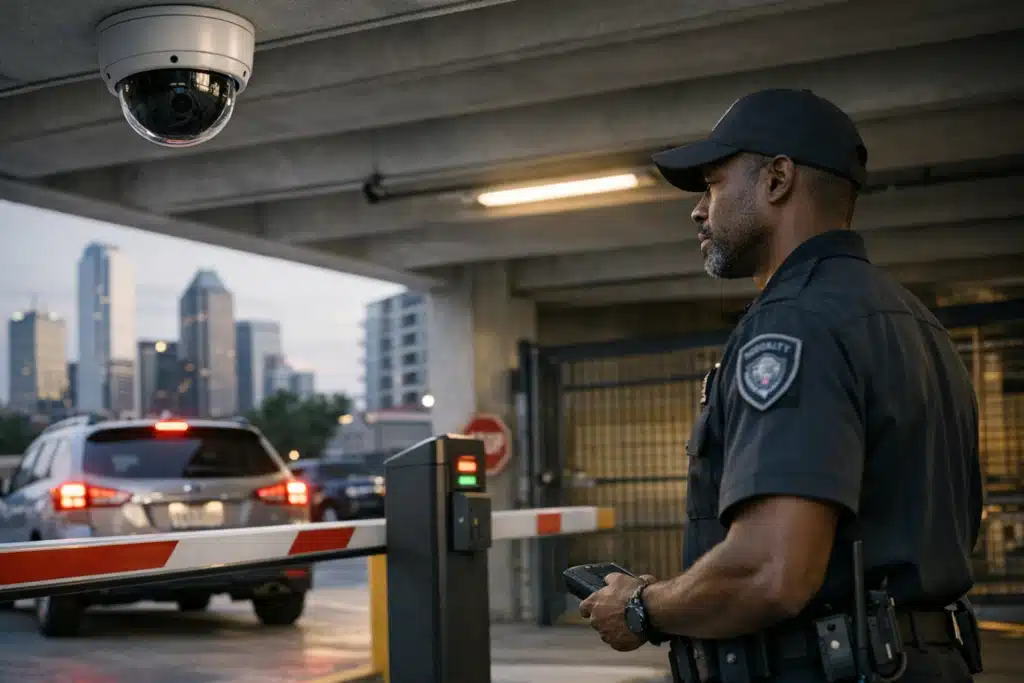
Think of it as rings around your building. The outer ring deters. The middle ring detects. The inner ring responds.
A single camera or one locked door is not enough for a multi-tenant Dallas office tower. Threats vary, and your defenses must match that range.
The Threats Dallas Offices Face
Dallas office buildings deal with specific risks that change by location and hour:
- After-hours break-ins targeting electronics and copper wiring
- Tailgating at parking garages in Uptown and the Design District
- Vehicle burglaries in open-deck garages off Central Expressway
- Vandalism and trespassing at vacant suites during tenant turnover
- Workplace disputes that escalate in lobbies and common areas
Each threat needs a different response. That is why one tool rarely covers a full building.
How to Build Layered Security Step by Step
To secure a Dallas office building effectively, follow these five layers in order. Start at the property edge and move inward.
Layer 1: Perimeter Deterrence
The first layer keeps most threats off your property entirely. Visible deterrents stop opportunistic criminals before they approach.
- Install bright LED lighting across parking lots and entry points
- Post clear signage warning of active monitoring
- Trim landscaping that blocks sightlines near doors
- Mark property boundaries with fencing or bollards
Dark corners invite trouble. A well-lit perimeter cuts parking lot incidents in Dallas garages and open decks.
Layer 2: Access Control at Entry Points
Access control decides who enters and when. Key cards, fobs, and mobile credentials replace easily copied metal keys.
For multi-tenant buildings, set role-based access. A cleaning crew should reach the lobby, not the server room.
Program after-hours lockdowns automatically. Doors that unlock at 7 a.m. and secure at 7 p.m. remove human error from the schedule.
Tailgating remains a top entry risk. Pair access readers with turnstiles or anti-tailgate sensors in high-traffic Dallas lobbies.
Layer 3: Remote Video Surveillance
Remote video surveillance is live monitoring of your cameras by trained operators at an off-site center. Operators watch feeds in real time and act on threats as they happen.
Recorded footage only helps after a crime. Remote monitoring stops the crime in progress.
Here is how it works at a Dallas office building:
- Cameras cover entrances, garages, loading docks, and corridors
- Operators verify motion alerts during set hours
- A live voice-down speaker warns trespassers to leave
- Operators dispatch police with confirmed, verified detail
Verified alarms get faster police response. Dallas officers prioritize calls backed by a live witness over unverified sensor trips.
Layer 4: On-Site Security Guards
On-site guards add judgment and physical presence that cameras cannot match. They respond to medical events, defuse disputes, and escort employees to cars.
For a large Dallas office tower, a lobby guard controls visitor flow during business hours. A patrol guard checks stairwells and garages after close.
On-Site Guards vs. Remote Monitoring: Cost Comparison
Both layers protect your building, but they fit different budgets and needs.
- On-site guards cost more per hour but handle in-person situations directly
- Remote monitoring covers more cameras for less and works well overnight
- A mixed model uses guards by day and remote operators after hours
Many Dallas property managers choose the mixed model. It controls cost without leaving gaps in coverage.
Layer 5: Response and Communication
The final layer ties every other layer together. A clear response plan turns detection into action.
- Define who gets called for each alert type
- Keep tenant contact lists current and reachable
- Set direct lines to Dallas police non-emergency and 911
- Run quarterly drills with building staff
A plan no one practices fails under pressure. Test your chain of communication before a real incident forces it.
How Layered Security Addresses Specific Dallas Threats
Each layer answers a real problem Dallas office buildings face. Matching the layer to the threat is what makes the model work.
Stopping Copper and Electronics Theft
Copper theft spikes during construction and tenant buildouts. Thieves target vacant suites with exposed wiring.
Remote operators watching loading docks catch these crews during entry. A voice-down warning ends most attempts before anything leaves the building.
Protecting Parking Garages
Open-deck garages near Central Expressway draw vehicle burglars. Lighting and camera coverage reduce break-ins to parked cars.
A patrol guard walking the deck at shift change adds presence when employees arrive and leave.
Managing Visitor and Tenant Access
Mixed-use towers host dozens of tenants with different hours. Access control logs every entry by credential and time.
When a dispute or theft occurs, that log narrows the investigation fast.

 Posted on Google
Common Mistakes Dallas Property Managers Make
Even good buildings leave gaps. Avoid these frequent errors when building your layers:
- Cameras no one watches — recorded footage without live monitoring only documents loss
- Keys never collected — former tenants and staff keep working credentials
- Dead lighting zones — one burned-out fixture creates a blind spot
- No after-hours coverage — most office crime happens between 10 p.m. and 5 a.m.
- Untested response plans — staff who never drill freeze during real events
Fixing these costs little and closes the gaps intruders count on.
How to Start Your Layered Security Plan
Begin with an assessment of your current building. Walk the property at night and note every dark corner and unlocked door.
Rank your threats by likelihood and impact. A garage with frequent car break-ins needs attention before a low-traffic side entrance.
Build your layers in order of risk. Add perimeter lighting and access control first, then stack monitoring and guards on top.
Review the plan every six months. Tenant turnover and seasonal changes shift your risk picture across the year.
Conclusion
Layered security protects Dallas office buildings by stacking deterrence, access control, surveillance, guards, and response into one defense. Each layer covers what the others miss, closing the gaps intruders exploit after dark.
Twin City Security Dallas builds these layers around your specific property and budget. Call or text 972‑385‑1144, email Dallas@twincitysecurity.com, or visit https://www.twincitysecuritydallas.com for a Dallas security assessment.
Sources
- Dallas Police Department – Crime Data and Statistics
- CISA – Physical Security Resources
- FBI – Uniform Crime Reporting Program
Dallas office buildings face over 35,000 business property crimes annually, making layered security - stacking multiple defenses that work together - a practical approach for property managers to protect their buildings.
- Layered security uses five steps: perimeter deterrence with lighting and signage, access control at entry points, remote video surveillance with live monitoring, on-site guards, and a tested response plan.
- Common Dallas threats include after-hours break-ins targeting electronics and copper, tailgating at parking garages, vehicle burglaries in open-deck structures, and vandalism during tenant turnover.
- Many property managers use a mixed model with guards during business hours and remote monitoring overnight to control costs while maintaining coverage.