
How Weather Affects Security Planning for Dallas Outdoor Events
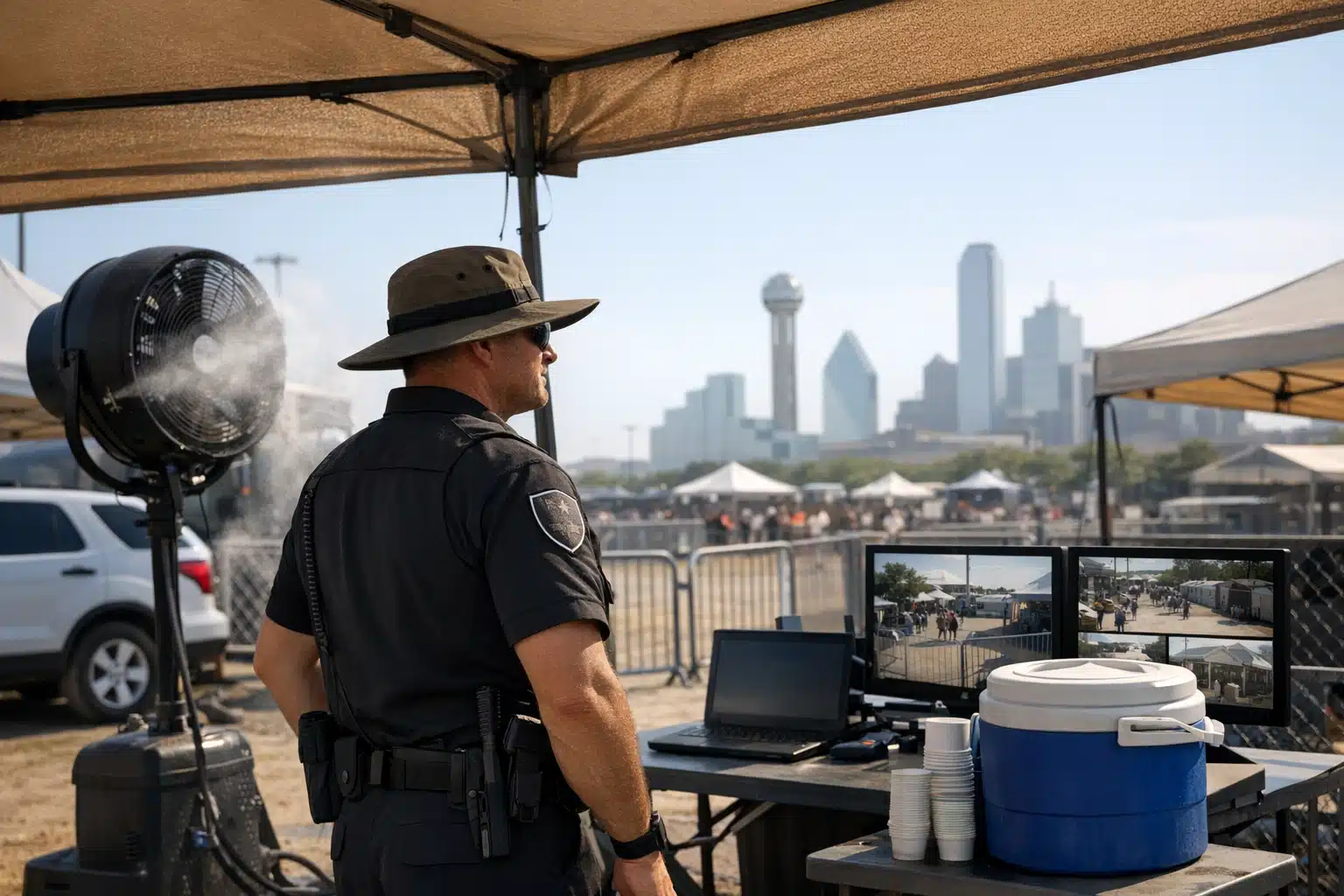
Dallas weather directly impacts outdoor event security by influencing guard staffing requirements, crowd behavior patterns, equipment placement decisions, and emergency response times. Extreme heat - with temperatures exceeding 105°F - requires adjusted security protocols, while seasonal weather changes demand flexible planning strategies to protect both attendees and security personnel throughout North Texas venues.
Dallas summers push heat index readings past 105°F for weeks at a time, and that number changes how any outdoor event must be secured. The weather impact on security is not a side note here. It affects guard staffing, crowd behavior, equipment placement, and emergency response times across every venue in North Texas. This post breaks down how local weather patterns shape event security planning and what property managers can do about it.
Dallas weather swings fast. A calm morning can turn into a severe thunderstorm warning by 3 p.m. Event security teams have to plan for that volatility, not react to it.
Why Weather Impact on Security Matters for Dallas Outdoor Events
Weather changes crowd behavior, and crowd behavior changes risk. Heat makes people irritable and dehydrated. Rain sends hundreds of guests rushing toward exits at once.
Both scenarios raise the odds of injury, theft, and confrontation. A security plan that ignores the forecast leaves gaps that criminals and chaos both exploit.
North Texas sees more than 40 days per year above 100°F in extreme summers. It records some of the highest hail-damage claims in the country. These conditions make the weather impact on security a planning priority, not an afterthought.
Common Dallas Weather Threats to Outdoor Events
- Extreme heat — medical incidents, crowd fatigue, equipment overheating
- Severe thunderstorms — sudden evacuations, lightning risk, power loss
- High winds — collapsed tents, flying debris, damaged fencing
- Hail — property damage, panic movement, vehicle claims
- Flash flooding — blocked exits, stranded vehicles, access problems
Each threat demands a different staffing and monitoring response. One plan cannot cover all five.
How Extreme Heat Changes Guard Staffing in Dallas
Heat is the most predictable Dallas threat and the most underestimated. Guards standing in direct sun for eight hours face the same heat stress as guests.
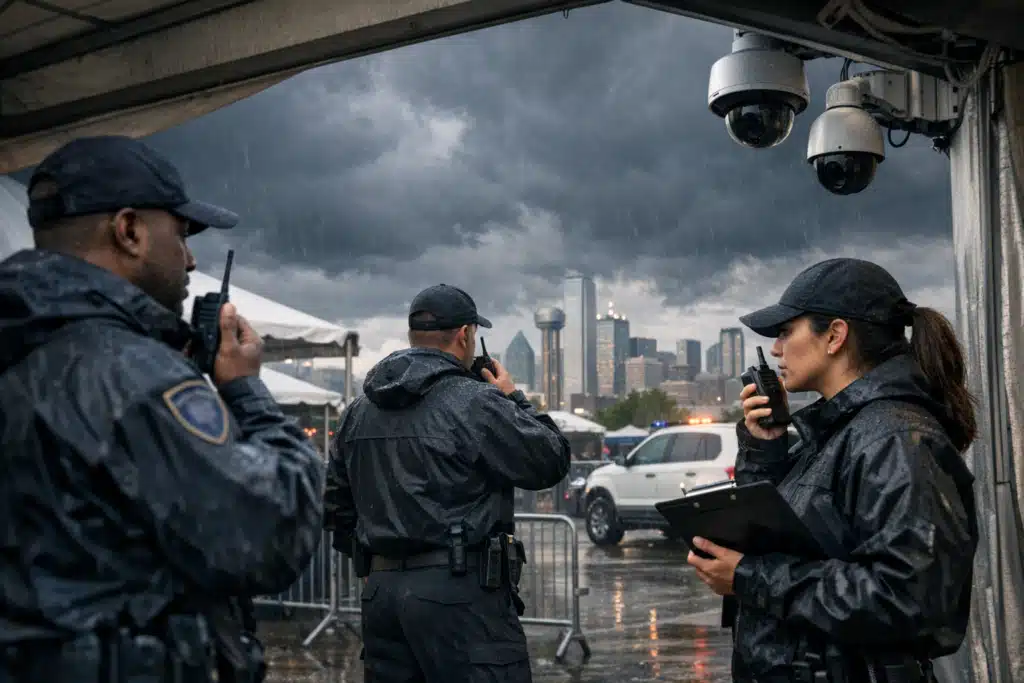
A fatigued guard reacts slower and misses more. Heat planning protects both staff and attendees at the same time.
Heat-Adjusted Security Steps for Dallas Events
- Rotate posts every 60 to 90 minutes during peak heat hours between noon and 6 p.m.
- Add relief guards so no post sits empty during rotations.
- Position shaded observation points near entrances and high-traffic zones.
- Pair on-site guards with remote video to cover ground without adding foot patrols in the sun.
- Stage water and cooling stations near guard posts and medical tents.
Remote video surveillance earns its keep during heat waves. Cameras monitor parking lots and perimeter fencing without exposing a guard to 105°F conditions for hours.
That mix keeps eyes on every zone while cutting heat-related staffing risk. A camera does not need a water break.
Storm Planning: The 30-Minute Window That Defines Dallas Events
Dallas thunderstorms move fast, and the last 30 minutes before impact decide how safe an evacuation goes. Security teams should track radar from setup to teardown.
Lightning within 10 miles is the standard trigger to move guests indoors. Waiting for rain to start is already too late.
Storm Response Steps for Event Security
- Assign one team member to weather monitoring using live radar throughout the event.
- Set a lightning trigger distance and share it with all staff before doors open.
- Pre-map evacuation routes to the nearest hard-roof structures.
- Station guards at every exit to prevent bottlenecks during fast movement.
- Secure loose equipment before wind gusts arrive, not after.
Crowd crushes happen during rushed evacuations, not the storm itself. Guards at exits keep foot traffic steady and prevent the pile-ups that cause injuries.
Remote monitoring adds a second layer here. Operators watching camera feeds spot crowd density building at exits and radio guards before it becomes dangerous.
Wind and Hail: Protecting Structures and Crowds
High winds turn event infrastructure into hazards. A 40 mph gust can lift an unsecured 20-by-20 tent off the ground.
Security staff should inspect anchoring during setup, not treat it as someone else’s job. A collapsed stage rig is a security emergency, not just a logistics problem.
Wind and Hail Checklist for Dallas Venues
- Verify tent and stage anchoring before guests arrive
- Identify hard-shelter zones for hail events
- Clear debris and signage that wind can turn into projectiles
- Keep vehicle lanes open so guests can shelter in cars if needed
- Confirm camera mounts can withstand gusts without losing feed
Hail sends crowds moving in seconds. Guards who already know the nearest covered zones cut confusion and injury.
How Remote Surveillance Handles Dallas Weather Better Than Foot Patrols Alone
Remote video surveillance keeps watching when weather forces guards to move. When lightning clears a field, cameras still cover the perimeter, vendor booths, and parking areas.
That continuity matters. Theft spikes during evacuations because attention scatters and equipment sits unattended.
On-Site Guards vs. Remote Monitoring in Bad Weather
On-site guards excel at:
- Direct crowd control during evacuations
- Physical response to conflicts and medical events
- Checking anchoring and access points in person
Remote monitoring excels at:
- Watching multiple zones during storms without exposing staff
- Covering parking and perimeter when guests shelter
- Recording verified footage for insurance and claims
The strongest Dallas event plans use both. Guards manage people on the ground. Cameras cover everything else, weather permitting or not.

 Posted on Google
Building a Weather-Ready Event Security Plan
A weather-ready plan starts weeks before the event, not the morning of. Local knowledge of Dallas patterns makes the difference between a plan that holds and one that breaks.
Pre-Event Planning Steps
- Review seasonal patterns for the event date and location.
- Set weather triggers for heat rotations, evacuations, and shutdowns.
- Assign clear roles for monitoring, exits, and crowd flow.
- Place cameras at parking, perimeters, and high-value zones.
- Run a briefing so every guard knows the triggers before doors open.
Events booked in July need different staffing than those in October. Spring events face the highest severe-storm risk in North Texas.
Matching the plan to the season keeps guests safe and cuts liability for the venue and organizer.
What This Means for Dallas Property Managers and Event Organizers
Weather is the one variable no organizer controls, but every organizer can plan for. A security team that reads the forecast prevents the injuries and losses that follow bad weather.
Local response time matters most when conditions turn fast. A Dallas-based team knows which venues flood, where shelter sits, and how fast storms build over North Texas.
That local knowledge turns a generic security setup into one built for the actual conditions your event will face.
Conclusion
Dallas weather shifts fast, and security plans have to move with it. Heat demands guard rotations and remote coverage, while storms demand tracked radar and pre-mapped exits. Pairing on-site guards with remote surveillance keeps outdoor events covered no matter what the sky does.
Twin City Security Dallas builds weather-ready plans for events, construction sites, and properties across North Texas. Call or text 972‑385‑1144, email Dallas@twincitysecurity.com, or visit https://www.twincitysecuritydallas.com for a Dallas security assessment or monitoring quote.
Sources
- National Weather Service – Fort Worth/Dallas Forecast Office
- OSHA – Heat Exposure and Prevention
- National Weather Service – Lightning Safety
- National Weather Service – Weather Safety
Dallas weather conditions - from extreme heat exceeding 105°F to sudden thunderstorms and hail - directly shape how outdoor events must be secured, affecting guard staffing, crowd behavior, equipment placement, and emergency response times.
- Heat requires rotating guard posts every 60 to 90 minutes, adding relief staff, and using remote video surveillance to reduce heat exposure while maintaining coverage.
- Storm planning centers on a 30-minute pre-impact window with assigned weather monitors, pre-mapped evacuation routes, and guards stationed at exits to prevent crowd crushes.
- Combining on-site guards with remote camera monitoring provides continuous coverage during evacuations when theft spikes and attention scatters.