
The Role of Unarmed Security Guards in Dallas Corporate Environments
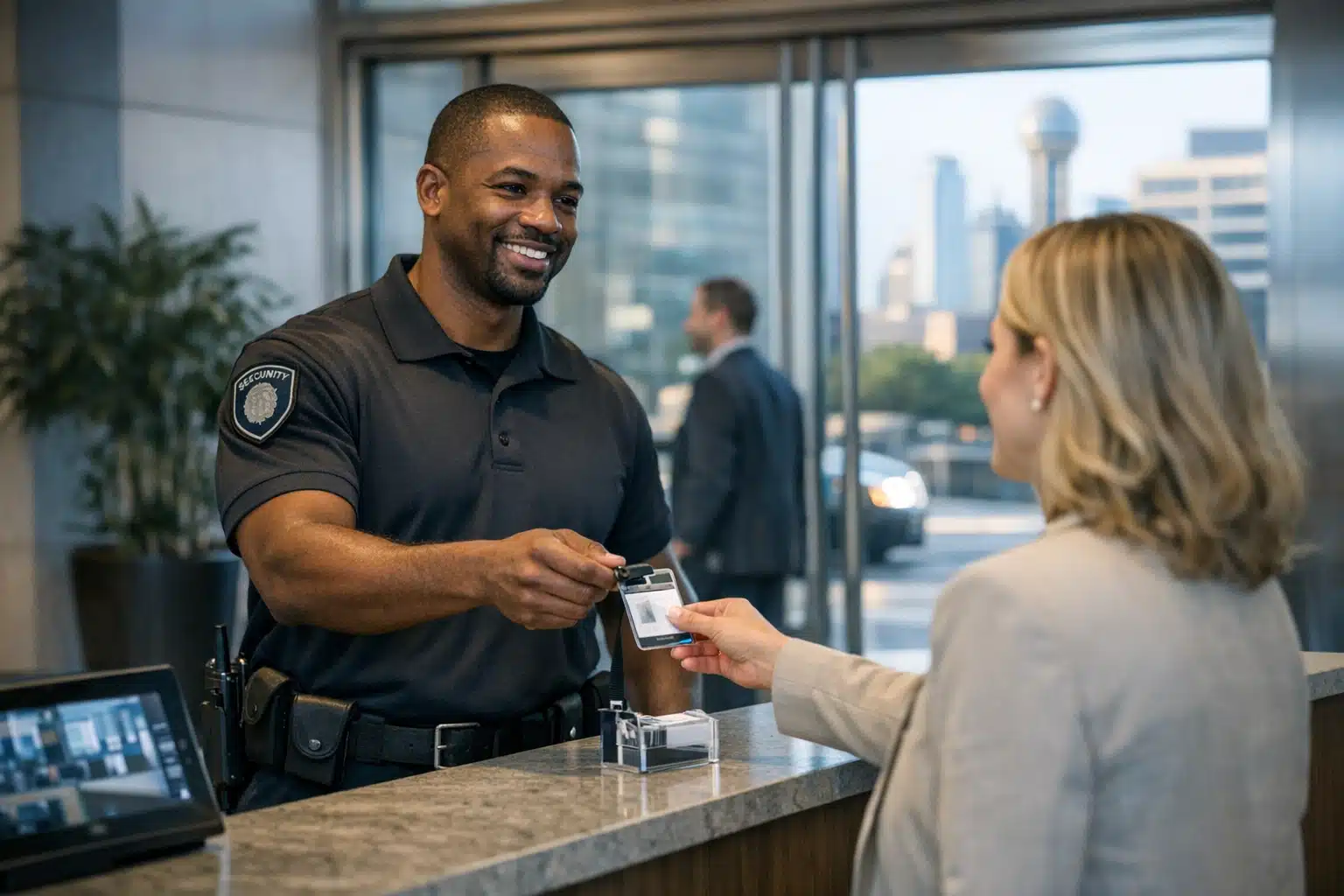
Unarmed security guards in Dallas corporate settings monitor building access points, patrol lobbies and parking garages, screen visitors, and maintain a visible presence that deters potential threats. They respond to disturbances, enforce company policies, assist employees and guests, and coordinate with local law enforcement when situations require additional support.
Why Dallas Corporate Buildings Rely on Unarmed Guards
Dallas added more than 100,000 office workers downtown and across the Telecom Corridor over the past decade. More foot traffic means more front doors, parking garages, and lobbies that need watching.
Unarmed security guards fill that need without changing how a workplace feels. They protect people and property while keeping a Class A office approachable for clients and staff.
This post breaks down what unarmed officers do in corporate settings, how they compare to armed staff, and how Dallas businesses pick the right coverage. You will see concrete examples from office towers, tech campuses, and multi-tenant buildings across DFW.
What Unarmed Security Guards Do in a Corporate Setting
Unarmed security guards are licensed officers who protect a site without carrying a firearm. In Texas, they hold a Level II certification regulated by the Texas Department of Public Safety.
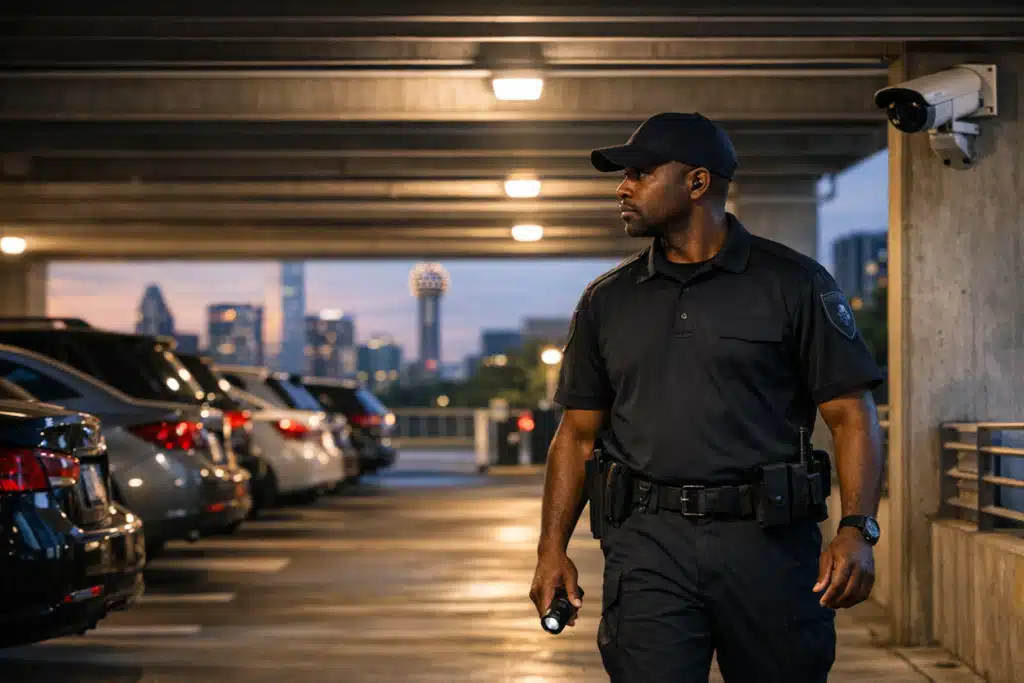
Their day covers far more than standing at a door. A single officer at a Las Colinas office tower might handle a dozen different duties before lunch.
Common Daily Responsibilities
- Access control at lobbies and loading docks
- Visitor management, including badge issuance and escort
- Patrols of garages, stairwells, and vacant floors
- Incident reports for slips, thefts, or disputes
- Alarm response and coordination with Dallas Police
- Emergency direction during fire drills or severe weather
Texas spring storms make that last point real. When a tornado warning hits North Texas, a trained officer moves tenants to interior safe zones fast.
Why Unarmed Guards Keep Corporate Spaces Welcoming
An office lobby is the first thing a client sees. A visible firearm can set a defensive tone before a single word is spoken.
Unarmed officers project calm authority instead. They greet guests, answer questions, and watch for trouble at the same time.
The Hospitality Side of Security
Many Dallas tech and finance firms want their front desk to feel like a hotel. An unarmed guard who knows regular tenants by name builds that atmosphere.
At a Deep Ellum creative agency, for example, the morning officer buzzes in couriers, signs for packages, and flags tailgaters at the garage gate. None of that work calls for a weapon.
The result: staff feel safe, visitors feel greeted, and bad actors see an alert presence watching the door.
Unarmed vs. Armed Guards: How Dallas Businesses Decide
The choice comes down to risk level, tenant mix, and cost. Most standard corporate offices match the unarmed profile.
When Unarmed Coverage Fits
- Multi-tenant office towers with steady foot traffic
- Tech campuses with badge-controlled entry
- Corporate lobbies and reception desks
- Parking garages needing patrol and presence
- After-hours building lockup and verification
When Armed Coverage Makes Sense
- Cash-handling sites like bank branches
- High-value asset storage
- Locations with a documented threat history
Armed officers cost more per hour because of added licensing and liability. For a typical Dallas office, that premium rarely matches the actual risk.
Cost Comparison at a Glance
- Unarmed guards carry lower hourly rates and lower insurance overhead.
- Armed guards raise liability exposure and require firearm qualification upkeep.
- Remote video monitoring can extend either option across off-hours at a fraction of full staffing cost.
Many clients pair a daytime unarmed officer with overnight remote surveillance. That mix covers a building 24 hours without paying for a night shift on site.
How Unarmed Guards Lower Corporate Liability in Dallas
Every use-of-force event carries legal risk. Removing firearms from a standard office setting removes one of the largest sources of that risk.
Unarmed officers are trained to observe, report, and de-escalate. They call Dallas Police for criminal matters rather than intervening physically.
This approach protects tenants and the property owner alike. A calm verbal resolution almost never ends in litigation.
De-escalation in Practice
A disgruntled former employee once returned to a North Dallas office demanding entry. The unarmed officer kept the person in the lobby, stayed polite, and quietly alerted management and police.
The situation ended with no injury and no confrontation. That outcome reflects good training, not luck.
Building a Corporate Security Plan That Works
Strong corporate security starts with a walk-through of the actual site. Generic staffing plans miss the quirks of each building.
Steps to Set Up Unarmed Coverage
- Assess entry points. Count doors, docks, and garage gates that need eyes.
- Map peak traffic. Identify morning rush, lunch, and shift changes.
- Define post orders. Write clear rules for access, visitors, and emergencies.
- Set patrol routes. Cover stairwells, vacant floors, and perimeter blind spots.
- Layer in technology. Add cameras and remote monitoring for off-hours gaps.
- Review monthly. Adjust posts as tenants and traffic shift.
A plan built this way scales with the building. A growing tech firm in Richardson can start with one lobby officer and add garage patrols as headcount rises.

 Posted on Google
Combining Unarmed Guards With Remote Surveillance
Remote video monitoring watches a site using live cameras staffed by trained operators. It extends an unarmed officer’s reach without adding bodies on the floor.
For a Dallas corporate campus, that pairing works like this:
- Daytime: unarmed officers manage access and greet visitors.
- Nighttime: remote operators watch feeds and trigger voice-down warnings.
- Alerts: any motion in restricted zones pushes an instant notification.
This model cuts after-hours staffing cost while keeping constant eyes on the property. It suits parking garages, where overnight theft and vandalism tend to spike.
What Dallas Property Managers Should Ask Before Hiring
The right questions reveal whether a provider knows corporate work. Use this short checklist during vendor interviews.
- Are your officers Level II licensed through Texas DPS?
- How do you handle visitor management at busy lobbies?
- What is your average response time to a Dallas alarm call?
- Can you pair on-site guards with remote monitoring?
- How are post orders documented and updated?
- What de-escalation training do officers receive?
A provider who answers these clearly understands the difference between guarding a warehouse and staffing a corporate front desk.
Local Response Matters in DFW
Dallas traffic can turn a five-mile drive into a 40-minute crawl. A security partner with local supervisors reaches a problem site faster than a national chain routing calls out of state.
Twin City Security Dallas staffs offices across Dallas, Las Colinas, Richardson, and Plano. Local roots mean supervisors who know the buildings and the routes between them.
Conclusion
Unarmed security guards protect Dallas corporate buildings while keeping lobbies open and welcoming. They lower liability, control access, and respond to emergencies without changing the feel of a workplace. Paired with remote surveillance, they cover a property around the clock at a sensible cost.
Ready for a site assessment or monitoring quote? Call or text Twin City Security Dallas at 972‑385‑1144, email Dallas@twincitysecurity.com, or visit https://www.twincitysecuritydallas.com.
Sources
- Texas Department of Public Safety – Private Security Program
- Dallas Police Department – Official Site
- U.S. Bureau of Labor Statistics – Security Guards Occupational Outlook
Unarmed security guards protect Dallas corporate buildings by managing access, greeting visitors, and responding to emergencies while maintaining a welcoming atmosphere. They offer lower liability and cost compared to armed guards, making them ideal for standard office environments.
- Unarmed officers hold Texas Level II certification and handle duties like lobby access control, visitor management, garage patrols, incident reports, and emergency coordination with Dallas Police.
- Most corporate offices choose unarmed guards because they project calm authority without the defensive tone a visible firearm creates - keeping lobbies approachable for clients and staff.
- Pairing daytime unarmed officers with overnight remote video monitoring provides 24-hour coverage at lower cost than full night staffing, which suits parking garages and multi-tenant buildings.