
The Impact of Weather on Security Planning for Dallas Construction Sites
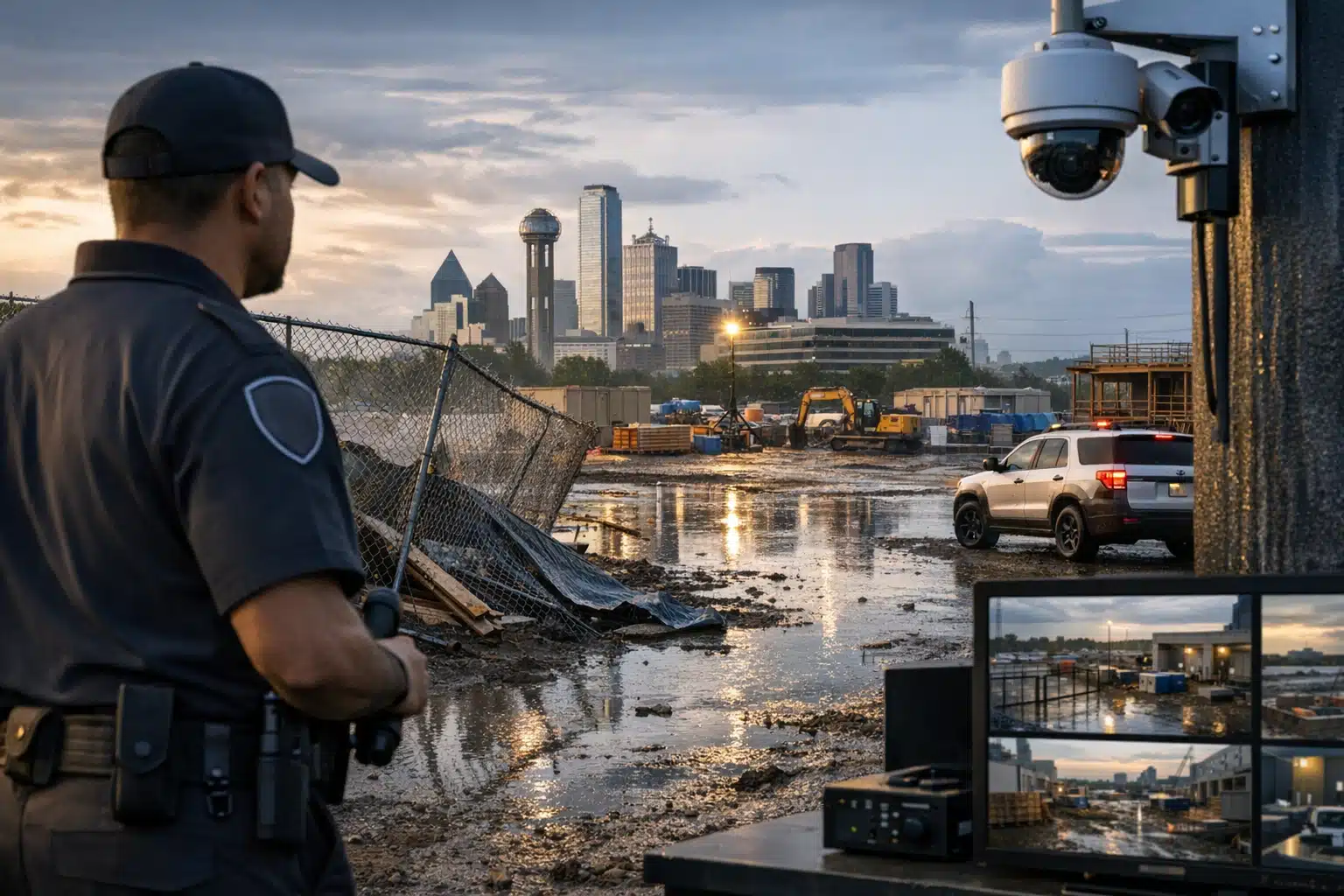
Weather significantly affects security at Dallas construction sites because storms create prime opportunities for theft. Sites often sit unwatched during severe weather events, and thieves target these vulnerable periods to steal materials, copper wire, and equipment. Security planning must account for weather-related gaps in coverage and implement protective measures that remain effective during storms and adverse conditions.
Why Dallas Weather Changes the Way You Protect a Construction Site
Dallas construction sites lose materials, copper wire, and equipment during storms more than any other time. Thieves know when a site sits unwatched during severe weather.
Strong construction security in Dallas accounts for the weather patterns that leave sites vulnerable. This post breaks down how North Texas conditions affect site protection and what steps reduce your risk.
Weather here swings from spring hailstorms to 100-degree summer stretches. Each pattern creates a different opening for theft, vandalism, and liability claims.
How Weather Impact Creates Security Gaps on Dallas Job Sites
The weather impact on a construction site goes beyond delayed pours and muddy access roads. Storms and heat directly affect who is watching your property and when.
Spring Storms and Hail
Dallas sits in the middle of hail season from March through June. The DFW area records some of the highest hail-damage claims in the country each year.
When a storm rolls in, crews leave early and sites empty out fast. That window between the last worker leaving and the storm passing is prime theft time.
Thieves target sites right after hail because attention shifts to damage assessment. Loose materials, exposed framing, and displaced fencing invite trespass.
Summer Heat and Guard Fatigue
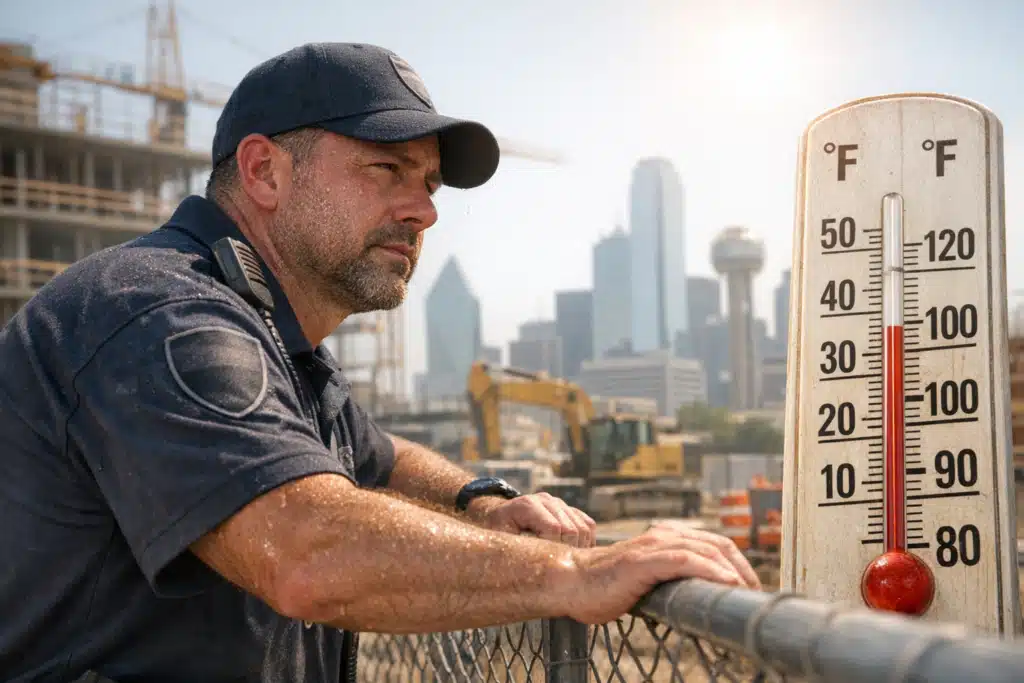
Dallas summers push past 100 degrees for weeks at a stretch. On-site guards face real heat-exposure risk during long outdoor shifts.
Guard fatigue in extreme heat lowers alertness. A tired officer misses details a fresh one would catch.
Heat also drives foot traffic to shaded, unlit corners of a site. Those blind spots become entry points after dark.
Winter Ice and Reduced Visibility
Ice storms shut down Dallas roads a few days each winter. Response times for police and mobile patrols stretch when overpasses freeze.
Fog and early darkness cut camera visibility. Standard cameras struggle in low light without infrared or thermal support.
How Remote Video Surveillance Handles Weather Better Than Guards Alone
Remote video surveillance is a monitoring setup where trained operators watch live camera feeds from an off-site center. Operators verify threats and call police without standing in the storm.
This matters in Dallas because weather does not stop the cameras. A hailstorm that clears a site of workers does not clear the monitoring center.
Advantages During Severe Weather
- No heat exposure risk — operators work indoors, so alertness holds through summer.
- Continuous coverage — cameras run during storms when guards would seek shelter.
- Faster verified alerts — operators confirm real intrusions and skip false alarms.
- Thermal and infrared — cameras see intruders in fog, rain, and darkness.
Where On-Site Guards Still Win
A physical presence deters theft before it starts. Guards check ID, manage gate access, and respond to injuries on the spot.
Many Dallas sites use both. Cameras cover the perimeter overnight, and guards manage daytime access and deliveries.
Steps to Weatherproof Construction Security in Dallas
To protect a Dallas site against weather-related threats, follow these steps in order:
- Map your storm-empty windows. Know when crews leave during weather alerts. Assign coverage to those exact hours.
- Install cameras with thermal imaging. Standard optical cameras fail in fog and rain. Thermal units detect body heat regardless of light.
- Secure loose materials before storms. Anchor fencing, lock containers, and stage copper indoors. Wind scatters items and hides theft.
- Shift guard schedules for heat. Rotate outdoor posts and add hydration breaks in summer. A fatigued guard is a liability.
- Add backup power to cameras. Ice storms cut grid power across Dallas. Battery or solar backup keeps feeds live.
- Set weather-triggered protocols. When a storm warning hits, activate remote monitoring automatically. Do not wait for a call.
Real Dallas Scenarios That Show the Weather Risk
Concrete examples make the risk clear. Here are patterns seen on North Texas sites.
The Post-Hail Copper Theft
A commercial build near Frisco lost spooled copper the night after an April hailstorm. Crews left at 3 p.m. for the warning. Thieves cut fencing at 9 p.m.
Remote monitoring with thermal cameras would have flagged the movement and dispatched police within minutes.
The Summer Blind Spot
An apartment build in South Dallas kept one guard during a July heat wave. The officer stayed near the trailer for shade. Vandals hit the far side of the lot.
Adding perimeter cameras would have covered the corners the guard could not reach in the heat.
The Ice Storm Delay
A site near I-35 saw a break-in during a February freeze. Roads iced over and mobile patrol arrived 40 minutes late. The intruders were gone.
Live operator verification lets police prioritize a confirmed crime in progress over an unverified alarm.

 Posted on Google
What Dallas Property Managers Should Ask Before Hiring
Before you sign a security contract, get answers to specific questions:
- Do your cameras have thermal or infrared for fog and darkness?
- What happens to coverage when a storm empties the site?
- How do you handle guard heat exposure in Dallas summers?
- Is there backup power for cameras during ice-storm outages?
- What is your verified alert time to police dispatch?
The right provider answers each with specifics, not vague promises. Weather planning should already be part of the setup.
Balancing Cost Between Guards and Remote Monitoring
On-site guards cost more per hour than remote monitoring across a full site. A single overnight guard covers one location at a time.
Remote monitoring covers multiple camera zones at once for less. For large Dallas sites, cameras handle the perimeter and a smaller guard team manages access.
This mix cuts cost during weather events. You avoid paying for outdoor guard hours during storms when cameras do the watching.
Local Response Time Advantage in Dallas
Verified alerts move faster with Dallas police than raw alarm signals. Departments deprioritize unverified alarms because false-alarm rates run high.
An operator who confirms a live intruder gives police a reason to respond fast. That advantage grows during weather events when units are stretched thin.
Conclusion
Dallas weather creates predictable security gaps, from post-hail theft windows to summer guard fatigue and winter response delays. Planning around construction security with thermal cameras, remote monitoring, and smart guard scheduling closes those gaps.
Twin City Security Dallas builds site protection around North Texas weather patterns. Call or text 972‑385‑1144, email Dallas@twincitysecurity.com, or visit https://www.twincitysecuritydallas.com for a Dallas site assessment.
Sources
- NOAA National Centers for Environmental Information – Severe Weather Data
- National Institute of Standards and Technology – Building Safety
- Occupational Safety and Health Administration – Heat Exposure
- Dallas Police Department – Official Site
Dallas construction sites face increased theft and security risks during severe weather events, as storms clear workers from sites and create opportunities for criminals. Combining remote video surveillance with thermal cameras and strategic guard scheduling addresses weather-related security gaps.
- Spring hailstorms and summer heat create prime theft windows when crews leave early or guards become fatigued from extreme temperatures. Thieves often target sites immediately after storms when attention shifts to damage assessment.
- Remote video monitoring with thermal and infrared cameras maintains coverage during storms and low visibility conditions when on-site guards would seek shelter. Operators can verify threats and contact police faster than traditional alarm systems.
- Property managers should secure loose materials before storms, install backup power for cameras, rotate guard schedules during heat waves, and set automatic weather-triggered monitoring protocols to reduce risk.