
How to Plan Security for Large Public Events in Dallas
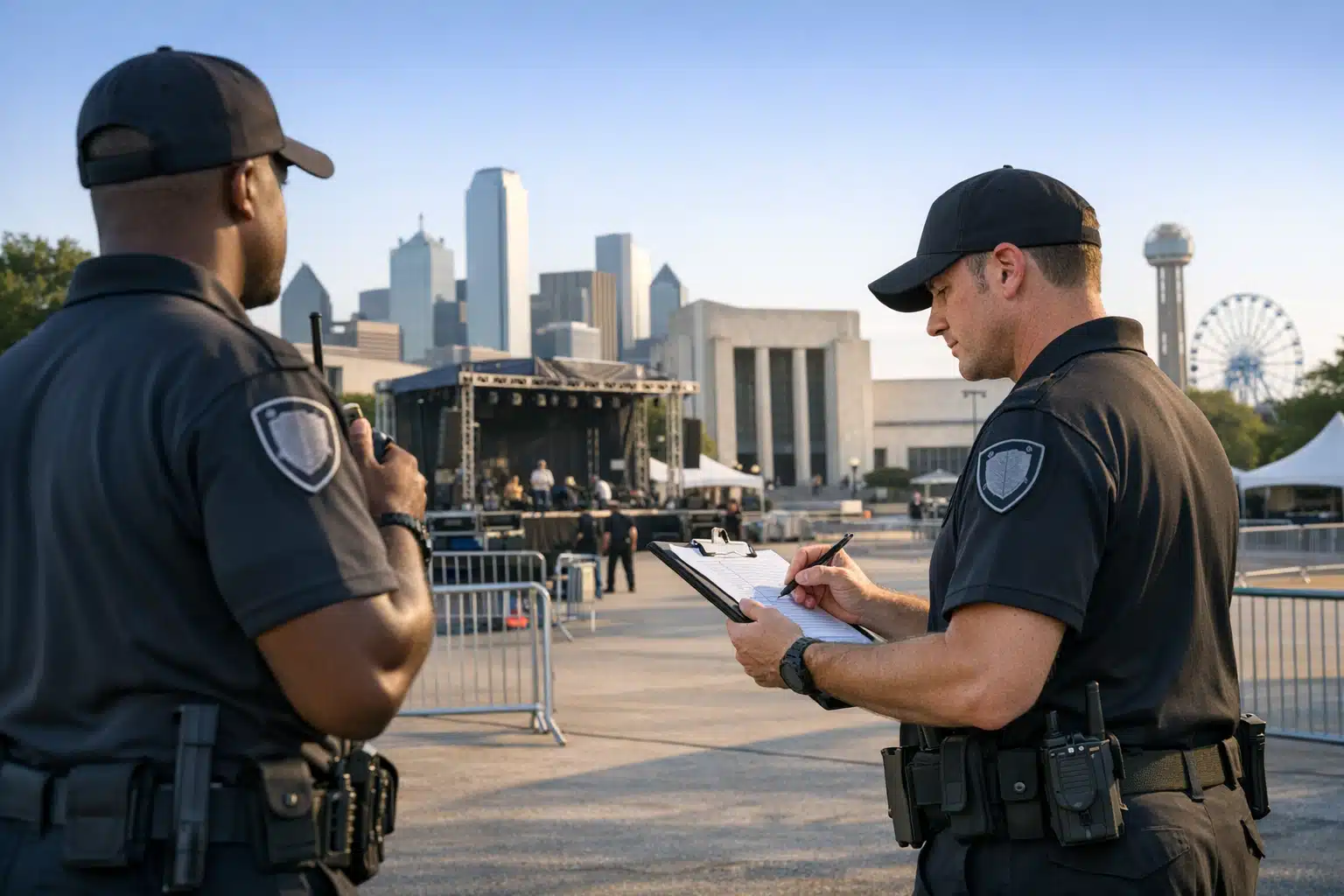
Planning security for large public events in Dallas involves conducting a thorough risk assessment, coordinating with local law enforcement and emergency services, establishing clear entry and exit points, deploying trained security personnel, and creating communication protocols. Organizers should also consider crowd management strategies, weather contingencies, and compliance with local permit requirements specific to Dallas venues.
Dallas hosts more than 1,000 permitted public gatherings each year, from Fair Park festivals to downtown corporate conferences. Strong event security planning separates the events that run smoothly from the ones that make the evening news. This post walks Dallas organizers and venue managers step by step, with a checklist built for local conditions.
You are dealing with Texas heat, large open venues, and crowds that can swell past capacity fast. Planning early gives you room to adjust before gates open.
Why Event Security Planning Matters for Dallas Organizers
Event security planning is the practice of assessing risks, staffing personnel, and coordinating with authorities before a crowd arrives. It reduces liability, injury, and financial loss.
Dallas venues carry specific exposure. Large sites like Fair Park, Dallas Market Center, and outdoor lots near Deep Ellum draw thousands with multiple entry points.
Poor planning creates three common problems:
- Bottlenecks at entry gates that trigger crowd crush risk
- Unmonitored parking areas where vehicle break-ins spike
- No clear chain of command when an incident happens
City permits for large gatherings frequently require a documented security plan. Starting late puts your permit approval at risk.
Start Your Timeline 8 to 12 Weeks Out
Begin security work at least two months before the event date. Larger events with alcohol sales or crowds above 5,000 need more lead time.
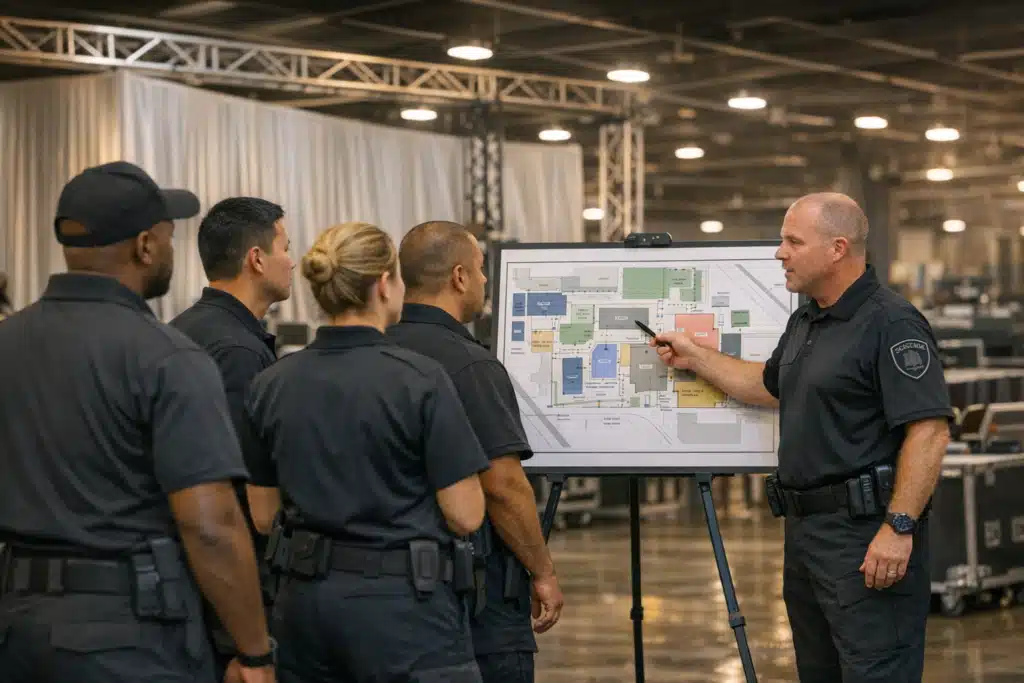
The Planning Timeline
- 8–12 weeks out: Conduct a site risk assessment and estimate crowd size
- 6–8 weeks out: Submit permit applications and confirm off-duty police coordination
- 4 weeks out: Finalize guard staffing counts and post assignments
- 2 weeks out: Walk the site with your security lead and mark camera positions
- Event day: Hold a pre-shift briefing 90 minutes before gates open
This schedule leaves margin for weather changes and last-minute attendance jumps.
How Many Security Guards Do You Need in Dallas?
A common baseline is one guard per 100 attendees for low-risk daytime events. Events with alcohol, cash handling, or nighttime hours push that ratio higher.
Guard Ratio Examples
- Corporate conference, 500 guests, no alcohol: 4–5 guards plus one supervisor
- Outdoor festival, 3,000 guests, alcohol served: 30–40 guards across zones
- Concert, 8,000 guests, night event: 80+ guards, plus off-duty officers for arrests
Only Texas-licensed officers can carry firearms or make certain detentions. Verify that your provider holds a current DPS license under the Private Security Bureau.
Twin City Security Dallas staffs both unarmed and licensed armed guards based on your risk profile.
Map Your Zones Before Gates Open
Divide the venue into defined zones so each guard owns a clear area. Vague assignments create coverage gaps.
Zones Every Dallas Event Needs
- Entry and bag check: The slowest point, so overstaff here first
- Perimeter and fence line: Where gate-jumpers and theft occur
- Parking and rideshare: High vehicle-crime area, especially after dark
- Stage or main floor: Crowd surge and medical response point
- VIP and cash areas: Requires access control and cash escorts
Assign a radio channel to each zone. A single supervisor should monitor all channels from a command post.
How Remote Video Surveillance Covers Dallas Event Blind Spots
Remote video surveillance is live monitoring of cameras by trained operators at an off-site center. For events, it extends your eyes beyond what guards can watch on foot.
Dallas parking lots and back-of-house areas are prime theft targets during busy events. Cameras with live operators catch problems before they grow.
Where Remote Monitoring Adds Value
- Overflow parking lots that guards cannot patrol constantly
- Loading docks and vendor areas after equipment is staged
- Perimeter fence lines at large outdoor sites like Fair Park
- Overnight setup and teardown when the crowd is gone but gear remains
Pairing on-site guards with remote monitoring costs less than staffing every corner with foot patrol. Operators dispatch guards to the exact spot when they see trouble.

 Posted on Google
Coordinate With Dallas Police and Fire Marshal
Large Dallas events with street closures or high attendance require coordination with city departments. The Dallas Fire-Rescue office sets occupancy and exit rules.
Local Coordination Checklist
- Confirm occupancy limits with the Fire Marshal in writing
- Reserve off-duty Dallas Police officers for arrest authority
- Share your site map and command post location with responders
- Post visible exit signage and keep fire lanes clear
- Assign one staff member as the single contact for first responders
Private guards handle prevention and observation. Sworn officers handle arrests. Knowing that line avoids legal problems on event day.
Your Dallas Event Security Checklist
Use this list as your master reference during planning.
- Risk assessment completed and documented
- Crowd size estimate confirmed with the venue
- Guard count and ratio matched to risk level
- DPS-licensed provider verified for armed posts
- Zone map with radio channels assigned
- Remote camera positions marked and tested
- Entry screening plan for bags and prohibited items
- Medical and evacuation routes mapped with staff
- Weather contingency for Texas heat and storms
- Pre-shift briefing scheduled before gates open
Print this and check each item off during your site walk. Gaps become obvious when everything is written down.
Plan for Texas Weather and Heat Emergencies
Summer events in Dallas face heat index readings above 105 degrees. Attendees and staff both risk heat illness during long outdoor events.
Build cooling and hydration into your security plan:
- Position guards to watch for signs of heat distress in the crowd
- Mark shaded rest zones and water stations on the site map
- Give outdoor posts rotation breaks every 60 to 90 minutes
Storm plans matter too. Have a clear signal and route to move crowds indoors when lightning approaches.
Conclusion
Solid event security planning in Dallas comes down to early timelines, correct guard ratios, mapped zones, and remote monitoring for blind spots. Coordinate with local authorities and prepare for Texas weather before your public events open the gates. Twin City Security Dallas builds event security plans for festivals, conferences, and venues across the metro.
Call or text 972‑385‑1144 or email Dallas@twincitysecurity.com for a Dallas event security assessment.
Sources
- Dallas Police Department – Official City of Dallas Police Site
- Texas Department of Public Safety – Private Security Bureau
- National Weather Service – Heat Safety
- Dallas Fire-Rescue – City of Dallas
This post guides Dallas event organizers through security planning for large public gatherings, covering timelines, guard ratios, zone mapping, and coordination with local authorities.
- Planning should start 8 to 12 weeks before the event, with permit applications submitted 6 to 8 weeks out and a pre-shift briefing held 90 minutes before gates open.
- Guard ratios range from one per 100 attendees for low-risk daytime events to 80 or more guards for large nighttime concerts, and all armed personnel must hold a current Texas DPS license.
- Remote video surveillance helps cover blind spots like overflow parking and perimeter fences, while coordination with Dallas Police and Fire Marshal addresses occupancy limits and arrest authority.