Enhancing Security for Dallas’s Expanding Healthcare Facilities
Dallas healthcare facilities can strengthen security by implementing access control systems, deploying trained security personnel, installing surveillance cameras, and establishing protocols for protecting controlled substances. With rapid population growth driving new medical campus openings, facilities must prioritize patient and staff safety while reducing exposure to theft, violence, and liability claims through layered security measures.
Dallas added more than 100,000 residents to its metro area in a single recent year, and new medical campuses keep opening to serve them. This growth puts pressure on hospitals, clinics, and surgery centers to protect patients, staff, and controlled substances. Strong healthcare security now separates well-run facilities from those exposed to theft, violence, and liability claims.
This post breaks down the specific risks Dallas medical facilities face. It covers practical protection strategies and how local response times change the math for facility managers.
Why Healthcare Security in Dallas Demands Specialized Attention
Hospitals are open to the public around the clock. That openness invites risks other properties never face.
Emergency departments see agitated patients, grieving families, and people under the influence. Pharmacies hold opioids that draw organized theft rings. Maternity wards require infant abduction safeguards.
The Dallas medical corridor along Harry Hines Boulevard concentrates major institutions near high-traffic areas. This density creates both opportunity and exposure for anyone managing a medical property here.
Key Threats Facing Dallas Medical Facilities
- Workplace violence against nurses and ER staff, which the field reports at rates far above other work settings
- Drug diversion and pharmacy theft, driven by street demand for prescription opioids
- Infant and pediatric abduction risk in labor and delivery units
- Vehicle break-ins and vandalism across large surface parking lots and garages
- Unauthorized access to records rooms, supply storage, and behavioral health wings
Each threat calls for a different countermeasure. A single guard at the front desk cannot cover all of them.
On-Site Guards Versus Remote Video Monitoring for Facility Protection
Medical facilities usually need both approaches. Each does something the other cannot.
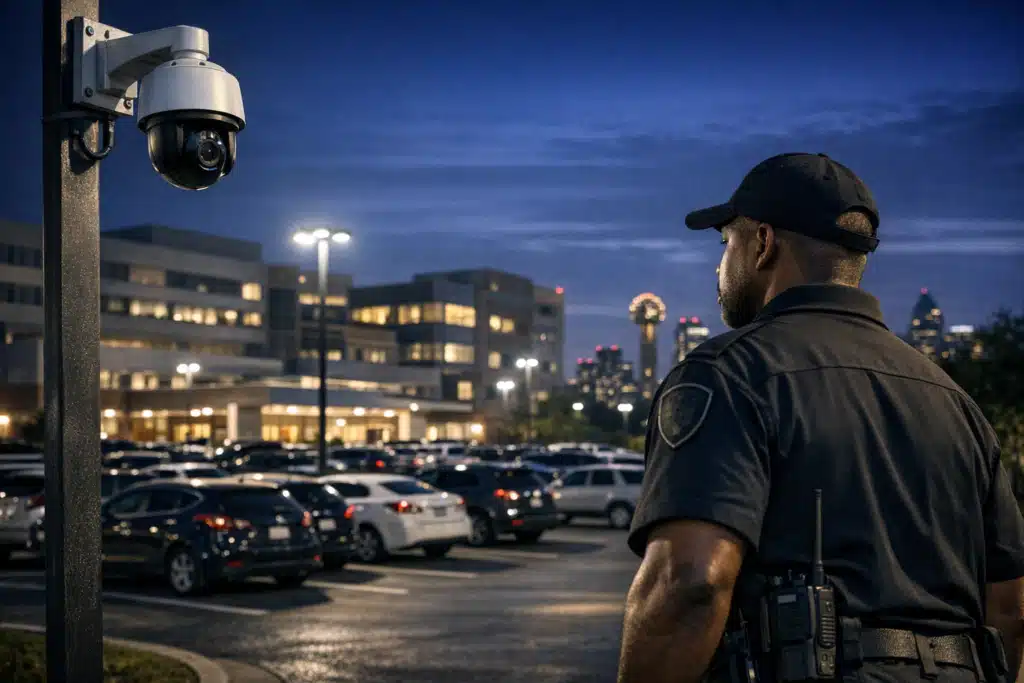
On-site officers handle direct human contact. Remote monitoring watches wide areas at lower cost. Smart facility protection combines the two based on where risk concentrates.
Where On-Site Guards Earn Their Keep
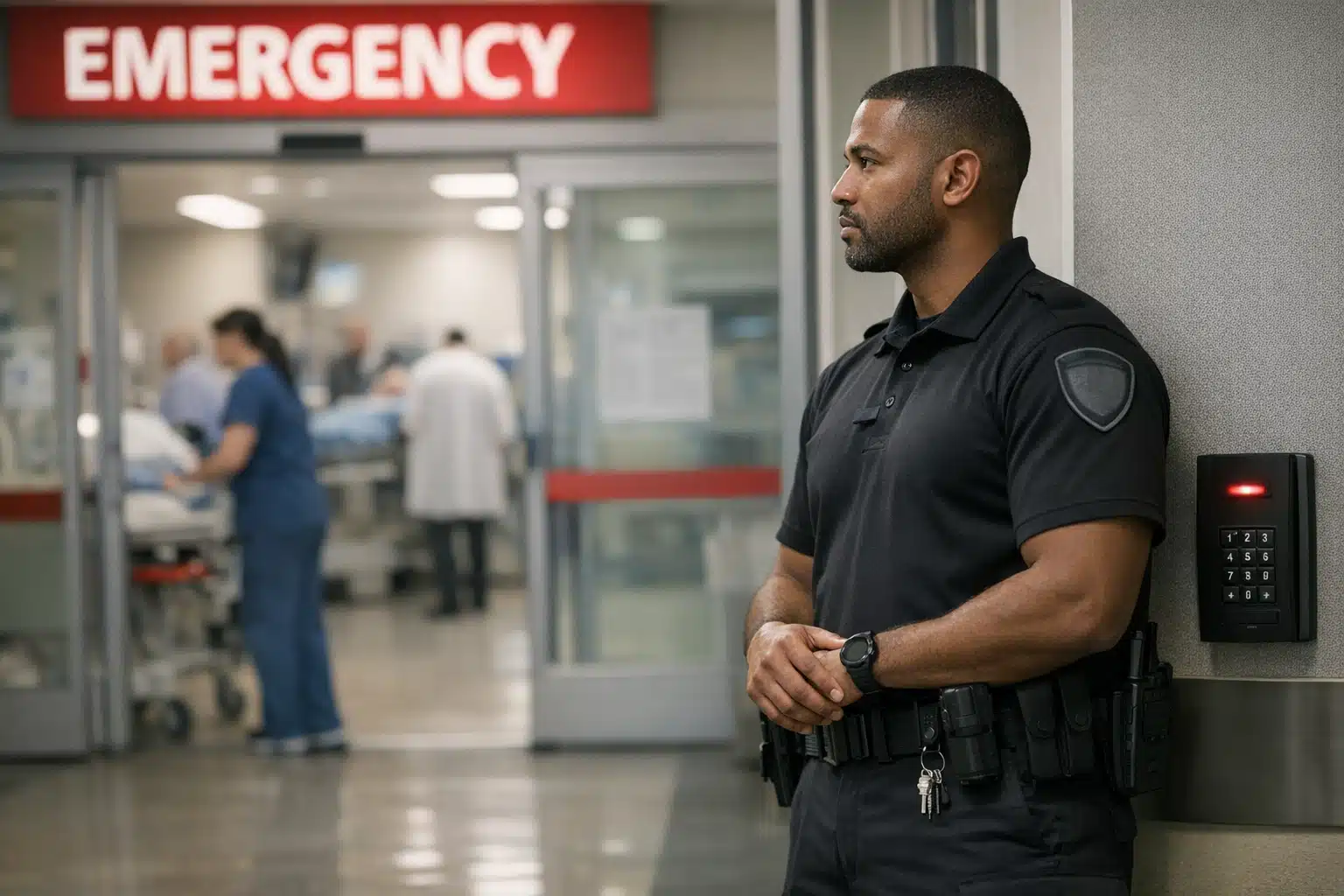
Human presence matters most where confrontation happens. An officer stationed in the emergency department can de-escalate a hostile visitor before it turns physical.
Assign on-site personnel to:
- Emergency department entrances, where conflict peaks after midnight and on weekends
- Behavioral health units, which require calm, trained intervention
- Pharmacy and controlled-substance areas that need visible deterrence
- Visitor screening desks during peak arrival hours
A trained officer also directs first responders during a code or evacuation. No camera can guide paramedics to the right floor.
Where Remote Surveillance Covers More Ground
Remote surveillance is live camera monitoring by trained operators at an off-site center. Operators watch feeds, spot problems, and alert authorities in real time.
This method fits large, low-traffic zones where posting a guard wastes money. Parking garages, loading docks, and exterior perimeters suit remote coverage.
Benefits for Dallas medical properties include:
- Wide coverage across multiple lots and building faces at once
- Lower cost per square foot than adding foot patrols everywhere
- Voice-down warnings that let operators speak to trespassers directly
- Recorded evidence for police reports and liability defense
A break-in attempt at a garage stairwell triggers an operator response within seconds. That speed matters after dark when parking areas empty out.
How Local Response Time Changes Healthcare Security Outcomes
Response speed defines whether an incident stays small. A Dallas-based team reaches your site faster than a national vendor routing calls out of state.
Twin City Security Dallas staffs officers who know DFW traffic patterns and neighborhood layouts. That familiarity cuts minutes off patrol dispatch and supervisor arrival.
Minutes decide the difference between a stopped theft and a completed one. They also decide whether a violent encounter gets contained before staff are hurt.
What Fast Local Coverage Looks Like in Practice
A clinic near Baylor reports a suspicious person circling the staff lot at 2 a.m. A remote operator confirms the threat and issues a voice warning.
The intruder leaves. If not, a nearby patrol officer arrives while the operator stays on the line with police. This layered timing depends on local staffing.
Building a Layered Security Plan for Your Medical Facility
Effective protection stacks several measures so one failure never exposes the whole site. Follow these steps to build a plan for a Dallas medical property.
- Map your risk zones. Identify the ER, pharmacy, maternity, records, and parking as separate priorities.
- Match coverage to each zone. Place guards where confrontation happens and cameras where distance dominates.
- Control access points. Use badge readers on staff-only wings and log every entry.
- Set infant protection protocols. Pair banding systems with camera coverage on maternity exits.
- Write escalation rules. Define who calls police, who locks down, and who guides responders.
- Review incident data monthly. Adjust patrols based on where events cluster.
Document each step. Written protocols protect your facility during audits and lawsuits.
Meeting Compliance and Documentation Needs
Healthcare regulators expect proof of a security program. The Joint Commission reviews how facilities manage workplace violence and access control.
Recorded video and officer logs supply that proof. They show inspectors and insurers that your program runs on evidence, not assumption.
Keep records of:
- Patrol times and routes
- Incident reports with timestamps
- Access logs for restricted areas
- Camera footage retention periods

 Posted on Google
Cost Considerations for Dallas Facility Managers
Budget pressure is real for medical operators. The goal is protection that fits both risk and finances.
A fully staffed guard force at every door costs more than most budgets allow. A mixed model controls that spend.
Here is how facility managers stretch a security budget:
- Post officers only at high-conflict points like the ER
- Cover parking and perimeters with remote monitoring
- Schedule extra patrols during shift-change spikes
- Scale coverage up during construction or expansion phases
New Dallas medical construction sites carry their own risks. Copper wiring, HVAC units, and equipment draw thieves before a building even opens.
Remote cameras protect these sites overnight without a full guard crew. Coverage then shifts to on-site officers once the facility opens to patients.
Protecting Staff Retention Through Safety
Security affects hiring, not just theft prevention. Nurses leave jobs where they feel unsafe.
Dallas hospitals compete hard for clinical staff. A visible security program signals that leadership takes worker safety seriously.
That signal helps retain the people who keep patients alive. Protection and recruitment work together more than most managers expect.
Get a Security Assessment for Your Dallas Healthcare Facility
Growing medical demand across Dallas means more patients, more traffic, and more exposure. Layered coverage that combines on-site officers with remote monitoring answers that pressure. Local staffing gives your facility the response speed that keeps incidents small.
Twin City Security Dallas builds security plans around the specific zones and risks of medical properties. Call or text 972‑385‑1144 or email Dallas@twincitysecurity.com for a facility assessment or monitoring quote.
Sources
- OSHA – Workplace Violence in Healthcare
- The Joint Commission – Standards and Requirements
- U.S. Census Bureau – Dallas City QuickFacts
- Dallas Police Department – Crime Data and Resources
Dallas's rapid population growth is driving expansion of medical facilities, creating pressure on hospitals and clinics to protect patients, staff, and controlled substances from theft, violence, and liability risks.
- Healthcare facilities face unique threats including workplace violence against ER staff, pharmacy theft of opioids, infant abduction risks, and parking lot crime - each requiring different security measures.
- A layered approach works best - placing on-site guards at high-conflict areas like emergency departments while using remote video monitoring for large spaces like parking garages and loading docks.
- Local security teams offer faster response times than national vendors, and visible security programs help with staff retention since nurses often leave jobs where they feel unsafe.