
Navigating Dallas Crime Trends: What Property Managers Need to Know
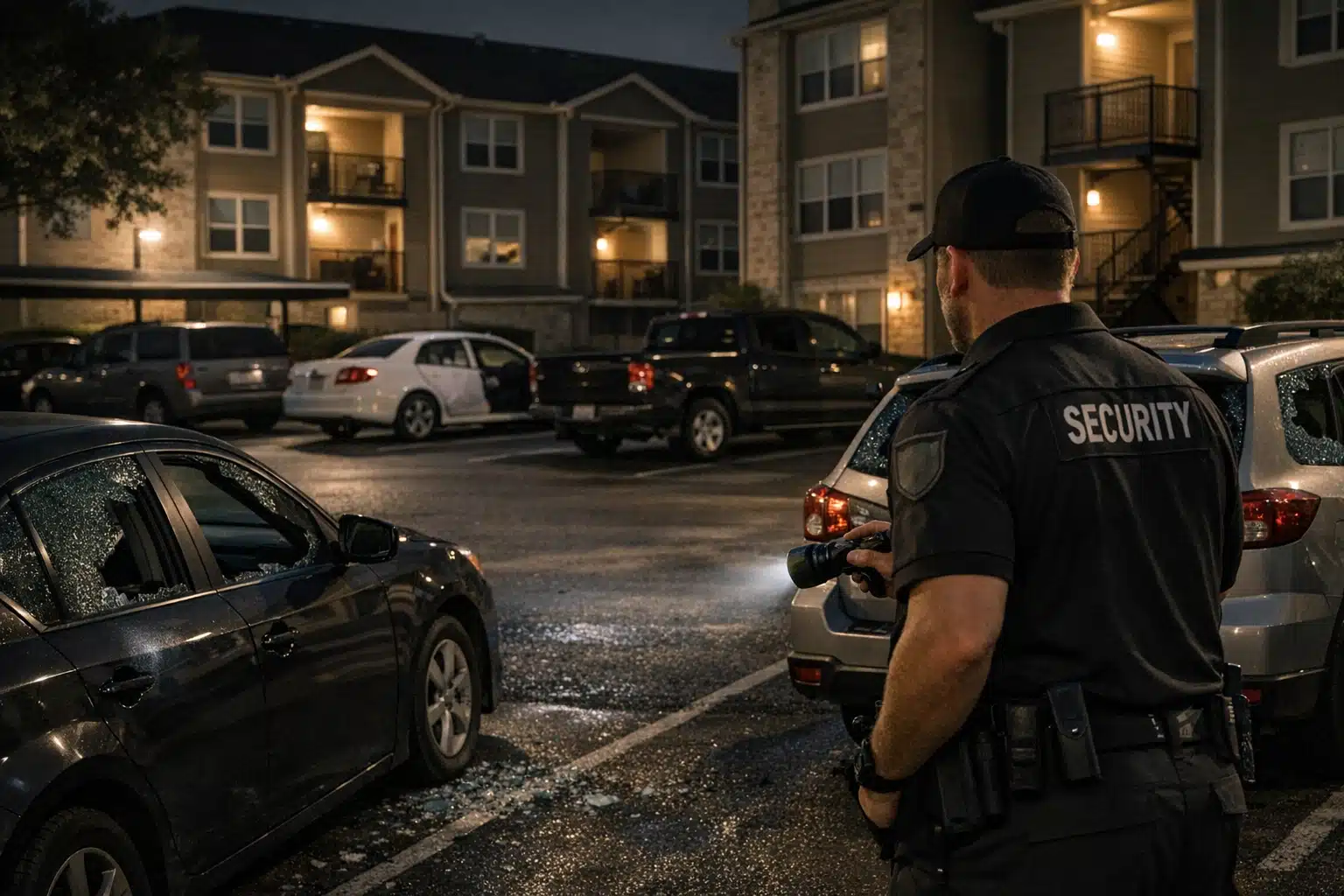
In Dallas, vacant units, parking garages, and construction lots experience the highest number of property crime incidents. These locations attract criminal activity due to reduced foot traffic, limited surveillance, and valuable materials left unattended. Property managers should prioritize security measures at these vulnerable sites to reduce theft, vandalism, and unauthorized access on their properties.
What Dallas Crime Trends Mean for Property Managers Right Now
Dallas property crime trends point to a steady problem for commercial and residential sites. Vacant units, parking garages, and construction lots draw the most incidents.
Property managers feel this pressure first. You handle the tenant complaints, the insurance claims, and the after-hours calls.
This post breaks down where Dallas crime is concentrated, which sites face the highest risk, and how on-site guards and remote video reduce loss. Every point comes from patterns our teams see across Dallas properties each month.
Where Dallas Crime Trends Hit Commercial Property Hardest
Property crime makes up the majority of reported offenses in Dallas. Theft, burglary, and vehicle break-ins outpace violent crime by a wide margin.
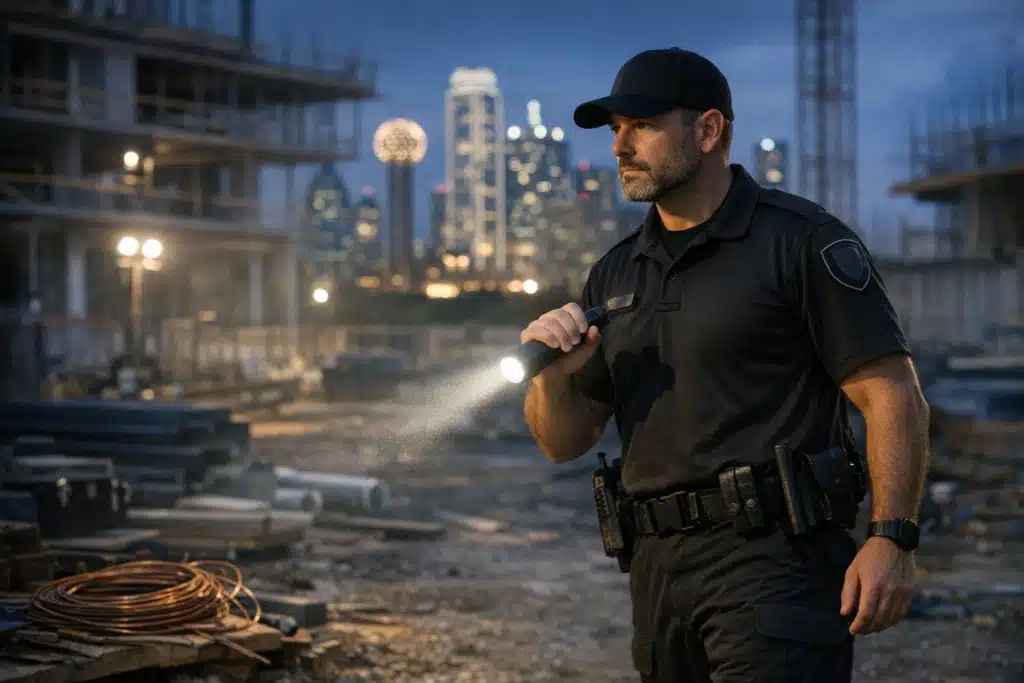
For property managers, three site types absorb most of the damage:
- Multifamily communities — package theft, car burglaries in open lots, and break-ins at vacant units.
- Construction sites — copper wire, catalytic converters, tools, and heavy equipment stolen overnight.
- Retail and mixed-use centers — smash-and-grab, loitering, and after-hours vandalism.
The pattern is consistent. Thieves target sites with poor lighting, no visible monitoring, and predictable gaps in coverage.
Why Apartment Communities See Repeat Incidents
Apartment lots are open by design. Residents come and go at all hours, which masks people who do not belong.
Car break-ins spike between midnight and 4 a.m. A single unmonitored lot can lose six to ten vehicles to break-ins in one night.
Vacant units invite squatting and copper theft. An empty second-floor unit with an unlocked window becomes a target within days.
Why Construction Sites Are the Top Target
Dallas construction activity stays high year-round. That volume creates thousands of exposed sites full of resellable materials.
Copper wire and catalytic converters move fast on resale markets. Thieves strip a site in under an hour, then return the next week if nothing changed.
Most losses happen between Friday night and Monday morning. Crews are gone, and the site sits open for 60 hours.
On-Site Guards vs. Remote Video Surveillance in Dallas
Both approaches cut crime, but they fit different sites and budgets. Here is how property managers weigh the two.
On-Site Security Guards
On-site guards provide a physical presence that stops trespassing before it starts. They handle access control, incident response, and tenant interaction.
Guards work best for:
- Large apartment communities with heavy foot traffic
- Event venues needing crowd management
- Sites with recurring confrontations or trespassing
The tradeoff is cost. A staffed post runs higher per hour than a camera feed, because you pay for a trained person on the ground.
Remote Video Surveillance
Remote video surveillance is live monitoring of camera feeds by trained operators at an off-site center. Operators watch in real time, issue voice warnings, and dispatch police when a threat appears.
This model fits:
- Construction sites with no need for daytime staffing
- Parking lots and perimeters
- Properties covering large areas at lower cost than full guard staffing
The advantage is reach. One operator watches multiple camera zones and speaks directly to intruders over on-site speakers.
When to Combine Both
Many Dallas property managers pair the two. A guard covers peak hours, and remote video watches the overnight window when incidents peak.
An apartment community might staff a guard on weekend nights and run remote monitoring the rest of the week. That mix controls cost without leaving gaps.
How Remote Surveillance Prevents Construction Theft in Dallas
Remote surveillance stops theft before materials leave the site. The key is intervention, not just recording footage after the fact.
Here is how an active monitoring setup works on a Dallas construction site:
- Cameras cover entry points, material storage, and equipment zones. Motion analytics flag movement during off-hours.
- An operator receives the alert in real time. They confirm whether it is a threat or a false trigger like an animal.
- The operator issues a live voice warning over on-site speakers. Most intruders leave the moment they hear a real voice.
- If the person stays, the operator calls Dallas police with a live description and location.
- Footage is logged and time-stamped for insurance and prosecution.
The voice warning stops most incidents at step three. Thieves expecting an empty lot back off when someone describes what they are wearing.
Local Response Time Advantages Property Managers Should Know
Response speed decides whether a threat becomes a loss. A Dallas-based monitoring team knows the streets, the precincts, and the fastest dispatch paths.
Local knowledge matters in concrete ways:
- Operators recognize your neighborhood. They give police accurate cross-streets and entry points.
- Guards familiar with Dallas patrol patterns position themselves where incidents cluster.
- Faster verification means faster dispatch. Police prioritize verified alarms with live confirmation over blind motion triggers.
A verified event with a live description moves up the police queue. That difference can save equipment worth tens of thousands.

 Posted on Google
A Practical Security Checklist for Dallas Property Managers
Use this checklist to assess any site before an incident forces the issue.
- Map your incident history. Pull the last 12 months of reports and mark where and when events happened.
- Audit lighting. Dark corners, back lots, and dumpster areas invite activity.
- Check camera coverage. Confirm feeds are live-monitored, not just recording to a hard drive.
- Control access points. Gates, fencing, and locked vacant units cut easy entry.
- Match coverage to peak risk hours. Most property crime runs midnight to 4 a.m.
- Post visible deterrents. Signage stating a site is monitored reduces first-time attempts.
Run this review twice a year. Crime patterns shift with construction cycles and seasonal traffic.
Signs Your Current Setup Is Failing
Some property management teams keep cameras that no one watches. Recorded footage helps a police report, but it does not stop the crime.
Watch for these red flags:
- Repeat car break-ins in the same lot
- Cut fencing or tampered locks on vacant units
- Tenants reporting strangers after hours
- Cameras that only record, with no live response
Any one of these signals a coverage gap worth fixing before the next incident.
How Twin City Security Dallas Supports Property Managers
Twin City Security Dallas works with apartment communities, construction firms, retail centers, and event venues across the metro. Our teams read local crime patterns and match coverage to each site.
We assess where your risk concentrates, then recommend on-site guards, remote video monitoring, or a mix of both. The goal is stopping incidents, not just documenting them.
Property management teams stay in the loop with incident reports and direct operator contact. You get eyes on your site during the hours that matter most.
Conclusion
Dallas crime trends concentrate on property, and the highest risk falls on apartment lots, construction sites, and retail centers during overnight hours. On-site guards, remote video, and local response speed cut those losses when matched to your specific site.
Get a Dallas security assessment from Twin City Security Dallas. Call or text 972‑385‑1144, email Dallas@twincitysecurity.com, or visit https://www.twincitysecuritydallas.com.
Sources
- Dallas Police Department – Crime Data and Statistics
- FBI – Uniform Crime Reporting Program
- Federal Reserve Bank of Dallas – Regional Construction and Economic Data
Dallas property crime remains a steady problem for commercial and residential sites, with vacant units, parking garages, and construction lots drawing the most incidents. Property managers can reduce losses by combining on-site guards with remote video surveillance matched to peak risk hours.
- Apartment communities face repeat car break-ins between midnight and 4 a.m., while vacant units attract squatting and copper theft within days of becoming empty.
- Construction sites are top targets because copper wire and catalytic converters sell quickly - most losses happen between Friday night and Monday morning when crews are gone.
- Remote video surveillance with live voice warnings stops most intruders before theft occurs, and pairing it with guards during peak hours controls cost without leaving coverage gaps.