
Seasonal Security Challenges for Dallas Shopping Malls
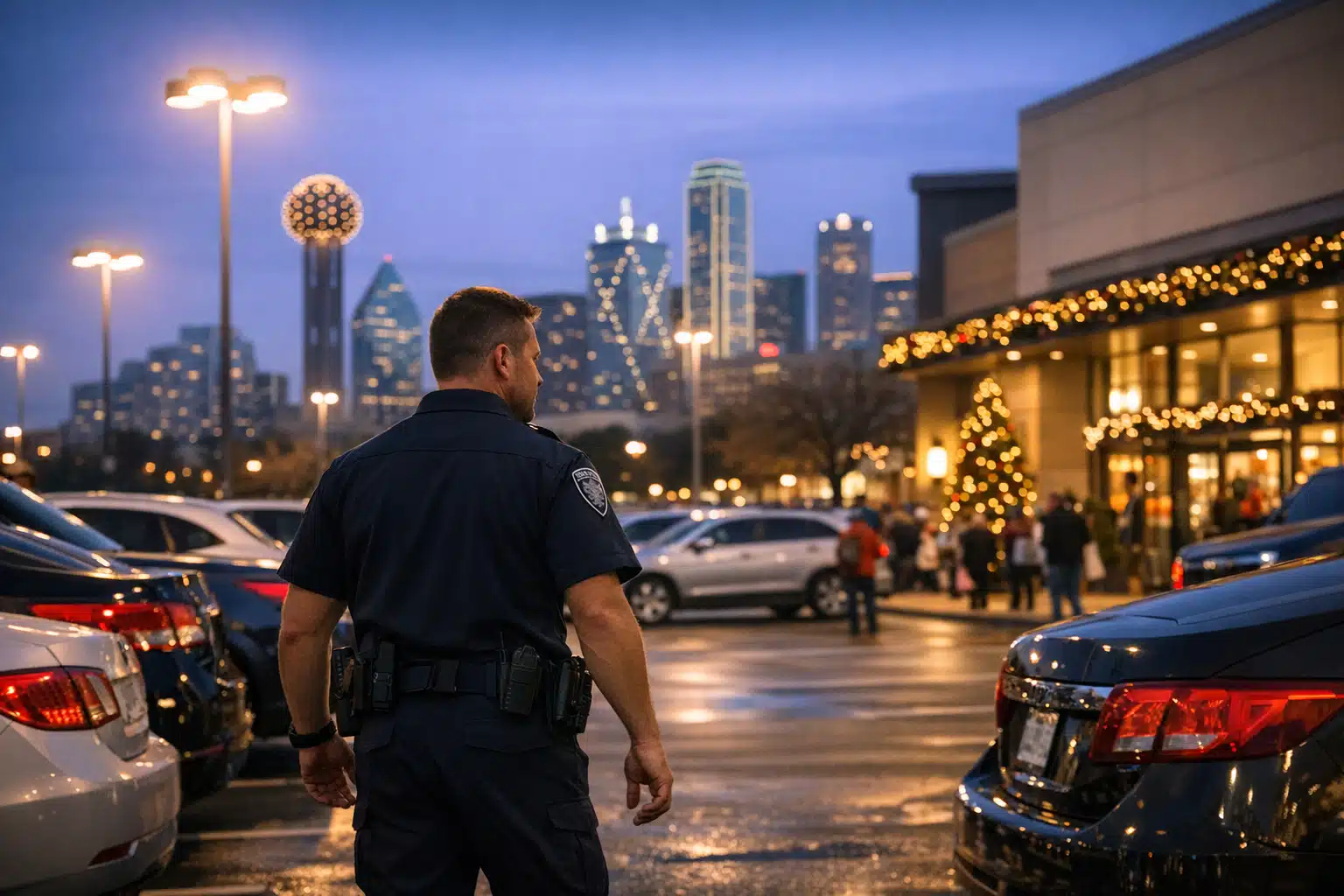
Dallas shopping malls should adapt security measures throughout the year to address changing threats. During the holiday season from November to January, retail theft increases sharply, particularly in parking lots. Mall managers need to shift their security posture each season rather than maintaining a static approach, implementing specific tactics suited to each period's unique risks and customer traffic patterns.
Dallas retail theft climbs sharply between November and January, with mall parking lots accounting for a large share of holiday incidents. Retail security for shopping centers cannot stay static across the calendar. What works in July fails in December. This post breaks down how Dallas mall managers can adjust their security posture season by season, with concrete tactics for each period.
Every season brings a different threat profile. Foot traffic, weather, staffing, and crime patterns all shift. A fixed security plan leaves gaps that shoplifters, car burglars, and organized retail crime crews exploit.
Why Retail Security Must Change With the Seasons in Dallas
Shopping mall risk is not constant. It rises and falls with traffic, daylight hours, and shopper behavior. Dallas weather adds its own pressure, from summer heat to sudden winter storms.
Seasonal security means matching guard coverage, camera focus, and patrol routes to the threats each period actually produces. A mall running the same plan in February and December is overspending in one and underprepared in the other.
The Four Risk Periods for Dallas Malls
- Holiday peak (November–January): Crowds, cash, and packed parking lots
- Spring break and Easter (March–April): Youth traffic and crowd management
- Summer (June–August): Heat, loitering, and after-hours vandalism
- Back-to-school (August–September): Traffic spikes and shoplifting rebounds
Holiday Season: The Highest-Risk Period for Dallas Retail Security
The holiday stretch produces the most incidents of any season. Parking lots fill with unattended vehicles holding wrapped merchandise. Crowds give thieves cover.
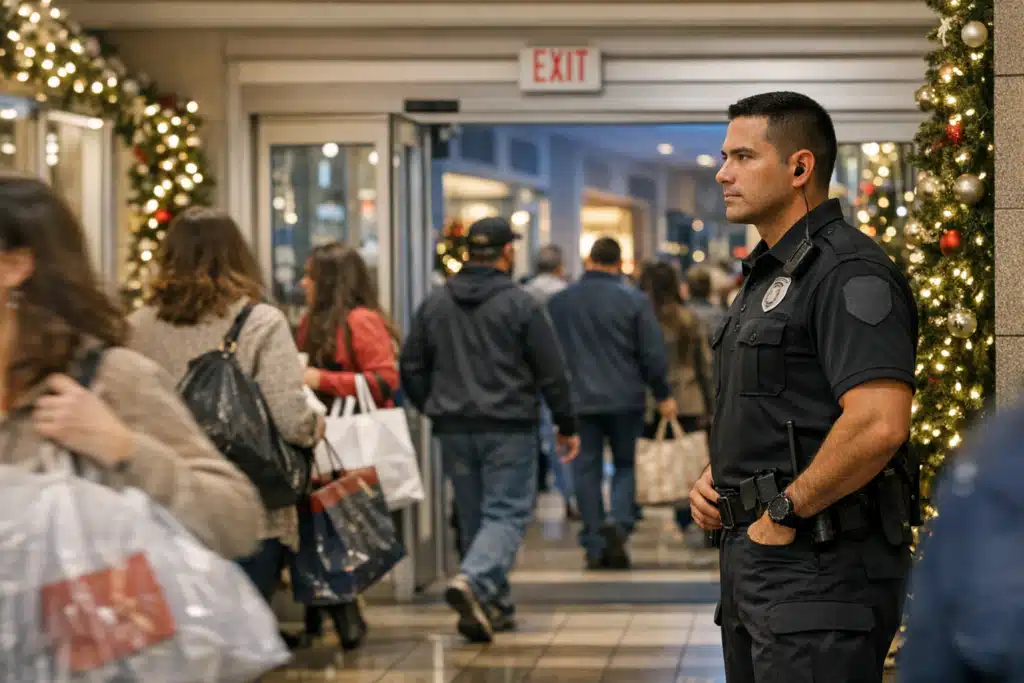
Organized retail crime crews target Dallas malls in December. They work in teams, hit multiple stores fast, and use the exits nearest their vehicles.
Holiday Security Tactics That Work
- Add parking lot patrols after 4 p.m. Most vehicle break-ins happen in the dark hours before closing.
- Position guards near exit corridors. Fast-exit theft depends on quick escapes.
- Use remote video to cover blind spots. Cameras watch loading docks and back rows that guards cannot reach.
- Coordinate with tenant loss-prevention teams. Shared radio channels cut response time.
- Stage a visible presence at mall entrances. Uniformed guards deter opportunists before they enter.
Remote video surveillance matters most here. A monitored camera network spots a crew loading a cart into a vehicle and alerts guards in real time.
Parking Lot Safety During the Holidays
Parking structures are the weak point in most Dallas malls. Poor lighting and long sightlines invite vehicle burglary and confrontation.
Guards on foot and in marked vehicles reduce lot incidents. Cameras with active monitoring extend that coverage to every level of a garage.
Spring: Managing Crowds and Youth Traffic
Spring break fills Dallas malls with unsupervised teens. Large groups create crowd-control demands and raise the odds of disturbances.
Malls sometimes enter these weeks with holiday staffing already cut. That gap is where problems start.
Spring Security Adjustments
- Keep weekend guard counts near holiday levels during break weeks
- Enforce youth escort policies for evening hours if your center uses them
- Watch food courts and common areas where groups gather
- Monitor entrances for group loitering that blocks shopper flow
Clear policies help. A posted parental escort rule after 6 p.m. reduces friction and gives guards a defined standard to apply.
Summer: Heat, Loitering, and After-Hours Risk
Dallas summer heat pushes people indoors. Malls become cooling spots, which raises loitering and non-shopper traffic.
Heat also strains guards working outdoor posts. Rotation schedules protect staff and keep coverage sharp.
Summer Threats to Watch
After-hours vandalism and property damage climb in summer. Empty lots at night draw trespassing and graffiti.
Remote video surveillance covers closed hours without paying for overnight guard shifts at every point. A monitored system flags motion in a dark lot and dispatches response only when needed.
Balancing Guard Costs and Remote Coverage
Summer is the right time to compare on-site and remote options. On-site guards handle live crowds and confrontations. Remote monitoring watches empty spaces at a lower hourly cost.
A blended plan uses guards during open hours and monitored cameras overnight. This keeps Dallas malls covered around the clock without doubling payroll.
Back-to-School: The Second Traffic Spike
Late summer brings a shopping surge as families buy clothes and supplies. Shoplifting rebounds with the crowds.
Electronics and apparel stores see the sharpest theft increases in August. Fitting rooms and high-value display areas need extra eyes.
Back-to-School Tactics
- Restore weekend guard levels to match traffic
- Focus patrols on anchor stores and electronics retailers
- Watch fitting-room corridors where concealment happens
- Track repeat visitors flagged by tenant loss prevention

 Posted on Google
How Remote Surveillance Supports Seasonal Retail Security
Remote video surveillance is a monitored camera network watched by trained operators off-site. Operators verify alarms, spot suspicious activity, and dispatch response.
For Dallas malls, this fills gaps that guards alone cannot. Cameras cover every entrance, garage level, and dock at once.
What Remote Monitoring Adds Each Season
- Holidays: Real-time detection of fast-exit theft and lot break-ins
- Spring: Wide coverage of common areas during crowd surges
- Summer: Overnight watch on empty lots and closed entrances
- Back-to-school: Extra eyes on high-theft store fronts
Response time drives value. A local Dallas monitoring team dispatches faster than a distant call center. Minutes matter when a crew is loading a vehicle.
Building a Year-Round Seasonal Security Plan
A strong plan flexes with the calendar. It scales guard hours up for peaks and leans on remote coverage during slow, empty periods.
Follow these steps to build one for your Dallas mall:
- Map your traffic by month. Use sales and foot-count data to find peaks.
- Match guard staffing to traffic. Add hours for holidays and back-to-school.
- Layer remote monitoring for off-hours. Cover empty lots without overnight payroll.
- Review incident logs quarterly. Adjust patrols to where problems actually occur.
- Coordinate with local police. Share crime trends and response contacts.
Review the plan four times a year. Each season teaches something the logs will show.
Conclusion
Dallas malls face different threats each season, from holiday lot break-ins to summer after-hours vandalism. A security plan that flexes with traffic and weather stops the gaps a fixed plan leaves open. Blending on-site guards with remote video keeps costs controlled while coverage stays sharp.
Twin City Security Dallas builds seasonal security plans for shopping centers across the metro. Call or text 972‑385‑1144, email Dallas@twincitysecurity.com, or visit https://www.twincitysecuritydallas.com for a Dallas mall security assessment.
Sources
- Dallas Police Department – Crime Statistics and Reports
- National Retail Federation – National Retail Security Survey
- FBI – Organized Retail Crime
Dallas malls face distinct security threats each season, from holiday parking lot break-ins to summer after-hours vandalism. A flexible security plan that adjusts guard staffing and remote video monitoring to match traffic patterns helps close gaps that fixed approaches leave open.
- The holiday period from November to January brings the highest risk, with organized theft crews targeting crowded malls and packed parking lots holding unattended vehicles with merchandise.
- Spring break increases youth traffic and crowd control demands, while summer heat drives loitering and after-hours property damage in empty lots.
- Back-to-school shopping in late summer causes shoplifting to rebound, especially in electronics and apparel stores. Blending on-site guards with remote camera monitoring controls costs while maintaining coverage.