
The Role of Security Guards in Enhancing Dallas Retail Store Safety
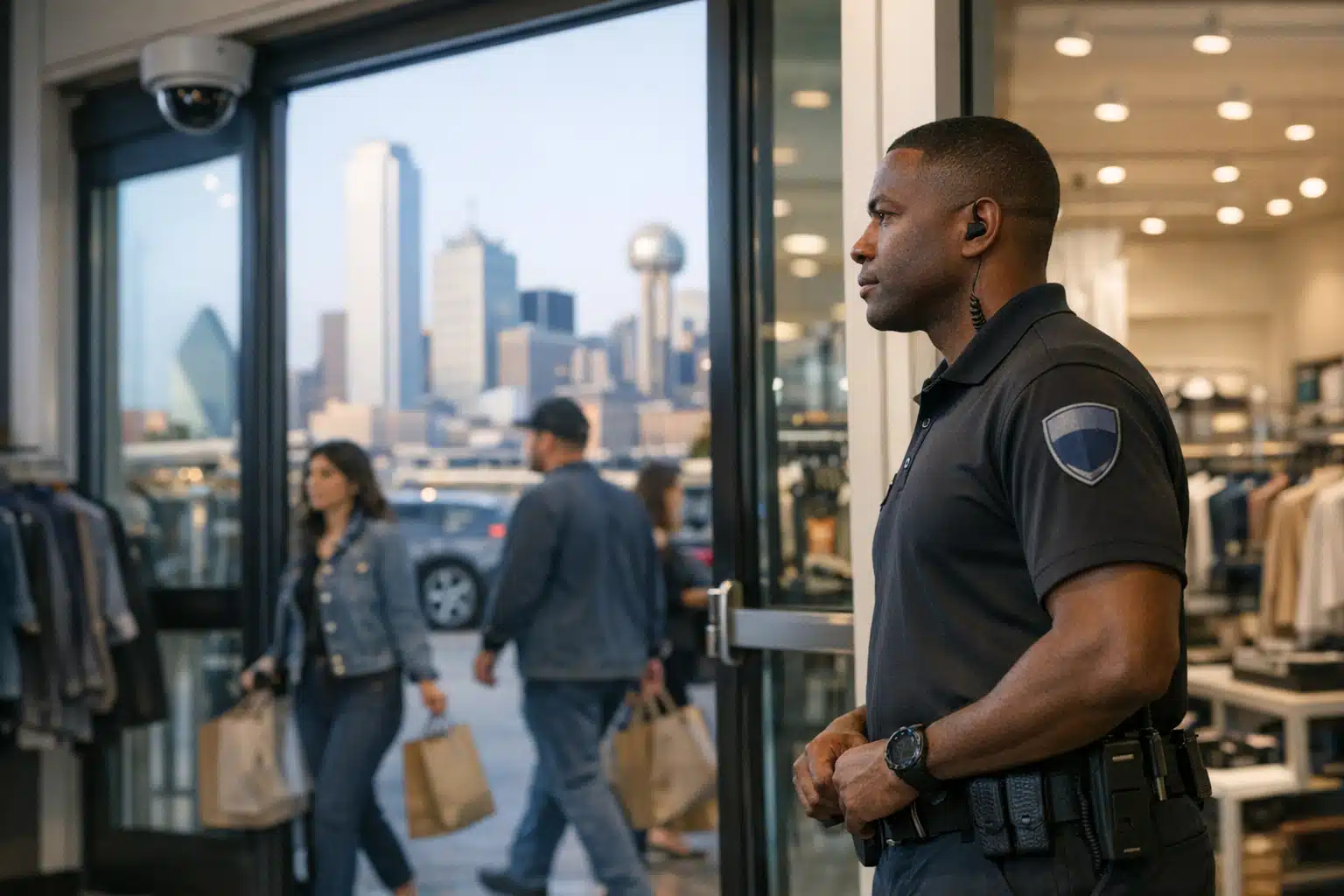
Security guards play a key role in retail store safety by deterring theft, monitoring customer and employee activity, and responding to incidents as they happen. They help reduce shrinkage through visible presence and surveillance, de-escalate confrontations before they turn violent, and create a safer shopping environment that encourages customers to return.
Retail theft cost U.S. stores over $112 billion in a single year, and Dallas businesses feel the pressure firsthand. Retail security has become a line-item concern for owners along Preston Road, in Deep Ellum, and across the Galleria corridor. This post breaks down the exact tactics guards use to stop shrinkage, calm confrontations, and keep customers coming back.
You will learn how a trained presence changes shopper behavior, what a guard does during a shift, and how to decide between on-site and remote coverage for your store.
Why Retail Security Matters for Dallas Store Owners
Dallas ranks among the Texas cities with the highest reported property crime volume. Retail storefronts sit directly in that risk path.
Organized retail theft crews target high-turnover corridors like Northwest Highway and the Bishop Arts District. They work in groups, distract staff, and clear shelves in under two minutes.
A visible guard breaks that pattern before it starts. Theft crews scout for easy targets. A uniformed presence at the entrance moves your store off their list.
The Real Cost of an Unprotected Storefront
- Inventory shrinkage eats directly into margins that already run thin in retail.
- Employee turnover rises when staff feel unsafe after repeated incidents.
- Insurance premiums climb after multiple theft or liability claims.
- Foot traffic drops when shoppers sense a store is unsafe.
One incident rarely stays isolated. Word spreads among crews that a location is soft.
Specific Tactics Security Guards Use in Dallas Retail Settings
Guards do far more than stand at a door. Trained retail officers apply repeatable methods that stop losses before they happen.
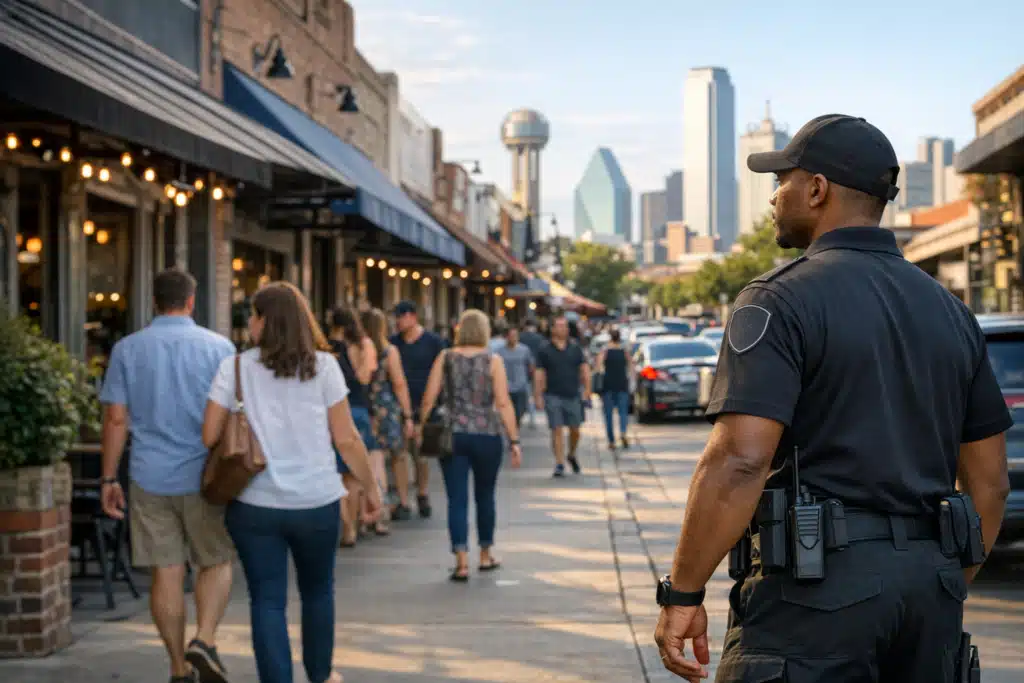
1. Positioning at Choke Points
A guard stationed near the entrance and exit controls the two spots where theft is completed. Most shoplifters must pass a fixed point to leave with stolen goods.
Guards watch the exit, not the whole floor. This narrows their focus to the moment theft becomes real.
2. Customer Contact as Deterrence
A simple greeting changes shopper psychology. When a guard makes eye contact and says hello, a would-be thief knows they have been seen.
This tactic, sometimes called the acknowledgment method, reduces theft without confrontation. It works in high-end boutiques and grocery chains alike.
3. Reading Behavior Cues
Experienced Dallas guards spot the tells that precede theft:
- Shoppers who watch staff more than merchandise
- Groups that split up and reconnect near high-value shelves
- Bulky clothing worn in warm Texas weather
- Repeated visits to the same aisle without buying
Pattern recognition beats reaction. A guard who reads cues intervenes before goods leave the shelf.
4. Managing Confrontation Safely
Texas law limits how and when a guard can detain a suspect. Licensed officers follow shopkeeper’s privilege rules under the Texas Occupations Code.
A trained guard de-escalates verbal conflict, protects staff, and documents the incident for police. Untrained intervention creates liability. Proper training removes it.
5. Closing and Opening Coverage
Robberies cluster around opening and closing hours. Staff carry cash, doors stay unlocked, and lots empty out.
A guard escorting employees to their cars removes the most dangerous window. Parking lot presence matters as much as floor presence.
On-Site Guards vs. Remote Video Surveillance for Dallas Retail
Both models protect stores. The right choice depends on store size, hours, and budget.
When On-Site Guards Fit Best
On-site officers work best for stores with high foot traffic, valuable inventory, or a history of theft. A physical presence deters crime and reassures customers at the same time.
Choose on-site coverage when:
- Your store sells small, high-value items like electronics or jewelry
- You operate in a corridor with repeat theft incidents
- Staff have reported feeling unsafe
- You need customer-facing conflict management
When Remote Surveillance Fits Best
Remote video surveillance uses monitored cameras watched by trained operators off-site. Operators speak through live speakers and dispatch response when they spot a threat.
Choose remote monitoring when:
- You need coverage across a large parking lot or multiple entrances
- Your store closes but the property needs after-hours watch
- You want lower cost per hour of coverage
- Theft risk peaks at night rather than during business hours
Combining Both for Full Coverage
Many Dallas retailers pair a daytime guard with overnight remote monitoring. This covers business hours with a human presence and after-hours with camera oversight.
The pairing lowers total cost. You pay for on-site staff only when foot traffic justifies it.
How to Build a Retail Security Plan for Your Dallas Store
To protect your store effectively in Dallas, follow these steps:
- Map your loss points. Identify which aisles, exits, and hours produce the most shrinkage.
- Review incident history. Pull past theft reports and note patterns in time and method.
- Match coverage to risk. Assign on-site guards to high-traffic hours and cameras to off-hours.
- Train staff on guard coordination. Employees should know how to signal a guard discreetly.
- Document every incident. Clean records support police cases and insurance claims.
- Review quarterly. Adjust coverage as theft patterns shift with seasons and sales.
Holiday season shifts risk sharply. Dallas retailers see theft spike from November through December as foot traffic and inventory both rise.

 Posted on Google
Why Local Response Time Matters in Dallas
A guard already on your floor responds in seconds. Police response times in parts of Dallas can stretch during peak call volume.
Seconds decide whether goods leave the building. An on-site officer closes that gap entirely.
Local guards also know the area. They recognize repeat offenders, coordinate with nearby store security, and understand which corridors draw organized crews.
What to Ask Before Hiring Retail Security in Dallas
Not all providers meet Texas standards. Ask direct questions before you sign.
- Are your guards licensed under the Texas Department of Public Safety?
- What retail experience do your officers carry?
- How do you handle detainment and confrontation legally?
- Can you combine on-site and remote coverage?
- What reporting will I receive after each shift?
Clear answers separate a real provider from a staffing agency with no retail training.
Conclusion
Retail security in Dallas works best when guards apply proven tactics: entrance positioning, customer acknowledgment, behavior reading, and safe confrontation management. Pairing on-site officers with remote monitoring covers both business hours and off-hours at a lower total cost.
Twin City Security Dallas builds coverage plans around your store’s real loss points and hours. Call or text 972-385-1144, email Dallas@twincitysecurity.com, or visit https://www.twincitysecuritydallas.com for a store security assessment.
Sources
- National Retail Federation – National Retail Security Survey
- Texas Department of Public Safety – Private Security Program
- Texas Occupations Code – Chapter 1702 Private Security
- FBI – Uniform Crime Reporting Program
Retail theft cost U.S. stores over $112 billion in one year, and Dallas businesses face significant pressure from organized theft crews targeting high-traffic corridors. Security guards use specific tactics to reduce shrinkage, manage confrontations, and maintain customer confidence.
- Guards position themselves at choke points like entrances and exits where theft is completed. Simple greetings and eye contact deter potential thieves by signaling they have been noticed.
- Experienced officers read behavioral cues such as watching staff instead of merchandise or wearing bulky clothing in warm weather. They follow Texas shopkeeper's privilege rules for safe detainment.
- Dallas retailers often combine daytime on-site guards with overnight remote video monitoring. This approach covers business hours with physical presence while reducing total security costs.