
The Impact of Increased Tourism on Dallas Security Needs
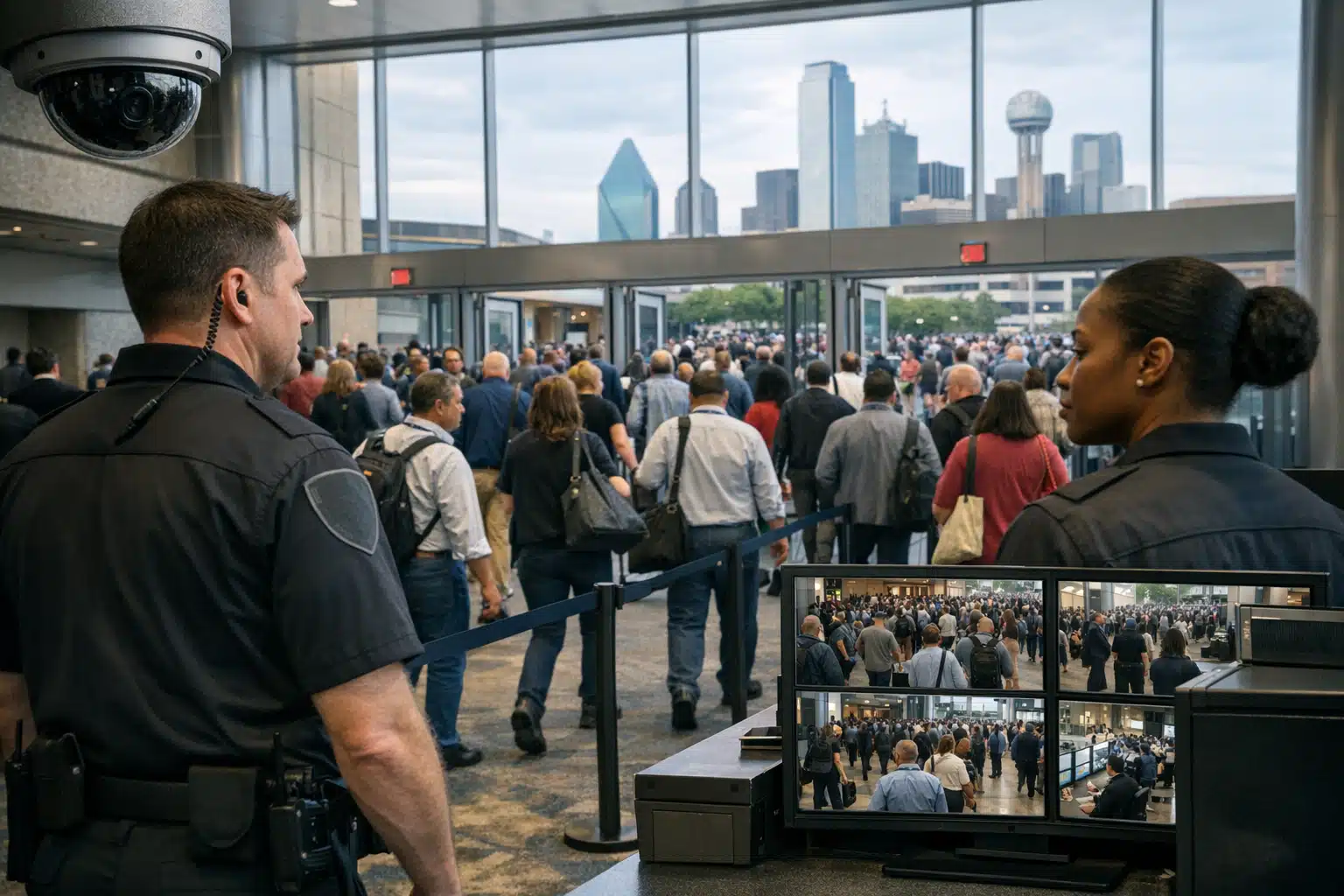
Dallas welcomed more than 27 million visitors in 2023, according to Visit Dallas. That volume reshapes tourism security needs for every hotel, event space, and retail corridor in the metro. Visitor crowds bring foot traffic, cash flow, and crime patterns that differ from a typical business day. This post breaks down how rising tourism changes risk for Dallas properties and what owners can do about it.
Twin City Security Dallas works these sites during peak seasons. The examples below reflect patterns we see on the ground.
Why Tourism Changes the Dallas Security Picture
Tourists concentrate in predictable spots. Downtown hotels, the Arts District, Deep Ellum, and the Convention Center see sharp spikes during conventions and sporting events.
Crowd density drives specific problems:
- Pickpocketing and theft rise where distracted visitors gather.
- Vehicle break-ins climb in hotel and garage lots full of rental cars.
- Vandalism and loitering increase around nightlife districts after events.
- Fraud and scams target out-of-town guests unfamiliar with the area.
Dallas property crime remains a steady concern. The Dallas Police Department’s public crime data shows thousands of theft and burglary reports each month citywide.
Visitors rarely report minor crimes before leaving town. That gap means tourism-related losses stay underreported and often go unaddressed.
How Tourism Security Differs From Routine Protection
Tourism security is protection planned around visitor volume, event schedules, and unfamiliar crowds. It accounts for people who do not know your property or neighborhood.
Routine business protection assumes known employees and steady traffic. Tourism periods flip that assumption. You face large groups of strangers moving in short, intense windows.
Peak Event Scenarios in Dallas
Certain events predictably strain local protection:
- Conventions at Kay Bailey Hutchison Convention Center fill downtown hotels overnight.
- State Fair of Texas brings millions to Fair Park across several weeks each fall.
- Major sporting events at AT&T Stadium and American Airlines Center pull crowds into bars and parking zones.
- Holiday shopping surges at NorthPark Center and Galleria Dallas draw regional and out-of-state buyers.
Each event demands staffing that scales up fast, then scales back down. Fixed, year-round coverage alone cannot match that rhythm.
On-Site Guards vs. Remote Surveillance for Visitor Crowds
Both methods have clear roles during tourism peaks. The right mix depends on your property type and visitor flow.
When On-Site Guards Work Best
On-site guards suit high-contact settings where a visible presence deters crime. People behave differently when a uniformed officer is watching.
Strong fits include:
- Hotel lobbies and entrances during convention check-in rushes
- Event venues managing entry points and crowd flow
- Retail floors during holiday shopping spikes
- Parking structures where confrontations may occur
Guards handle live decisions. They direct lost visitors, de-escalate disputes, and respond to incidents in seconds.
When Remote Video Surveillance Works Best
Remote video surveillance is live monitoring of camera feeds by trained operators at an off-site center. Operators watch multiple zones at once and alert authorities when needed.
This method fits:
- Large parking lots with scattered vehicle break-in risk
- Perimeters of event venues after hours
- Hotel garages and loading docks
- Properties covering wide ground with few entry points
Remote monitoring costs less than posting guards across every acre. One operator can cover areas that would need several officers on foot.
Cost Comparison for Dallas Properties
On-site guards carry higher hourly costs because each post needs a person. Remote surveillance spreads one operator’s time across many camera zones.
A practical approach pairs both:
- Guards at human-contact points like entries and lobbies
- Remote cameras on perimeters, lots, and low-traffic zones
This split controls cost without leaving blind spots during visitor surges.
Local Response Time Advantages Matter During Events
Dallas police response times stretch during large events. Officers get pulled toward crowd control and traffic management.
Private security fills that gap. On-site teams respond immediately, and remote operators flag incidents the moment they start.
Faster response reduces loss. A theft caught on live camera and reported within seconds has a far better chance of recovery.
Steps to Prepare Your Property for Tourism Season
To protect your Dallas property during visitor peaks, follow these steps:
- Map your crowd windows. Identify which events and dates drive your foot traffic.
- Audit your blind spots. Walk your lots, entries, and perimeters to find weak coverage.
- Match coverage to risk. Place guards at contact points and cameras on wide zones.
- Scale staffing by date. Add guards for peak windows, not the full calendar.
- Brief your team on visitor behavior. Train staff to spot lost guests, scams, and distracted-target theft.
- Set a direct escalation path. Define who calls police and when.
Each step reduces the chance that a visitor crowd turns into a loss event.

 Posted on Google
Dallas Security Challenges Specific to Visitors
Dallas security planning must account for people who cannot read warning signs about local risks. Tourists leave valuables in rental cars and walk unfamiliar streets at night.
Common visitor-driven incidents include:
- Smash-and-grab theft from rental vehicles
- Room and bag theft during hotel lobby congestion
- Aggressive panhandling near entertainment districts
- After-hours loitering around event venues
Addressing these needs a plan built for strangers, not just regular patrons.
Matching Security to Your Property Type
Different properties face different tourism pressures. Here is how coverage shifts by type.
Hotels and Hospitality
Hotels need lobby guards during check-in surges and camera coverage on floors and garages. Visitor turnover makes access control a daily concern.
Event Venues
Venues need entry screening, crowd flow management, and perimeter monitoring. Staffing must scale with each event’s size.
Retail Centers
Shopping centers need floor presence during peak hours and lot surveillance against vehicle crime. Holiday seasons demand the most coverage.
Construction and Mixed-Use Sites
Growth near tourist zones draws theft of materials and equipment. Remote cameras watch these sites overnight at lower cost than guard patrols.
Conclusion
Rising tourism concentrates crowds, cash, and crime risk into short windows across Dallas. The strongest protection pairs on-site guards at contact points with remote video surveillance across wide zones. Scaling coverage to event dates keeps costs in line while closing visitor-driven gaps.
Twin City Security Dallas staffs hotels, venues, and retail properties during peak visitor seasons. For a property assessment or monitoring quote, call or text 972‑385‑1144, email Dallas@twincitysecurity.com, or visit https://www.twincitysecuritydallas.com.
Sources