
How to Safeguard Dallas-Based Retailers Against Organized Crime
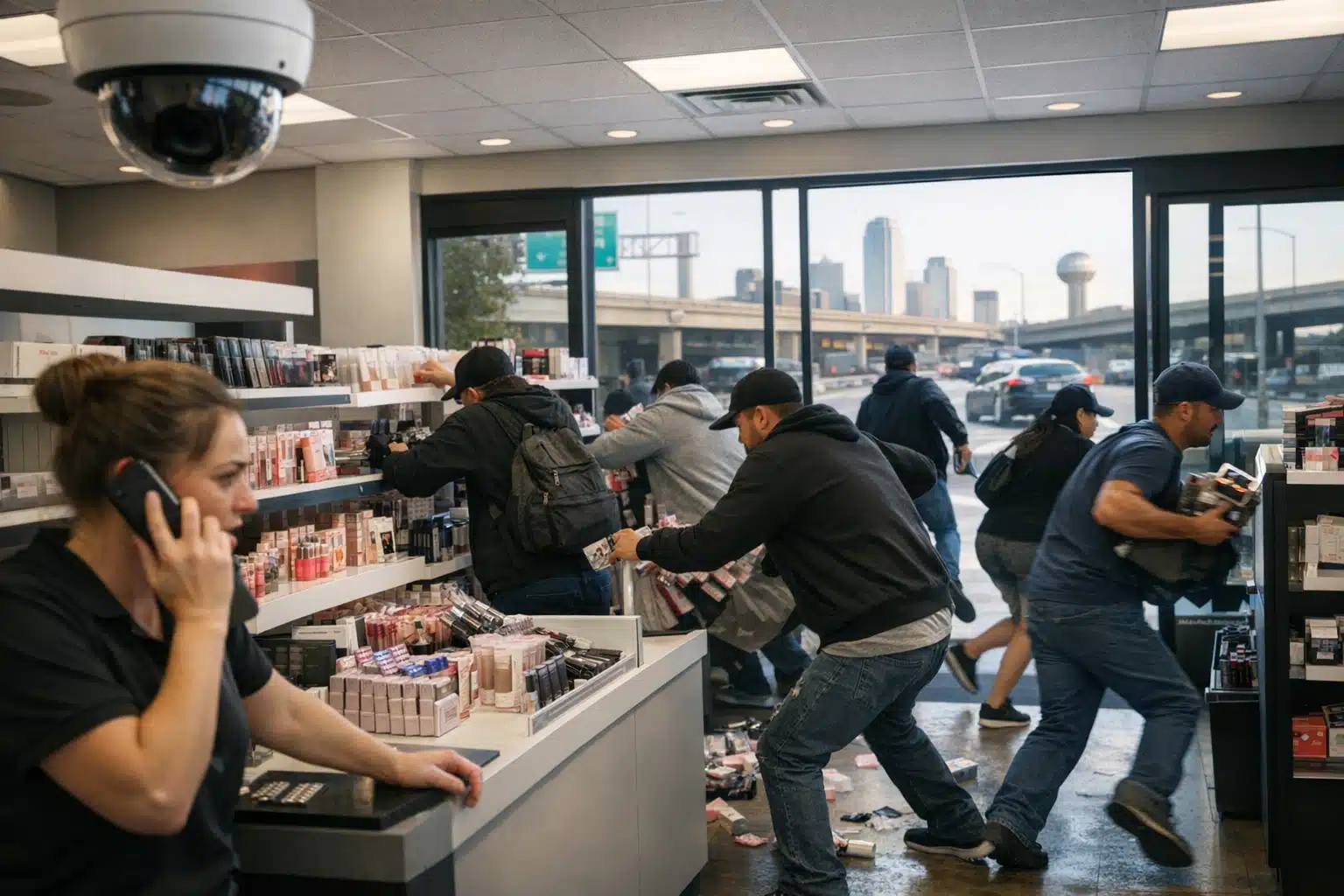
Dallas retailers can protect against organized retail crime by implementing layered security measures including professional security personnel, advanced surveillance systems, and employee training programs. Effective strategies combine visible deterrents at entry points with loss prevention technology and coordination with local law enforcement to identify and stop theft crews before they can target merchandise.
Organized retail crime cost Texas businesses more than $1 billion in recent years, and Dallas storefronts along corridors like Preston Road and Northwest Highway feel the pressure firsthand. Strong retail security is what separates a store that loses inventory weekly from one that stops theft crews before they reach the shelves. This post breaks down the exact tactics Dallas retailers use to fight back against organized crime.
You will learn how booster crews operate, which defenses stop them, and how on-site and remote coverage compare for local stores.
What Organized Retail Crime Looks Like in Dallas
Organized retail crime is theft carried out by coordinated groups, not lone shoplifters. These crews target high-resale goods and move fast.
Dallas retailers see repeat patterns. Groups hit stores near highway on-ramps for quick I-635 and I-35E escape routes.
Common Tactics Dallas Stores Report
- Flash-mob grab-and-runs where 6 to 12 people clear shelves in under 90 seconds
- Booster bags lined with foil to defeat electronic tags
- Distraction teams that pull staff to one aisle while others load merchandise
- Cargo and delivery theft at loading docks during shift changes
- Return fraud rings using stolen goods and fake receipts
Beauty stores, pharmacies, and electronics retailers get hit hardest. Detergent, razors, and designer bags resell quickly online.
Why Retail Security Matters More for Dallas Storefronts
Retail security matters because Dallas theft crews study your weak points before they strike. They watch camera placement, staffing gaps, and exit layouts.
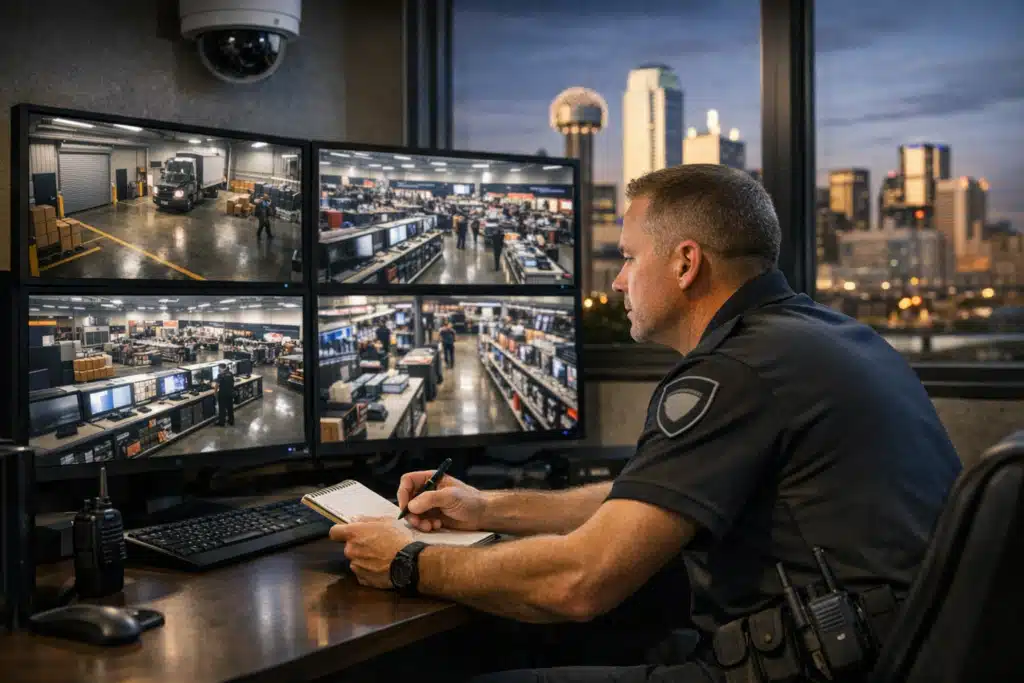
A store with visible deterrence rarely becomes a repeat target. Crews move on to easier locations.
The Cost of Doing Nothing
Unprotected stores face more than lost inventory. They face rising insurance premiums and staff turnover from unsafe conditions.
One theft event can trigger copycat hits. Crews share store details, and a soft target gets flagged fast.
How Remote Video Surveillance Stops Organized Theft in Dallas
Remote video surveillance is live monitoring of your store by trained agents watching feeds off-site in real time. When they spot a crew forming, they act before goods leave the building.
This differs from a passive camera that only records. Recorded footage helps after a loss. Live monitoring prevents it.
How Live Monitoring Works in Practice
- Cameras cover entrances, high-theft aisles, and loading docks
- Agents watch feeds and flag suspicious grouping or bag behavior
- A speaker system issues a live voice warning to the crew
- Agents alert store staff and Dallas police at the same time
- Timestamped footage is saved for prosecution
The live voice-down is the part crews hate most. A human calling out their exact location breaks their plan instantly.
Why Local Response Time Wins
Dallas theft events unfold in seconds. A monitoring team that knows local police districts routes alerts faster.
Twin City Security Dallas agents understand which precinct covers your ZIP code. That local knowledge cuts precious response minutes.
On-Site Guards vs. Remote Monitoring: What Dallas Retailers Should Weigh
Both methods stop organized crime, but they fit different store types. Cost and layout drive the decision.
On-Site Security Guards
A uniformed guard at the door stops most grab-and-run crews cold. Visible presence is the strongest deterrent for street-level theft.
- Best for large-format stores, malls, and high-traffic corridors
- Strength physical presence and immediate intervention
- Cost higher hourly rate, staffed shifts
Remote Video Surveillance
Live monitoring covers more square footage per dollar. One agent watches several camera zones at once.
- Best for multi-aisle stores, docks, and after-hours coverage
- Strength wide coverage and voice-down deterrence
- Cost lower than round-the-clock guards
The Combined Model Most Dallas Stores Use
Many retailers pair a daytime guard with overnight remote monitoring. This covers peak theft hours without overstaffing.
A guard handles the sales floor by day. Remote agents watch the perimeter and docks after close.
A Step-by-Step Plan to Harden Your Dallas Store
To reduce organized retail crime at your Dallas location, follow these steps in order.
- Map your high-theft zones. Track which products vanish and when
- Fix camera blind spots. Cover both entrances and rear exits
- Add live voice-down speakers. Real-time warnings stop crews mid-act
- Position visible deterrence. A guard or clear signage at the door
- Train staff on de-escalation. Staff should never chase crews outside
- Log every incident. Patterns help police link repeat offenders
- Coordinate with neighbors. Share crew descriptions along your corridor
Step seven matters most in Dallas retail districts. Crews hit multiple stores in one strip. Shared alerts warn the next target.
Protecting Loading Docks and Back Entrances
Docks are where cargo theft happens during shift changes. Crews time hits to the gap between deliveries.
Live monitoring of the dock closes that window. Agents watch the exact minutes staff are stretched thin.

 Posted on Google
What to Ask Before Hiring Retail Security in Dallas
Not every provider understands Dallas theft patterns. Ask direct questions before you sign.
- Do your agents know local police districts and response areas?
- Is monitoring live, or only recorded playback?
- Can you add live voice-down warnings to my cameras?
- How fast do you escalate a flash-mob event?
- Do you provide court-ready footage for prosecution?
The answers reveal whether a provider prevents theft or only documents it. Prevention protects your margins.
Documentation That Supports Prosecution
Dallas prosecutors need clear, timestamped footage to charge crew members. Grainy recordings rarely lead to convictions.
Twin City Security Dallas keeps footage organized for police follow-up. Strong evidence turns one arrest into a broken crew.
Building a Long-Term Defense Against Organized Crime
Stopping organized crime is ongoing work, not a one-time fix. Crews adapt, and your defense should adapt too.
Review your incident logs each quarter. Shift camera angles and guard positions as theft patterns move.
Stores that stay unpredictable stay protected. Crews want certainty, and a changing defense denies it.
Conclusion
Organized retail crime in Dallas is coordinated and fast, but the right mix of live monitoring, visible guards, and local response stops it. Combine on-site presence with remote surveillance, harden your docks, and keep evidence prosecution-ready. Twin City Security Dallas builds defense plans around your store layout and local theft patterns.
For a Dallas security assessment or monitoring quote, call or text 972‑385‑1144, email Dallas@twincitysecurity.com, or visit https://www.twincitysecuritydallas.com.
Sources
- National Retail Federation – National Retail Security Survey
- Dallas Police Department – Crime Data and Reporting
- Texas Department of Public Safety – Crime Records
Organized retail crime has cost Texas businesses over $1 billion, with Dallas storefronts along major corridors facing coordinated theft crews that target high-resale goods and use quick highway escape routes.
- Theft crews use tactics like flash-mob grab-and-runs, foil-lined booster bags, distraction teams, and return fraud rings - targeting beauty stores, pharmacies, and electronics retailers most often.
- Live remote video surveillance with voice-down warnings stops crews mid-act, while on-site guards provide visible deterrence - many Dallas retailers combine daytime guards with overnight remote monitoring.
- Retailers should map high-theft zones, fix camera blind spots, train staff on de-escalation, log incidents, and coordinate with neighboring stores to share crew descriptions along retail corridors.