
Understanding Remote Video Surveillance for Dallas’s Industrial Parks
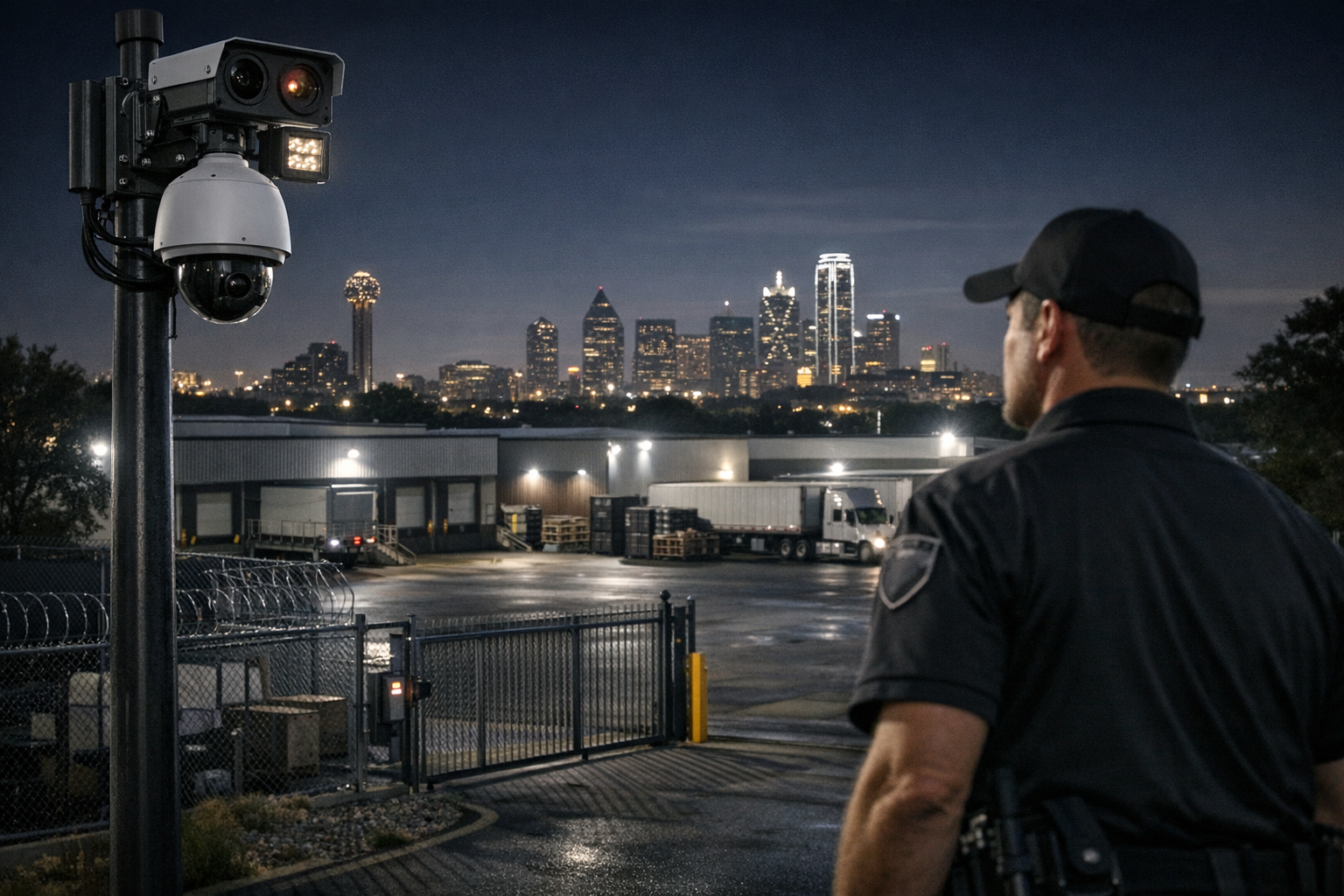
Remote video surveillance is a security system that uses strategically placed cameras monitored off-site by trained professionals in real-time. For industrial parks, this technology provides continuous protection of warehouses, storage yards, and equipment without requiring guards on location. Operators can detect threats, trigger audio warnings, and alert local authorities instantly when suspicious activity occurs.
Industrial theft in Dallas spikes during long weekends and overnight hours, when warehouses and storage yards sit empty. Copper wire, catalytic converters, heavy equipment, and raw metals draw thieves to poorly watched lots. Industrial park security needs more than a locked gate and a lone patrol car. This post breaks down how remote video surveillance protects large Dallas facilities, what it costs compared to on-site guards, and how to set it up right.
What Remote Video Surveillance Means for Industrial Parks
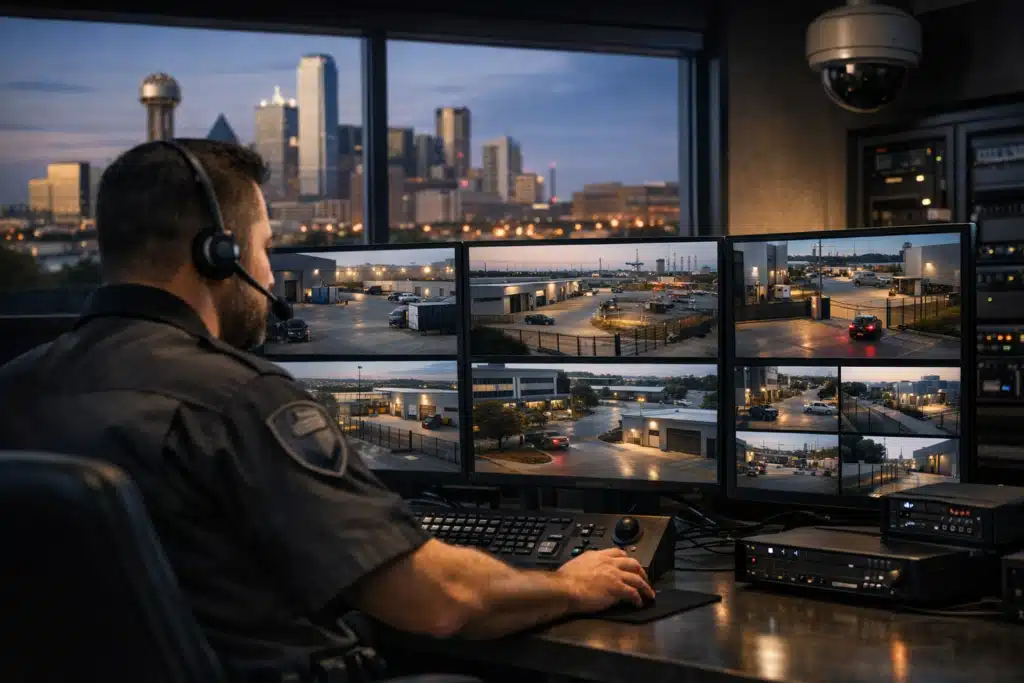
Remote video surveillance is a system where trained operators watch live camera feeds from an off-site monitoring center. When they spot a trespasser, they respond in real time. They can trigger audio warnings, alert police, and record evidence.
For a sprawling Dallas industrial park, this matters. A single property can cover 10 to 40 acres with multiple buildings, loading docks, and fenced storage.
One guard on foot cannot cover that ground. Cameras with live operators can watch every corner at once.
How the System Works Step by Step
- Cameras scan the property. Thermal and infrared units detect movement in total darkness.
- Analytics flag activity. Software separates a person climbing a fence from a stray dog or blowing trash.
- A live operator verifies the threat. No false alarm wastes a police trip.
- Audio warnings fire first. A speaker tells the intruder they are being recorded and watched.
- Police get a verified call. Dallas officers prioritize confirmed crimes in progress.
Most intruders leave the moment a voice calls them out by location. That alone stops the majority of break-in attempts.
Why Industrial Park Security in Dallas Needs More Than Fences
Industrial parks hold high-value, easy-to-resell goods. Scrap metal, electronics, fuel, tools, and fleet vehicles move fast on the black market.
Dallas sits on major freight corridors near I-35, I-20, and I-45. Thieves use these routes to haul stolen material out of the county quickly.
Perimeter fencing slows nobody with bolt cutters. Motion lights help, but empty lots stay empty after the lights come on.
The gap is verification and speed. A camera that only records gives you footage after the loss. Remote monitoring stops the loss while it happens.
Common Theft Scenarios at Dallas Facilities
- Catalytic converter cuts from parked fleet trucks on weekends.
- Copper wire stripping at construction-adjacent lots and electrical yards.
- Trailer and container theft during shift-change blind spots.
- Diesel fuel siphoning from staged equipment overnight.
- Scrap and pallet grabs from open storage areas near rear fence lines.
Each of these happens in minutes. Each can be stopped by a live operator and a loud speaker.
Remote Monitoring vs On-Site Guards: The Cost Breakdown
On-site guards bring a human presence, which some sites need. But cost and coverage differ sharply from remote video surveillance.
On-Site Guard Costs
A single unarmed guard in Dallas runs roughly to per hour. One guard covering nights and weekends costs thousands per month.
Covering a 20-acre park around the clock may need three or four guards per shift. That math climbs fast.
One guard also sees one place at a time. A thief entering the opposite fence line goes unseen.
Remote Surveillance Costs
Remote monitoring usually costs a fraction of full guard coverage. You pay for cameras, setup, and a monthly monitoring fee.
One operator watches many camera zones at once. The whole property stays visible all night.
Many Dallas facilities use a hybrid model. One roving guard handles access and physical checks. Remote cameras watch the perimeter and storage yards.
Side-by-Side Comparison
- Coverage: Remote watches the full site at once; guards cover one zone.
- Cost: Remote runs lower per acre for overnight protection.
- Response: Both call police; remote adds instant audio deterrence.
- Evidence: Remote records every event with timestamped video.
- Fatigue: Cameras never sleep; a lone guard can miss activity.
How to Set Up Remote Surveillance for a Dallas Industrial Park
Strong camera placement decides whether a system works. A rushed install leaves blind spots thieves find fast.
Follow these steps to cover a large site correctly.
- Map every entry point. Gates, fence corners, loading docks, and rear access roads all need eyes.
- Prioritize high-value zones. Fuel tanks, scrap piles, and vehicle lots get the first cameras.
- Add thermal cameras for dark areas. Back lots without lighting need heat-based detection.
- Place speakers within range of each zone. Audio warnings only work if intruders hear them clearly.
- Test analytics against real conditions. Dallas wind, rain, and wildlife can trigger false alerts if untuned.
- Confirm the monitoring center verifies before dispatch. This keeps police response fast and credible.
Local Details That Change the Setup
Dallas summer heat affects camera housings and power draw. Equipment rated for high temperatures lasts longer here.
Spring storms and hail can damage exposed units. Protected mounting points reduce repair calls.
Some Dallas-area parks sit near rail lines and flood-prone creeks. Camera height and placement must account for both.

 Posted on Google
What Verified Response Means for Police Dispatch
Dallas police field a heavy call volume. Unverified alarms sit low on the priority list.
A verified crime in progress, reported by a live operator who sees it, moves up fast. Operators give the dispatcher a live description and location.
This shortens the window between the alert and officer arrival. For a stripped copper line or a cut trailer lock, every minute counts.
Verified response turns a camera from a record-keeper into an active defense.
Building an Evidence Trail
Recorded, timestamped footage supports police reports and insurance claims. Clear video of a suspect and vehicle helps investigators act.
Many Dallas facility managers find their insurance renewals improve with documented monitoring in place. Fewer losses and faster claims help the bottom line.
Choosing a Monitoring Partner in Dallas
The equipment matters, but the people watching the screens matter more. Ask any provider direct questions before you sign.
- Are operators trained to verify before calling police?
- How fast do they respond to a flagged alert?
- Do they know Dallas police dispatch procedures?
- Can the system scale as your park adds buildings?
- Is live audio deterrence included, or extra?
A local Dallas provider understands regional theft patterns and response times. That local knowledge shapes smarter camera placement and faster action.
Protect Your Dallas Industrial Park Today
Remote video surveillance covers more ground, costs less than full guard staffing, and stops theft as it happens. Verified operator response gets Dallas police moving faster. For large industrial parks, that combination protects assets and lowers loss.
Twin City Security Dallas assesses your site and builds a monitoring plan around your real risk points. Call or text 972‑385‑1144, email Dallas@twincitysecurity.com, or visit https://www.twincitysecuritydallas.com for a Dallas security assessment.
Sources
- FBI – Uniform Crime Reporting Program
- Dallas Police Department – Official Website
- National Institute of Standards and Technology – Physical Security Resources
Remote video surveillance protects Dallas industrial parks by using off-site operators who monitor live camera feeds, trigger audio warnings, and alert police to verified threats in real time. This approach covers more ground than on-site guards at a lower cost while stopping theft as it happens.
- Industrial theft in Dallas peaks during overnight hours and long weekends when facilities sit empty. Thieves target copper wire, catalytic converters, heavy equipment, and scrap metal near major freight corridors.
- The system uses thermal cameras and analytics to detect intruders, then live operators verify threats before issuing audio warnings and calling police. Most intruders leave once a voice calls them out by location.
- Remote monitoring costs less than full guard coverage and watches entire properties at once. Many facilities use a hybrid model with one roving guard plus remote cameras for perimeter and storage yard protection.