
The Role of Security Guards in Managing Dallas Apartment Complexes
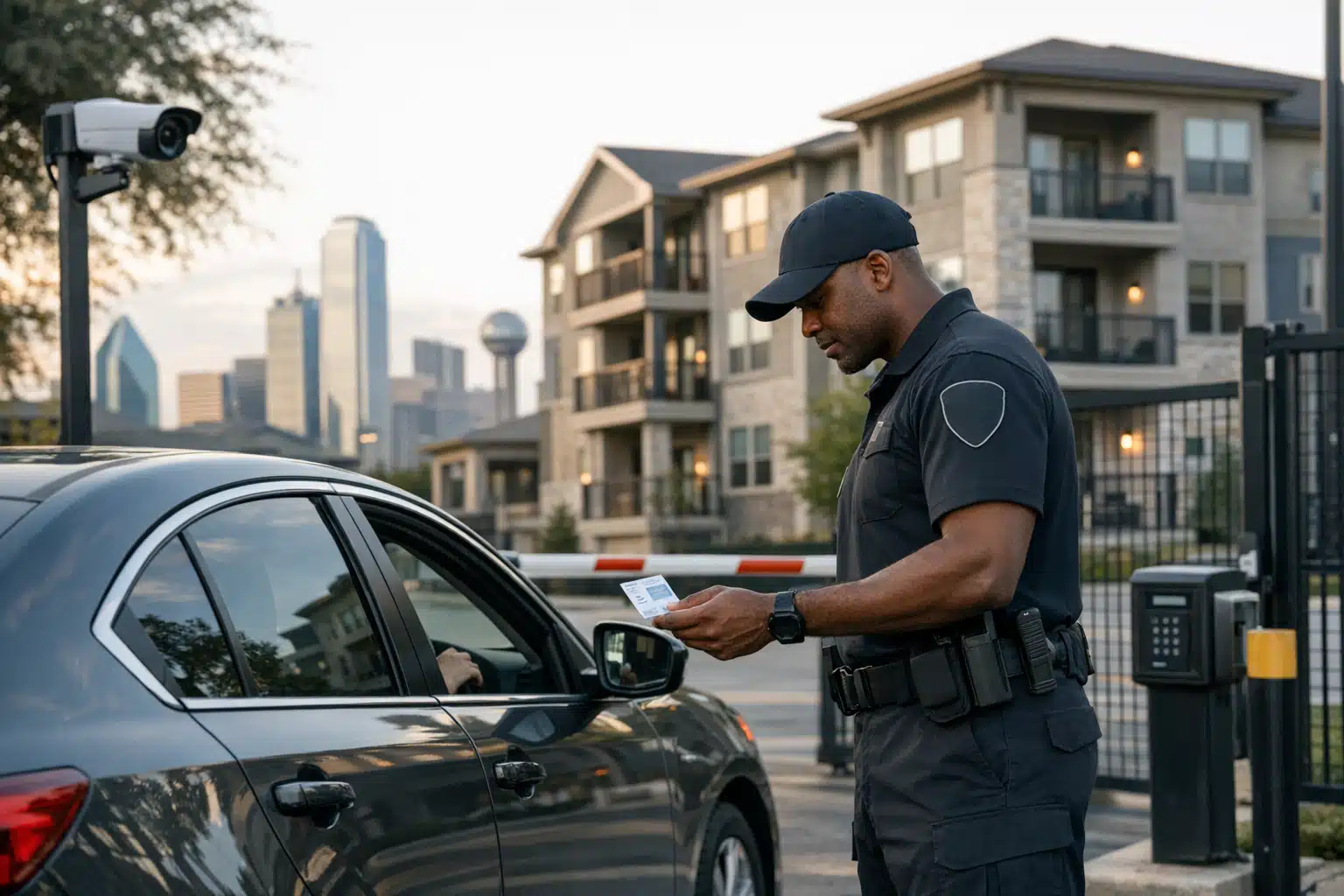
Security guards in apartment complexes perform multiple functions including patrolling common areas, monitoring access points, responding to disturbances, and documenting incidents. Their visible presence deters criminal activity, reduces property crime rates, and improves resident safety. Guards also help manage visitor access, enforce community rules, and provide emergency response support - all of which lower liability exposure for property managers.
Dallas reported over 42,000 property crime offenses in a recent year, and multifamily residences absorbed a heavy share. For property managers, strong apartment security is now a leasing advantage, not a luxury. This post breaks down what on-site security guards do inside residential communities and why their presence changes resident behavior, incident rates, and liability exposure.
You manage rent, maintenance, and turnover already. Adding a security program feels like one more line item. Below, you get concrete answers on guard duties, staffing models, and cost trade-offs specific to Dallas complexes.
Why Apartment Security Matters More in Dallas Communities
Multifamily properties face threats that single-family homes rarely see. Shared parking garages, open breezeways, mail rooms, and pool decks create dozens of unmonitored access points.
Dallas police divisions like Northeast and Southeast log steady calls for auto burglary and package theft at apartment addresses. A single unsecured gate can invite repeat incidents across a 200-unit property.
Residents notice. Online reviews mentioning break-ins or loitering push prospective tenants elsewhere. A visible security presence protects both people and your occupancy rate.
Common Incidents Guards Address at Dallas Complexes
- Vehicle break-ins in unsecured surface lots and garages
- Package theft from leasing office lobbies and doorsteps
- Trespassing and loitering around pools after posted hours
- Unauthorized guests using amenities meant for residents
- Domestic disputes that escalate in common areas
- Vandalism to gates, mailboxes, and fitness equipment
The Specific Duties of Security Guards in Residential Settings
Security guards in apartment communities do far more than sit in a booth. Their daily assignments cover prevention, response, and documentation.
1. Access Control at Gates and Entrances
Guards verify residents, screen visitors, and log delivery vehicles. At gated Dallas properties, a stationed officer stops tailgating vehicles that slip past automated arms.
This single duty cuts a large volume of trespass-related crime. Non-residents lose easy entry to garages and amenity areas.
2. Foot and Vehicle Patrols
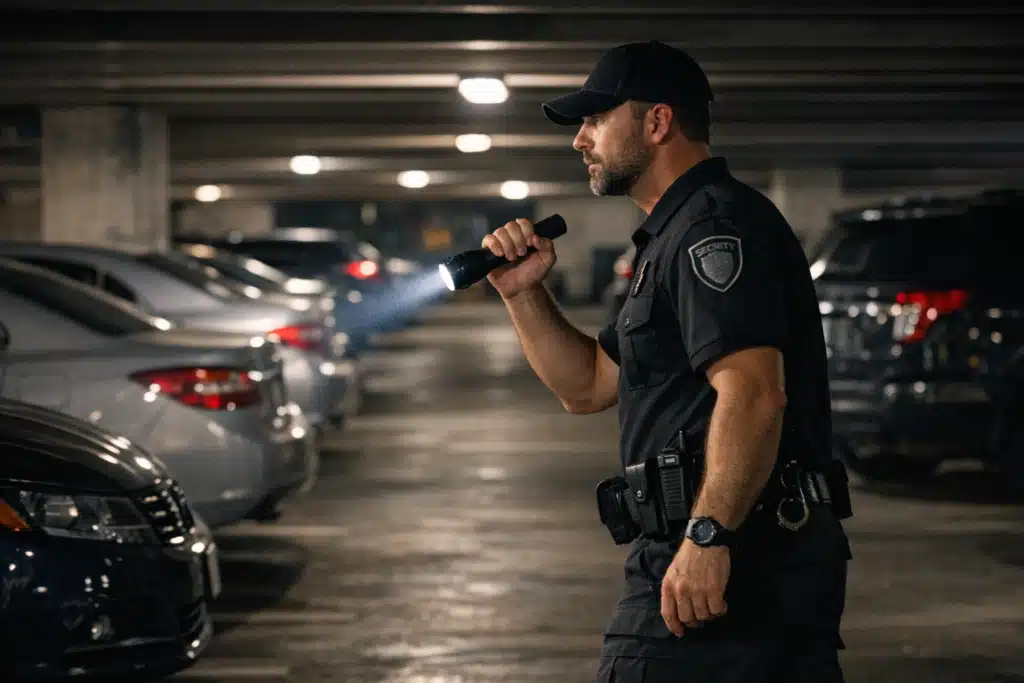
Guards walk breezeways, stairwells, laundry rooms, and parking structures on rotating schedules. Unpredictable patrol timing matters more than constant coverage.
A predictable pattern lets bad actors plan around it. Rotating routes keep dark corners and back gates unpredictable for anyone watching.
3. Emergency Response and De-Escalation
On-site officers reach an incident faster than any outside caller can summon help. In a scattered-layout Dallas complex, that time gap decides how a dispute ends.
Trained guards de-escalate verbal conflicts before they turn physical. They contact Dallas police when a situation crosses into criminal activity.
4. Enforcing Community Rules
Guards enforce pool hours, guest parking limits, and noise policies. Consistent enforcement stops small violations from becoming recurring problems.
Residents respect rules they see applied evenly. A guard removes the manager from awkward face-to-face confrontations.
5. Incident Documentation
Every shift produces logs of patrols, contacts, and unusual activity. Written reports protect your property against liability claims.
When a resident disputes an event, dated records carry weight. This documentation supports insurance filings and any court proceeding.
On-Site Guards vs. Remote Video Surveillance for Apartment Security
Both models reduce crime, but they fit different budgets and property types. Many Dallas managers combine the two for wide coverage at controlled cost.
On-Site Security Guards
A physical officer handles live confrontations, medical events, and rule enforcement. Presence alone discourages opportunistic crime near entrances and parking.
Best fit: larger communities, properties with a history of violent incidents, and complexes with active amenity areas.
Remote Video Surveillance
Remote monitoring uses live-viewed cameras watched by off-site operators. When a camera flags motion in a restricted zone, an operator issues a voice-down warning or dispatches police.
Best fit: perimeter fences, garages, mail rooms, and overnight coverage where a full guard shift costs too much.
Cost and Coverage Comparison
- Coverage hours: Guards cost more per hour; cameras run continuously at a lower rate.
- Physical response: Only an on-site guard intervenes in person.
- Deterrence: A marked patrol vehicle and live voice-down both discourage intruders.
- Scalability: Cameras cover many zones at once; one guard covers one area at a time.
A layered plan uses guards during peak evening hours and remote monitoring overnight. That structure controls spending without leaving gaps.
How to Build an Apartment Security Program in Dallas
To set up effective coverage at your community, follow these steps in order.
- Map your access points. List every gate, stairwell, and lot entrance an intruder could use.
- Pull your incident history. Review past 12 months of resident complaints and police calls.
- Identify peak-risk hours. Most auto burglaries cluster between late evening and early morning.
- Match the model to the risk. Assign guards to high-conflict zones and cameras to perimeter coverage.
- Set clear post orders. Define patrol routes, escalation rules, and reporting formats in writing.
- Review monthly reports. Adjust patrol timing based on where incidents keep occurring.

 Posted on Google
Texas Licensing and What to Verify Before Hiring
Texas regulates private security under the Department of Public Safety. Guard companies and individual officers must hold current state licensing.
Before you sign a contract, confirm these points:
- Company license issued by the Texas DPS Private Security Program
- Individual officer registration for every guard on your property
- Armed vs. unarmed status matched to your risk level and insurer requirements
- Liability insurance coverage that names your property where appropriate
- Local Dallas response familiarity with area police divisions and geography
A guard who knows Dallas street layouts and response patterns reacts faster. Local knowledge shortens the gap between an incident and police arrival.
Measuring Whether Your Security Program Works
Track results so your spending stays justified. Numbers show leadership and residents that coverage earns its cost.
Metrics Worth Watching
- Reported incidents per month compared to your pre-guard baseline
- Auto burglary counts in monitored lots and garages
- Resident renewal rates tied to safety perception
- Response times from alert to guard arrival on scene
- Rule-violation trends around pools and guest parking
A downward incident trend over two quarters signals the program works. Rising numbers in one zone tell you where to shift patrols.
Conclusion
Security guards in Dallas apartment communities control access, patrol shared spaces, respond to emergencies, and document incidents that protect your property. Pairing on-site officers with remote video surveillance gives wide coverage at a cost that fits multifamily budgets.
Twin City Security Dallas builds apartment security programs matched to your property layout and incident history. Call or text 972‑385‑1144, email Dallas@twincitysecurity.com, or visit https://www.twincitysecuritydallas.com for a Dallas security assessment.
Sources
- Dallas Police Department – Crime Statistics and Reporting
- Texas Department of Public Safety – Private Security Program
- FBI – Uniform Crime Reporting Program
Security guards at Dallas apartment complexes control access, patrol shared spaces, respond to emergencies, and document incidents. Their presence reduces property crime, improves resident retention, and lowers liability exposure for property managers.
- Dallas logged over 42,000 property crimes recently, with multifamily residences hit hard. Guards address vehicle break-ins, package theft, trespassing, and disputes at amenity areas.
- On-site officers verify visitors at gates, walk unpredictable patrol routes, de-escalate conflicts, and enforce community rules. Written incident logs protect properties against liability claims.
- Combining guards during peak hours with remote video monitoring overnight offers broad coverage at controlled cost. Texas DPS licensing and local Dallas familiarity should be verified before hiring.