
Why Dallas Property Managers Should Consider Seasonal Security Audits
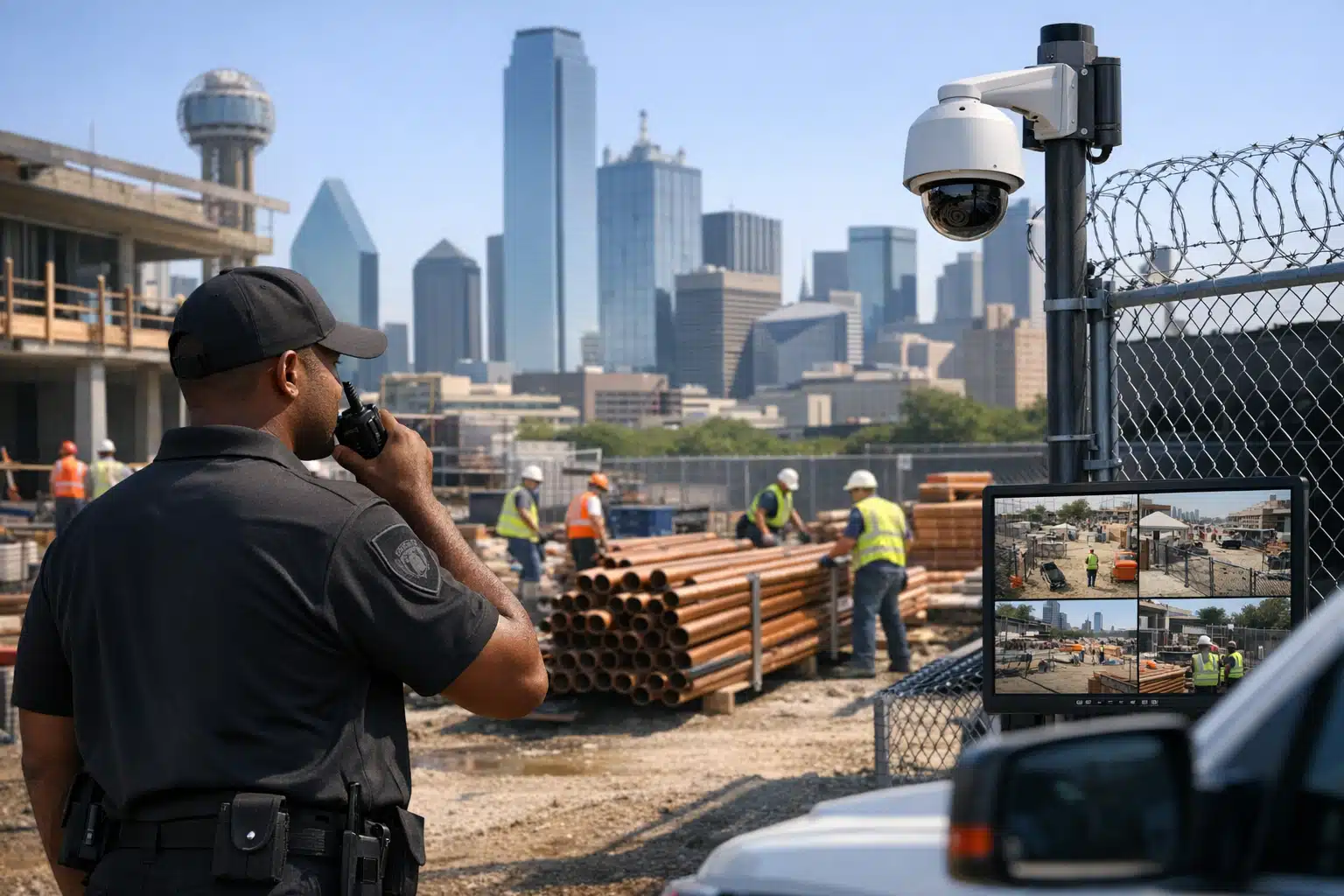
Dallas property managers should conduct seasonal security audits because property crime patterns shift throughout the year. Summer construction booms, winter storm outages, and holiday vacancy periods each create different vulnerabilities across buildings and job sites. A security audit matched to each season catches gaps that a single annual inspection would miss, providing better year-round protection.
Dallas property crime shifts with the calendar. A property security audit matched to the season catches gaps that a once-a-year inspection misses. Summer construction booms, winter storm outages, and holiday vacancy each create different weak points across Dallas buildings and job sites.
This post walks Dallas property managers step by step through seasonal audits. You get concrete checklists, local risk patterns, and a schedule you can act on before the next weather swing hits.
What a Seasonal Property Security Audit Actually Covers
A property security audit is a structured review of physical access, camera coverage, lighting, patrol routes, and response plans. A seasonal version repeats that review four times a year and adjusts for the risks specific to each quarter.
Most Dallas managers audit once at lease renewal or after an incident. That leaves months of blind spots when threats change faster than the paperwork.
Seasonal trends drive most of those changes. Daylight hours, occupancy rates, and weather all move on a predictable schedule. Your security should move with them.
Why an annual audit falls short in Dallas
Consider a mixed-use property near Deep Ellum. In June, foot traffic and after-hours activity spike. In January, the same block empties by 7 p.m. and lighting gaps grow dangerous.
One static plan cannot cover both patterns. A single annual review locks you into settings that fit only one part of the year.
How Dallas Seasonal Trends Change Your Risk Profile
Each Dallas season brings a distinct threat pattern. Matching your audit to the calendar puts attention where it belongs.
Spring: construction ramp-up and material theft
Dallas building permits climb sharply in spring. New job sites mean exposed copper, lumber, and equipment sitting overnight.
- Copper and wire theft peaks when material prices rise and sites lack fencing.
- Equipment left in the open becomes a target during unattended weekend hours.
- Perimeter gaps appear as fencing lags behind the pour schedule.
A spring audit should verify camera placement on material staging areas. Remote video monitoring covers these zones after crews leave for the day.
Summer: heat, longer daylight, and event surges
Summer heat pushes activity into the evening. Apartment pool areas, event venues, and retail patios draw crowds late.
Guard scheduling should shift to cover peak evening hours. Camera glare from low western sun also creates blind spots that a summer audit catches.
Fall: campus proximity and reduced daylight
Daylight shrinks fast after the September equinox. Parking lots that felt safe at 6 p.m. in August go dark by fall.
A fall audit re-times lighting schedules and patrol routes. It also checks camera infrared range for the earlier nightfall.
Winter: vacancy, storm outages, and holiday risk
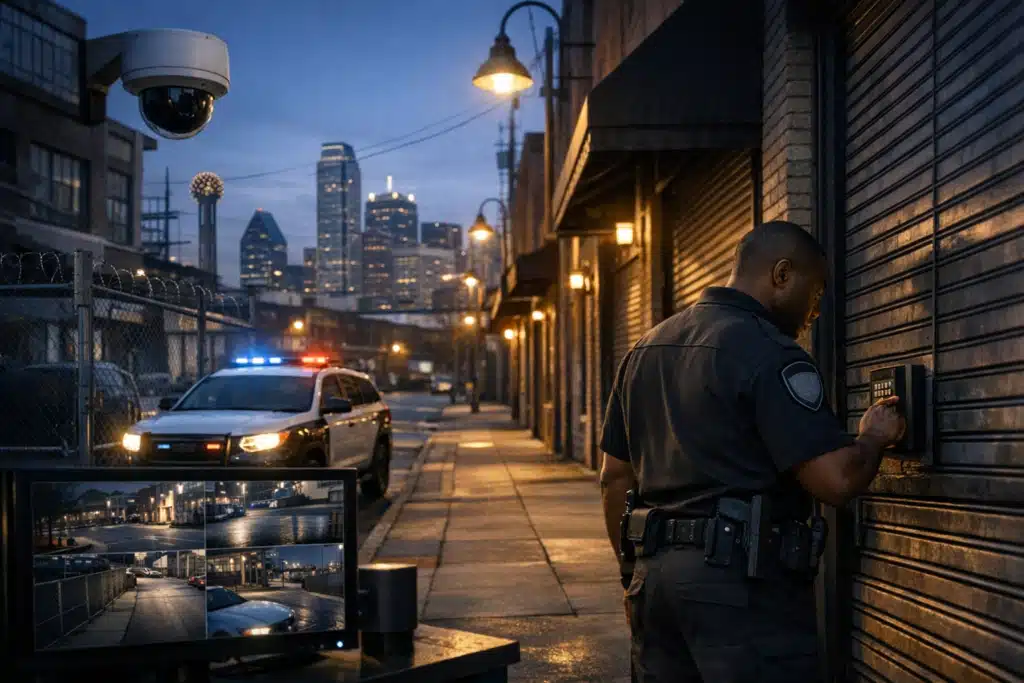
The holiday stretch empties offices and warehouses for days at a time. Dallas ice storms knock out power and expose reliance on grid-only systems.
- Extended vacancy during holiday closures invites break-ins.
- Power outages from ice can disable cameras without battery backup.
- Package theft rises at apartment communities in December.
A winter audit confirms backup power for surveillance and tightens access during closures.
A Step-by-Step Seasonal Security Audit for Dallas Properties
Follow this sequence at the start of each season. It takes a few hours and prevents the incidents that cost far more.
- Walk the perimeter at dusk. Note dark corners, broken fencing, and blocked sightlines. Timing matters because dusk changes by 90 minutes across the year.
- Test every camera feed. Check for glare, foliage growth, spider webs on lenses, and dead zones. Summer growth and winter sun both distort coverage.
- Review access logs. Compare entry patterns to the current season’s occupancy. Flag credentials that should be deactivated after tenant turnover.
- Confirm backup power. Verify battery and cellular failover before storm season. Ice storms are the top cause of Dallas surveillance downtime.
- Re-time lighting and patrols. Adjust timers to match sunset. Set guard rounds to hit high-risk hours for that quarter.
- Update the response plan. List current emergency contacts, gate codes, and law enforcement precinct details.
Document each finding with photos and a date. Season-over-season records reveal patterns you would otherwise miss.
On-site guards versus remote video: matching the method to the season
Both approaches have a place, and the right mix shifts by quarter. Cost and coverage drive the decision.
- On-site guards fit summer events, apartment peak hours, and any site needing direct human interaction.
- Remote video monitoring fits overnight construction coverage and winter vacancy at a lower hourly cost.
- A combined model uses cameras for wide coverage and guards for response during peak windows.
Remote monitoring watches multiple Dallas sites from one center. A live operator can trigger voice-down warnings and call police the moment motion crosses a set line.
How Remote Surveillance Prevents Construction Theft in Dallas
Remote surveillance is live camera monitoring by trained operators who intervene during an incident. Motion analytics flag movement in staging areas after hours.
For a Dallas construction site, this covers the highest-loss window: nights and weekends. An operator issues a spoken warning over site speakers before theft happens.
The advantage is speed. A local monitoring response often beats the wait for an unmonitored alarm that no one is watching in real time.
What to check on construction sites each season
- Spring: confirm fencing and camera coverage on new material drops.
- Summer: address heat-related equipment placement and evening trespassing.
- Fall: extend infrared coverage for earlier darkness.
- Winter: secure idle equipment during holiday shutdowns.

 Posted on Google
Building a Year-Round Audit Calendar
Set fixed audit dates near each equinox and solstice. Tying reviews to the sun keeps you ahead of daylight shifts.
A workable Dallas schedule looks like this:
- Late March: spring audit before construction season peaks.
- Mid June: summer audit for evening activity and glare.
- Late September: fall audit for shrinking daylight.
- Early December: winter audit before holiday vacancy and storms.
Assign one person to own each audit. Share findings with your security provider so coverage adjusts the same week.
What Property Managers Should Ask Before Hiring in Dallas
Before you sign, get direct answers on these points:
- Response time for your specific address and precinct.
- Backup power and cellular failover for camera systems.
- Seasonal flexibility to scale guard hours up or down by quarter.
- Reporting that documents each audit with dated evidence.
Clear answers here separate a real security partner from a fill-in vendor.
Conclusion
Dallas risk changes every quarter, and a single annual review cannot keep pace. Seasonal property security audits catch daylight, weather, and vacancy gaps before they turn into losses. Match your method to the season, document every finding, and adjust coverage the same week.
Twin City Security Dallas builds seasonal audit schedules and monitoring plans for local properties. Call or text 972‑385‑1144, email Dallas@twincitysecurity.com, or visit https://www.twincitysecuritydallas.com for a Dallas security assessment.
Sources
- Dallas Police Department – Crime Statistics and Data
- FBI – Uniform Crime Reporting Program
- National Weather Service – Fort Worth/Dallas Forecast Office
- National Fire Protection Association – Safety Codes and Standards
Dallas property managers should conduct security audits four times a year rather than annually, as seasonal changes in daylight, weather, and occupancy create different vulnerabilities throughout the year.
- Spring audits should focus on construction site theft prevention, while summer reviews address evening activity and camera glare from low sun angles.
- Fall audits need to adjust lighting and patrol schedules for earlier darkness, and winter reviews should confirm backup power before ice storms and holiday vacancies.
- Remote video monitoring works well for overnight construction coverage and winter vacancy, while on-site guards fit better for summer events and peak apartment hours.