
Protecting Dallas Construction Sites from Theft: Beyond Basic Measures
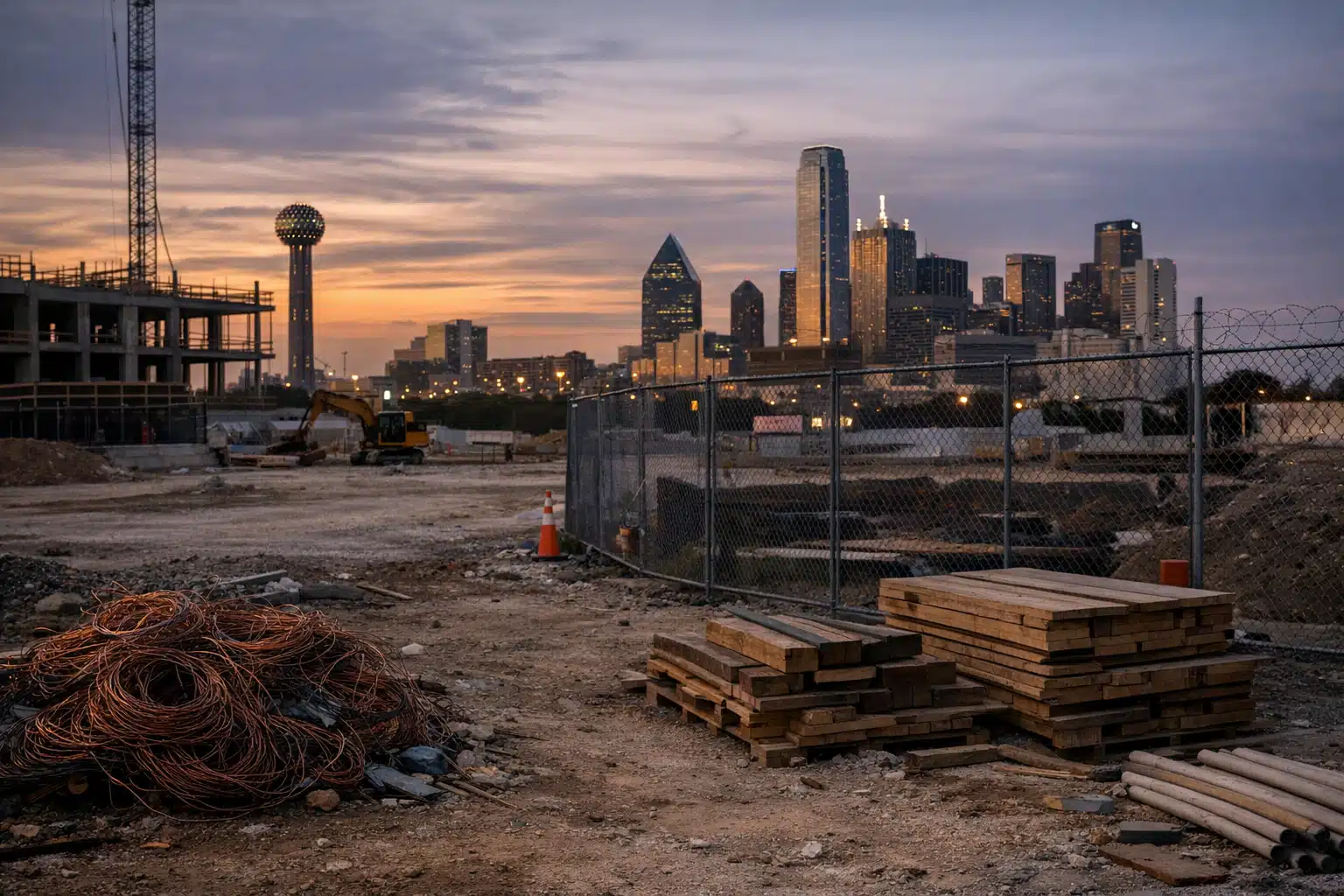
Dallas construction sites can protect against theft by implementing advanced security methods beyond basic fencing and padlocks. These include GPS tracking on heavy equipment, motion-activated cameras with remote monitoring, controlled access systems, proper lighting throughout the site, and secure storage containers for tools and materials. Regular inventory checks and employee background screening also help reduce losses.
Copper wire, power tools, and heavy equipment vanish from Dallas job sites every week. The National Equipment Register puts annual construction theft losses across the country between $300 million and $1 billion. For Dallas builders, construction site security means protecting assets that basic fencing and a padlock cannot cover. This post breaks down advanced methods that stop theft before it starts.
Why Dallas Construction Sites Face Higher Theft Risk
Dallas construction activity runs year-round, unlike colder regions with seasonal slowdowns. That steady pace leaves valuable materials on open lots for months at a time.
Thieves know this. They track new developments across Collin, Dallas, and Denton counties, watching for deliveries of copper, lumber, and fuel.
Three conditions make local sites attractive targets:
- Open perimeters that span acres with no fixed walls
- Predictable schedules where crews leave by 5 p.m. and return at 7 a.m.
- High-value copper and catalytic converters that resell fast on regional black markets
A single stolen skid steer can set a project back $40,000 and weeks of downtime. Rental equipment adds contract penalties on top of replacement costs.
Common Theft Patterns Around Dallas
Most job site theft happens between Friday evening and Monday morning. Long holiday weekends spike the risk further.
Thieves often pose as delivery drivers or subcontractors during daytime hours. They load tools onto a truck and drive off without a second glance from busy crews.
Copper wire theft remains the most frequent hit in North Texas. Crews arrive Monday to find spooled wire and installed conduit stripped overnight.
How Remote Video Surveillance Improves Construction Site Security
Remote video surveillance is a monitoring system where trained agents watch live camera feeds off-site and respond to activity in real time. It covers gaps that static cameras and periodic patrols leave open.
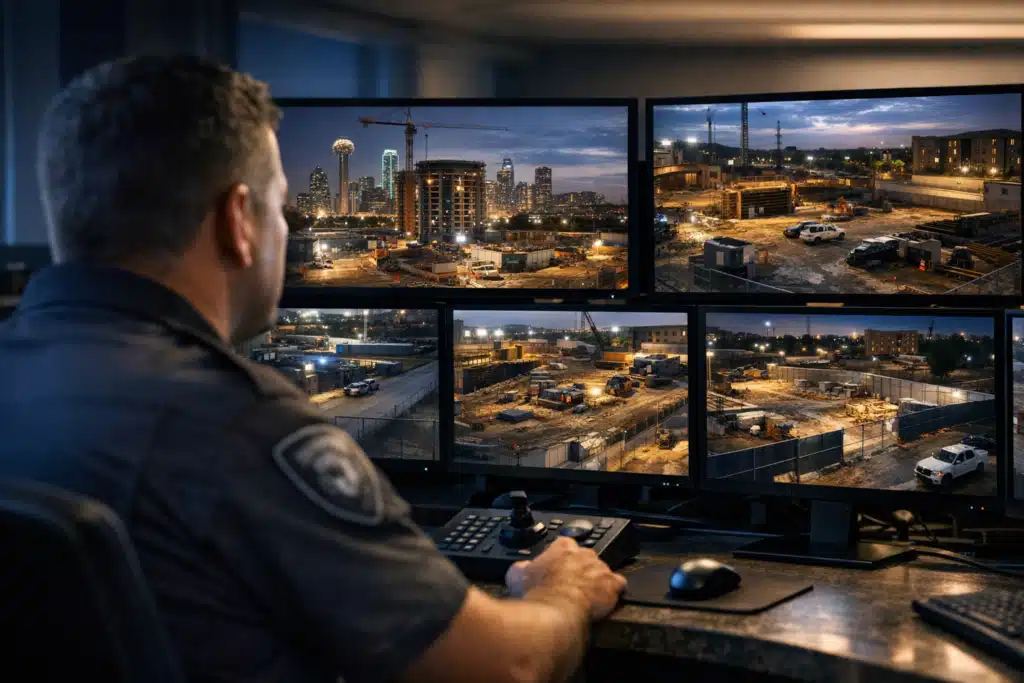
Recorded-only cameras show you who stole your equipment. Live-monitored cameras stop the theft as it happens.
Here is what separates active monitoring from a basic camera install:
- Motion-triggered alerts notify an agent the moment someone crosses the perimeter after hours.
- Live voice-down warnings let agents speak directly to intruders over on-site speakers.
- Verified dispatch means police get a confirmed crime report, not an unverified alarm they may deprioritize.
Dallas police treat verified intrusions as priority calls. That distinction shortens response time when minutes decide whether equipment leaves the lot.
Talk-Down Deterrence in Action
A voice-down warning ends most intrusions within seconds. An agent announces the trespasser is being recorded and that officers are en route.
Few thieves stick around after a loudspeaker names their location and clothing. The psychology matters more than the fence height.
One Dallas apartment build we monitored logged three overnight approaches in a single month. Each ended the moment the speaker activated. Zero losses followed.
Layering On-Site Guards With Remote Technology
On-site guards and remote monitoring solve different problems. Pairing them closes the gaps each leaves alone.
A guard controls access at the gate and checks credentials during work hours. Remote cameras cover the full perimeter overnight when a single guard cannot patrol every corner.
When to Choose Guards vs. Remote Monitoring
Cost drives many of these decisions. A rough comparison for Dallas sites:
- On-site guards: Higher hourly cost, best for access control and active daytime traffic
- Remote surveillance: Lower nightly cost, best for wide overnight coverage across large lots
- Hybrid model: Daytime guard plus overnight remote monitoring for balanced spending
A mid-size commercial build usually spends less with overnight remote coverage than with a second guard shift. The camera network watches every zone at once.
Large multi-phase developments often need both. The gate stays staffed while cameras track staging yards and equipment corrals.
Practical Steps to Secure a Dallas Job Site
To secure your site effectively in Dallas, follow these steps in order:
- Map your high-value zones. Identify where copper, fuel, and equipment sit after hours.
- Install monitored cameras at every access point. Cover gates, staging areas, and blind corners.
- Add motion-activated lighting. Darkness invites theft; light exposes it.
- Post visible signage. State that the site is under active video monitoring.
- Lock and immobilize equipment. Remove keys and use wheel locks on machines overnight.
- Log all deliveries and subcontractors. A gate log deters daytime grab-and-go theft.
- Schedule unpredictable checks. Vary patrol and camera-sweep timing so patterns stay hidden.
Each step reduces one avenue of loss. Stacked together, they make your lot the hardest target on the block.
Documentation That Protects You Later
Video footage does more than stop theft. It supports insurance claims and police investigations when incidents occur.
Insurers move faster on claims backed by timestamped, verified footage. Some Dallas carriers offer lower premiums for sites with monitored surveillance.
Keep footage retention at 30 days minimum. That window covers most claim and dispute timelines.

 Posted on Google
Theft Prevention Mistakes Dallas Builders Make
Strong theft prevention fails when crews treat security as an afterthought. The most common errors are avoidable.
- Relying on recorded-only cameras that no one watches until after a loss
- Leaving fuel tanks unmonitored when diesel theft climbs with fuel prices
- Ignoring the daytime threat from posing subcontractors and fake deliveries
- Skipping perimeter coverage on the back and side lots where thieves cut in
Fixing these gaps costs far less than replacing a stolen loader or rewiring a stripped floor.
Cover the Weekend Gap
The Friday-to-Monday window causes most Dallas job site losses. Plan coverage around it deliberately.
Remote monitoring runs every hour of the weekend without fatigue or shift gaps. That consistency matters when thieves count on empty lots.
Why Local Response Time Matters in Dallas
Distance shapes how fast help arrives. A monitoring center that knows Dallas geography routes dispatch faster than a national call queue.
Agents familiar with local police precincts and traffic patterns cut wasted minutes. They know which patrol areas cover which developments.
That local knowledge turns a camera feed into a working defense. It links your site to the nearest response, not a distant one.
Conclusion
Effective construction site security in Dallas layers monitored cameras, active talk-down deterrence, and access control that fits your budget. Recorded footage alone stops nothing; live response stops theft in progress. Map your risk zones, cover the weekend gap, and back it all with verified dispatch.
Twin City Security Dallas builds monitoring plans around your site’s layout and schedule. Call or text 972‑385‑1144, email Dallas@twincitysecurity.com, or visit https://www.twincitysecuritydallas.com for a Dallas site assessment.
Sources
- National Insurance Crime Bureau – Construction and Agricultural Equipment Theft
- National Equipment Register – Equipment Theft Data
- Dallas Police Department – Crime Reporting and Statistics
Twin City Security Dallas outlines advanced methods to protect construction sites from theft, noting that basic fencing and padlocks are insufficient against the $300 million to $1 billion in annual construction theft losses nationwide.
- Dallas sites face higher theft risk due to year-round construction, open perimeters, predictable crew schedules, and high-value materials like copper that resell quickly on black markets.
- Remote video surveillance with live monitoring and voice-down warnings stops theft in progress, unlike recorded-only cameras that only show who stole equipment after the fact.
- Layering on-site guards for daytime access control with overnight remote monitoring provides balanced coverage, and verified dispatch to Dallas police results in faster response times.