
Hiring Armed vs Unarmed Security Guards: Making the Right Choice for Dallas Businesses
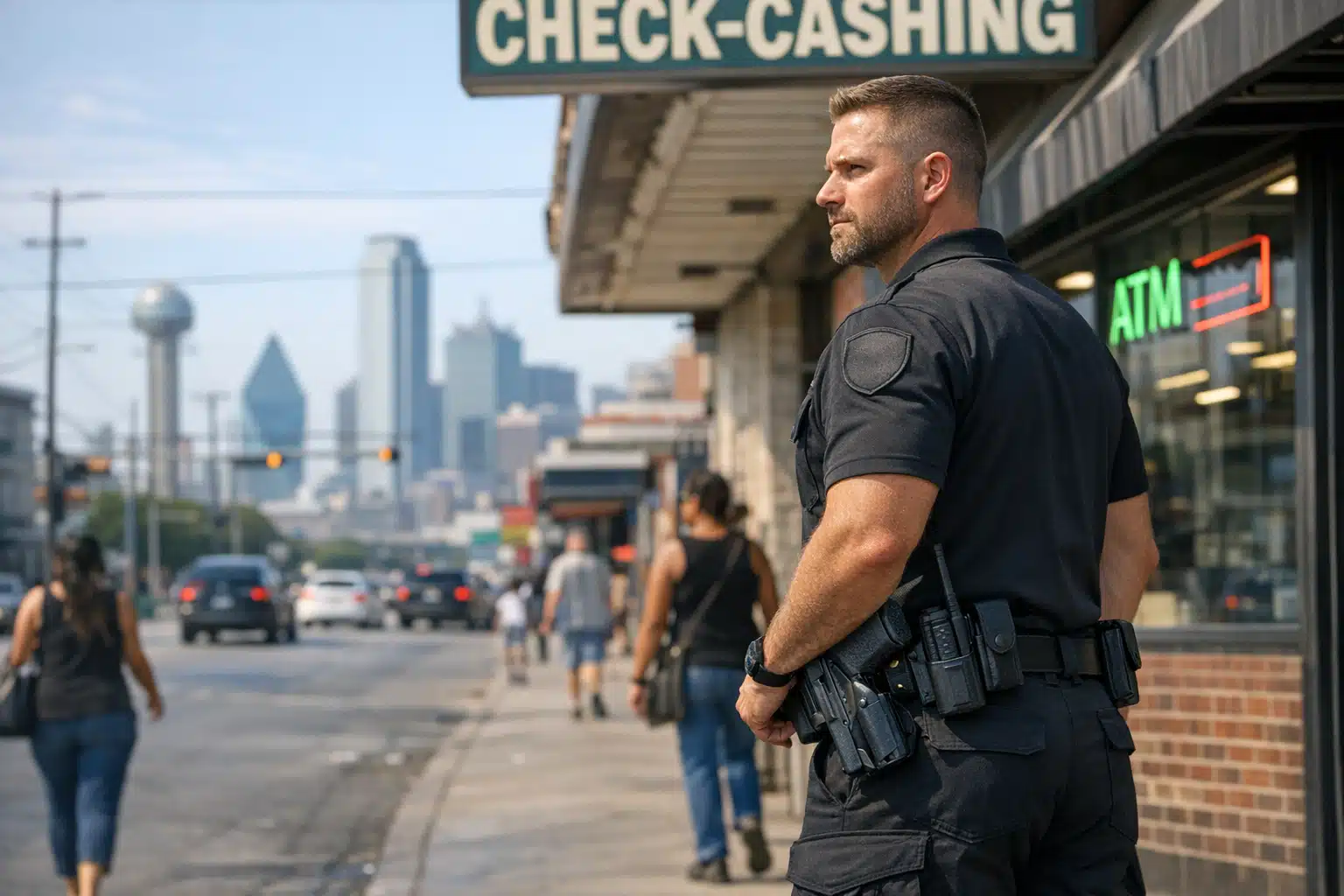
Armed security guards carry firearms and are trained to respond to high-risk threats, making them suitable for locations with valuable assets or elevated danger levels. Unarmed security guards provide a visible deterrent and handle access control, monitoring, and customer service without weapons. The right choice depends on your business location, the value of assets on site, and the specific threats your property faces.
Dallas reported more than 40,000 property crimes in a recent year, according to city police data. That number pushes many owners to ask one question: does my site need armed security or unarmed guards? The answer depends on your location, your assets, and the threats specific to your block. This post breaks down both choices for Dallas businesses, with concrete examples from local site types.
Armed Security vs Unarmed Security: The Basic Difference
Armed guards carry a firearm and hold advanced Texas licensing. Unarmed guards protect through presence, observation, and reporting.
Both roles patrol, monitor access, and respond to incidents. The gap shows up in how each handles a direct physical threat.
What an Armed Guard Brings
An armed guard adds deterrence against violent or high-value theft. Their presence changes the math for anyone planning an armed robbery.
In Texas, armed guards must hold a Level III certification. That requires classroom hours, firearms training, and a state background check under the Texas Department of Public Safety.
What an Unarmed Guard Brings
An unarmed guard covers most everyday security needs at lower cost. They watch entrances, log visitors, and call police when a situation escalates.
For a retail strip in North Dallas or a leasing office in Uptown, an unarmed guard covers daily risk. Their job centers on visibility and fast reporting.
When Dallas Businesses Need Armed Security
Armed security fits sites where cash, valuables, or violence risk runs high. The added cost buys stronger deterrence and faster force response.
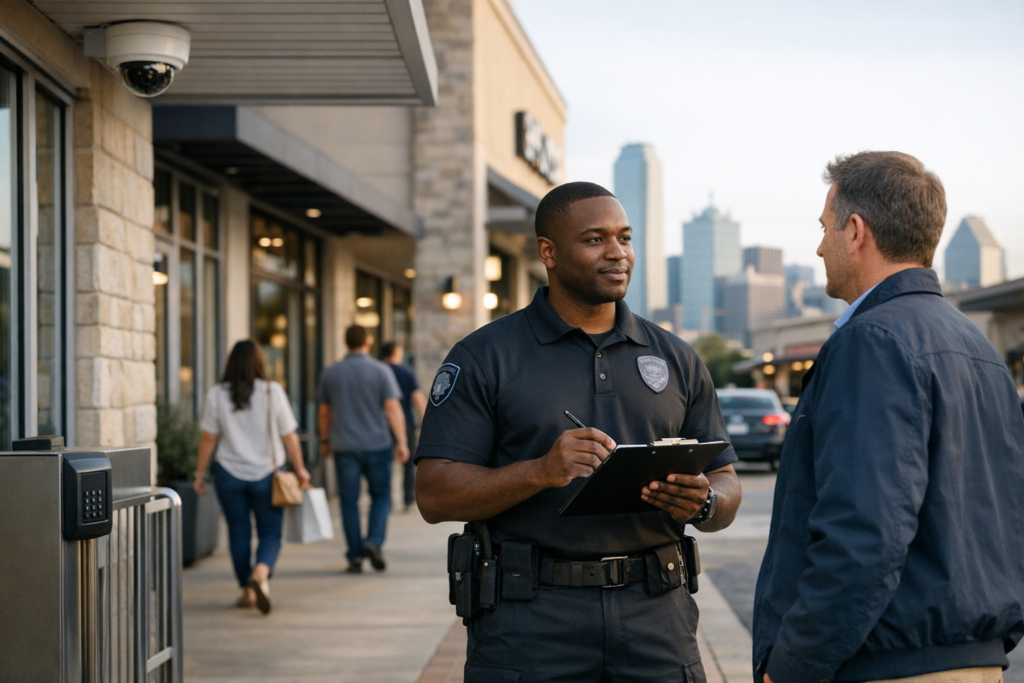
Here are Dallas scenarios where an armed guard earns the investment:
- Cash-heavy operations — check-cashing stores, jewelry shops, and dispensaries along corridors like Harry Hines Boulevard.
- Bank branches and ATMs — sites with predictable cash flow that attract planned robbery.
- Gun ranges and pawn shops — locations storing firearms on-site.
- Late-night venues — bars and clubs in Deep Ellum where crowds and alcohol raise conflict odds.
- Executive protection — high-profile individuals or events with credible threats.
If your Dallas location has been targeted before, armed coverage sends a direct message. Repeat offenders read guard posture quickly.
When Unarmed Security Fits Better
Unarmed security works for most commercial and residential sites in Dallas. The role fits places where visibility deters casual crime.
Common fits include:
- Apartment communities — patrols in areas like Oak Cliff and Vickery Meadow reduce loitering and vehicle break-ins.
- Office buildings — front-desk access control and after-hours patrol.
- Construction sites — deterring copper and equipment theft during off-hours.
- Retail centers — customer-facing presence that discourages shoplifting.
- Corporate events — crowd flow and access checks at conference venues.
An unarmed guard paired with remote video surveillance covers many Dallas sites at strong value. Cameras extend one guard’s reach across a large property.
Cost Comparison for Dallas Employers
Armed guards cost more per hour than unarmed guards. The premium reflects licensing, training, insurance, and liability.
Expect an armed guard to run several dollars more per hour than an unarmed post. Over a 24/7 schedule, that gap adds up fast across a month.
To weigh the cost, run this quick check:
- List your assets on-site. Cash, inventory value, and equipment totals.
- Pull your local crime data. Check violent versus property crime rates for your ZIP code.
- Review your incident history. Past break-ins, confrontations, or threats.
- Match coverage to risk. High violence risk points to armed; property risk often fits unarmed plus cameras.
- Calculate insurance impact. Some carriers adjust premiums based on guard type.
Many Dallas businesses land on a mixed model. Armed coverage for the highest-risk hours, unarmed for daytime foot traffic.
Liability and Legal Notes for Texas
Armed security raises the stakes on liability for Dallas businesses. A firearm on-site changes your risk profile and insurance conversation.
Every armed guard must carry current Level III certification and state registration. Ask any provider to verify licensing before a shift starts.
Questions to Ask Before Hiring
- Are your armed guards Level III certified and DPS registered?
- What is your firearms retraining schedule?
- How does your insurance cover armed incidents?
- What is the guard’s use-of-force policy?
- How fast can you swap coverage if my risk changes?
A serious provider answers each without hesitation. Vague responses on licensing signal a step to walk away.

 Posted on Google
How Remote Surveillance Strengthens Either Choice
Remote video surveillance multiplies the value of any guard on your Dallas site. Cameras watch blind spots while a guard patrols on foot.
A monitored camera network flags movement in real time. Operators can trigger voice-downs, alert on-site guards, and call Dallas police with live confirmation.
For construction sites off major corridors like I-35, this pairing cuts theft during vulnerable overnight hours. One monitored feed can replace several patrol passes.
Making the Right Call for Your Dallas Site
Start with your threat level, then match the guard type to it. High violence and cash risk point to armed security; property and access risk fit unarmed coverage.
Map your specific block, your hours, and your assets. A leasing office in Frisco carries different risk than a warehouse near Fair Park.
The right choice protects your people and budget at once. Many owners find the answer sits between the two, backed by cameras.
Talk to Twin City Security Dallas
Armed and unarmed security each fit different Dallas risk levels, and the right mix depends on your site’s assets, crime data, and hours. A local assessment removes the guesswork. Twin City Security Dallas evaluates your property and recommends the coverage that matches your real threats.
Call or text 972‑385‑1144 for a Dallas security assessment. Email Dallas@twincitysecurity.com or visit https://www.twincitysecuritydallas.com for a monitoring quote.
Sources
- Texas Department of Public Safety – Private Security Program
- Dallas Police Department – Crime Statistics and Reports
- FBI – Uniform Crime Reporting Program
This post helps Dallas businesses decide between armed and unarmed security guards based on location, assets, and specific threats. The right choice depends on violence risk, property value, and budget considerations.
- Armed guards carry firearms and require Level III Texas certification - they fit cash-heavy businesses, banks, gun ranges, and late-night venues where violence risk runs high.
- Unarmed guards work well for apartment communities, office buildings, construction sites, and retail centers where visibility deters casual crime at lower cost.
- Many Dallas businesses use a mixed model with armed coverage during high-risk hours and unarmed guards for daytime - pairing either option with remote video surveillance extends protection across larger properties.