
What Dallas Event Organizers Need to Know About Seasonal Security Risks
Dallas event security risks vary by season. Spring brings severe weather threats like tornadoes and flash flooding. Summer events face extreme heat emergencies and dehydration concerns among attendees. Fall gatherings must manage large crowd surges during popular events like the State Fair. Winter presents challenges with ice storms and reduced daylight affecting parking lot safety and emergency response times.
Dallas hosts more than 100 major outdoor events each year, from State Fair crowds to summer concert series at Fair Park. Each season brings different event security risks that catch organizers off guard. A March festival faces problems a September gala never will.
This post breaks down how weather, crowd behavior, and crime patterns shift across the calendar. You will learn what to plan for in each season and how to staff accordingly.
Why Seasonal Risks Change Dallas Event Security Planning
Seasonal risks are the specific threats tied to weather, daylight hours, and local behavior patterns during a given time of year. In Dallas, these shift fast.
A July outdoor event battles 100-degree heat and medical emergencies. A December event battles early darkness and parking lot theft. The same guard plan cannot cover both.
Dallas property crime tends to climb during the holiday shopping months. The Dallas Police Department reports higher theft activity in November and December. Event parking lots become targets when guests leave gifts and valuables in cars.
The Four Season Framework for Dallas Events
Break your planning into four windows. Each demands a different guard-to-guest ratio and skill set.
- Spring (March–May): Storm season and festival crowds
- Summer (June–August): Heat emergencies and late-night events
- Fall (September–November): Peak event volume and rising theft
- Winter (December–February): Early darkness and holiday crime spikes
Spring Event Security Risks in Dallas
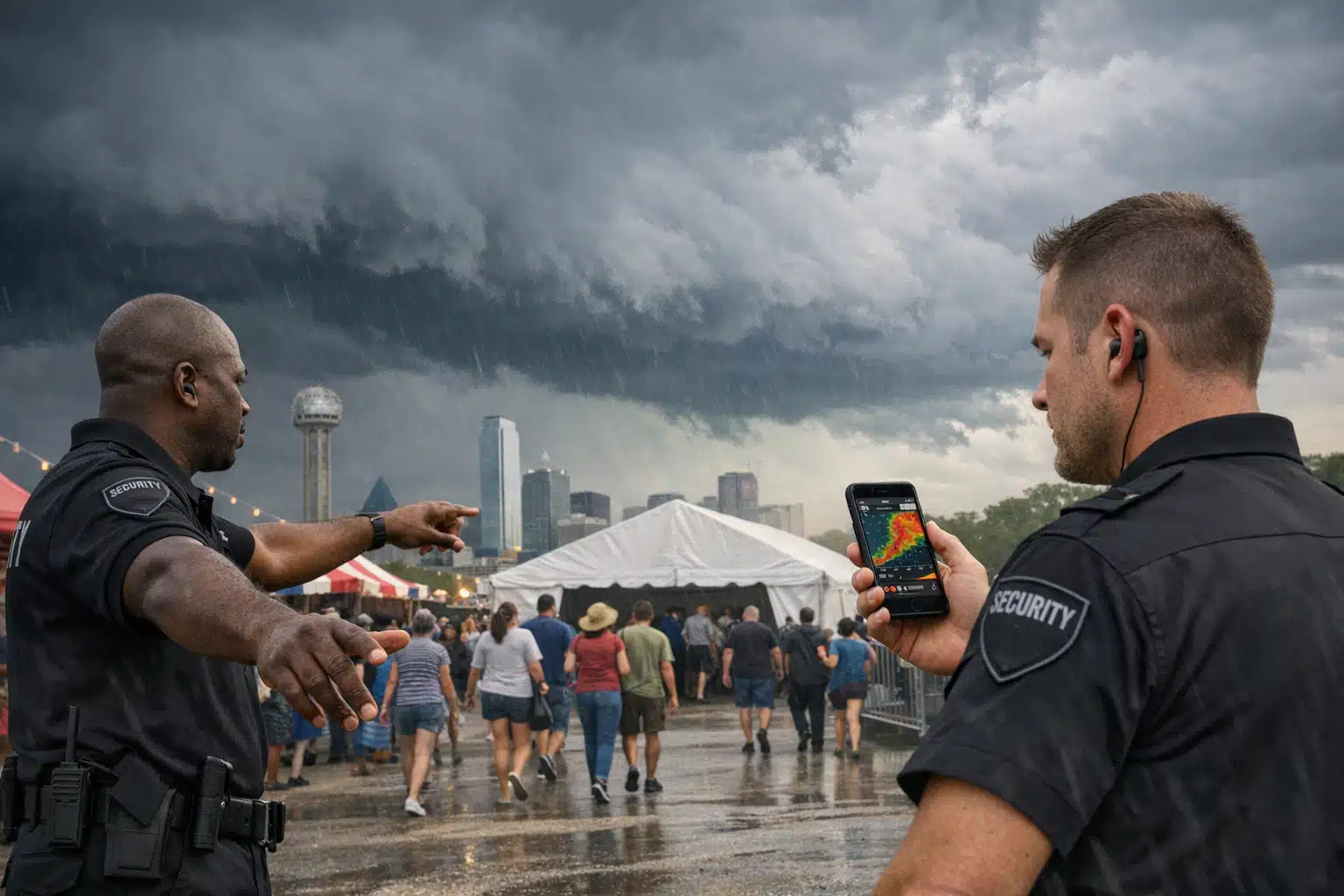
Spring in Dallas means severe weather. Tornado season peaks in April and May. Outdoor events face sudden storms, high winds, and hail with little warning.
Your security team needs a weather evacuation plan before guests arrive. Guards should know the nearest indoor shelter and the fastest route to it.
What Spring Guards Must Handle
- Monitor weather alerts in real time during the event
- Control crowd flow during rapid evacuations
- Secure tents and staging that high winds can turn into hazards
- Manage muddy or flooded parking areas after rain
Spring festivals near White Rock Lake and Klyde Warren Park draw large crowds. More people means more chances for lost children, medical calls, and alcohol-related incidents.
Takeaway: Assign at least one guard trained in weather response for every 250 guests at spring outdoor events.
Summer Event Security Risks in Dallas
Summer heat is the top threat for Dallas events. Temperatures regularly pass 100 degrees from June to August. Heat exhaustion and dehydration send guests to first aid stations fast.
Guards do more than watch for trouble. They spot early signs of heat illness before it becomes a 911 call.
Heat-Specific Duties for Summer Events
- Direct guests to shade and water stations
- Watch for elderly and child guests showing distress
- Rotate their own posts to avoid guard heat fatigue
- Keep emergency vehicle lanes clear for medical response
Summer events run late to escape the heat. Concerts and food festivals stretch past midnight. Late hours raise the risk of alcohol incidents and parking lot crime.
Remote video surveillance helps here. Cameras cover parking areas after dark when on-site guards focus on the crowd. A monitoring center flags suspicious movement near vehicles and alerts the ground team.
Takeaway: Pair on-site guards with remote camera monitoring for any summer event that ends after 10 p.m.
Fall Event Security Risks in Dallas
Fall is peak event season in Dallas. The State Fair of Texas alone draws over two million visitors across three weeks. Corporate galas, weddings, and outdoor festivals fill the calendar.
High volume creates staffing pressure. Good guards get booked early. Organizers who wait until October scramble for coverage.
How to Staff Fall Events Right
- Book security 8–12 weeks out for October and November dates
- Match guard count to peak attendance, not average
- Add access control for ticketed and gated events
- Plan for shorter daylight as sunset moves earlier
Theft starts climbing in late fall. Holiday shopping season overlaps with corporate party season. Parking lots at hotel and venue events become prime targets.
Takeaway: Fall events need both crowd guards and dedicated parking lot coverage.
Winter Event Security Risks in Dallas
Winter events face two main threats: early darkness and holiday crime. The sun sets before 5:30 p.m. in December. Most evening events run entirely after dark.
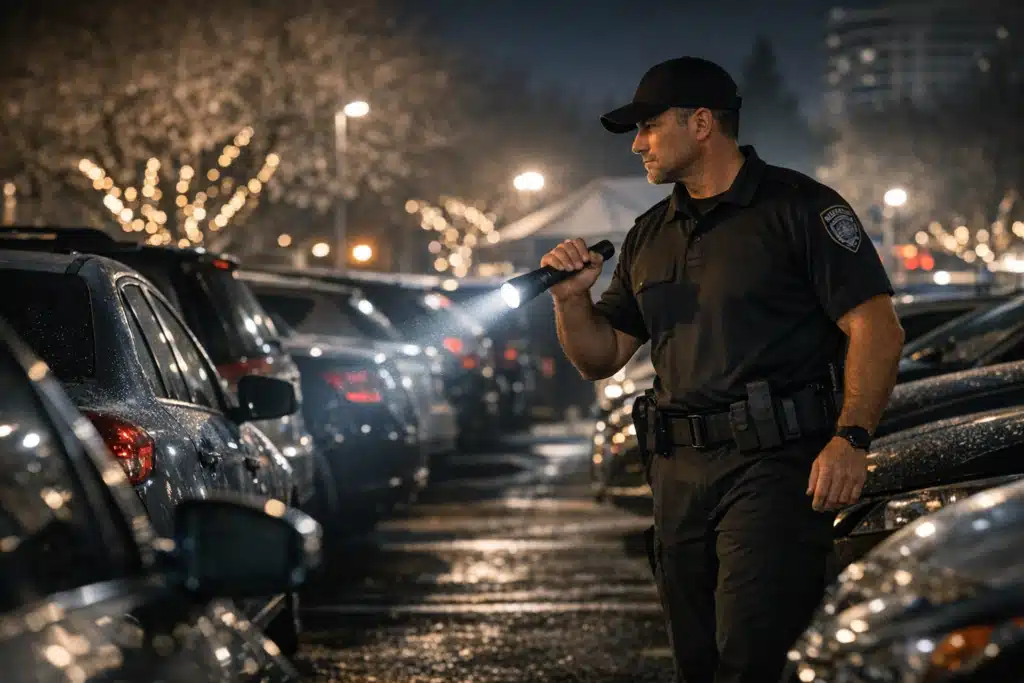
Darkness changes how guards work. Poorly lit parking lots hide theft and assault. Guards need flashlights, clear sightlines, and camera support.
Cold-Weather Event Preparation
- Position guards at every dark entry and exit point
- Use remote cameras to cover blind spots in parking areas
- Plan for rare Dallas ice events that create slip hazards
- Watch for smash-and-grab theft from parked vehicles
Dallas holiday markets and tree lightings draw dense crowds into small spaces. Tight crowds raise pickpocket and theft risk. Guards trained in crowd density management reduce these incidents.
Takeaway: Winter events need lighting checks and camera coverage across every parking area.

 Posted on Google
On-Site Guards vs. Remote Surveillance for Seasonal Events
Both methods solve different problems. The right mix depends on your season, venue, and budget.
When On-Site Guards Make Sense
On-site guards handle direct crowd contact. They de-escalate disputes, check credentials, and respond to medical calls. Spring and summer crowd events need this human presence.
When Remote Surveillance Adds Value
Remote video monitoring watches large perimeters at lower cost. Cameras cover parking lots, back entrances, and storage areas. A monitoring center flags problems and calls the ground team.
Fall and winter events benefit most from remote coverage. Early darkness and theft risk make parking lots the weak point. Cameras fill gaps guards cannot cover alone.
The Combined Approach
Most Dallas events run best with both. On-site guards manage the crowd. Remote cameras watch the edges. Together they cut response time and cover more ground.
A Season-by-Season Event Security Checklist
Use this quick reference when planning any Dallas event.
- Spring: Weather evacuation plan, storm-trained guards, secured staging
- Summer: Heat monitoring, water station support, late-night camera coverage
- Fall: Early booking, peak-attendance staffing, parking lot theft coverage
- Winter: Lighting checks, dark-hour guards, dense crowd management
Match your guard count to the season, not last year’s plan. Dallas weather and crime patterns shift too much for a fixed template.
Conclusion
Dallas events face different threats every season, from spring storms to winter theft spikes. Smart organizers match their guard plan and camera coverage to the calendar. The right mix of on-site guards and remote surveillance keeps crowds safe year-round.
Twin City Security Dallas builds event security plans around your season, venue, and crowd size. Call or text 972‑385‑1144 or email Dallas@twincitysecurity.com for a Dallas event security assessment.
Sources
- Dallas Police Department – Crime Statistics and Reports
- National Weather Service – Fort Worth/Dallas Forecast Office
- State Fair of Texas – Attendance and Event Information
- CDC – Heat and Health Guidance
Dallas hosts over 100 major outdoor events yearly, and each season brings distinct security risks that require different guard strategies and coverage approaches.
- Spring events face tornado season and severe storms - guards need weather evacuation training and should be assigned one per 250 guests for outdoor gatherings.
- Summer heat regularly exceeds 100 degrees, causing medical emergencies, while late-night events increase parking lot crime - pairing on-site guards with remote camera monitoring helps after 10 p.m.
- Fall brings peak event volume and rising theft during holiday shopping season - book security 8 to 12 weeks ahead and add dedicated parking lot coverage.