
Enhancing Security for Dallas Outdoor Events with Mobile Patrols
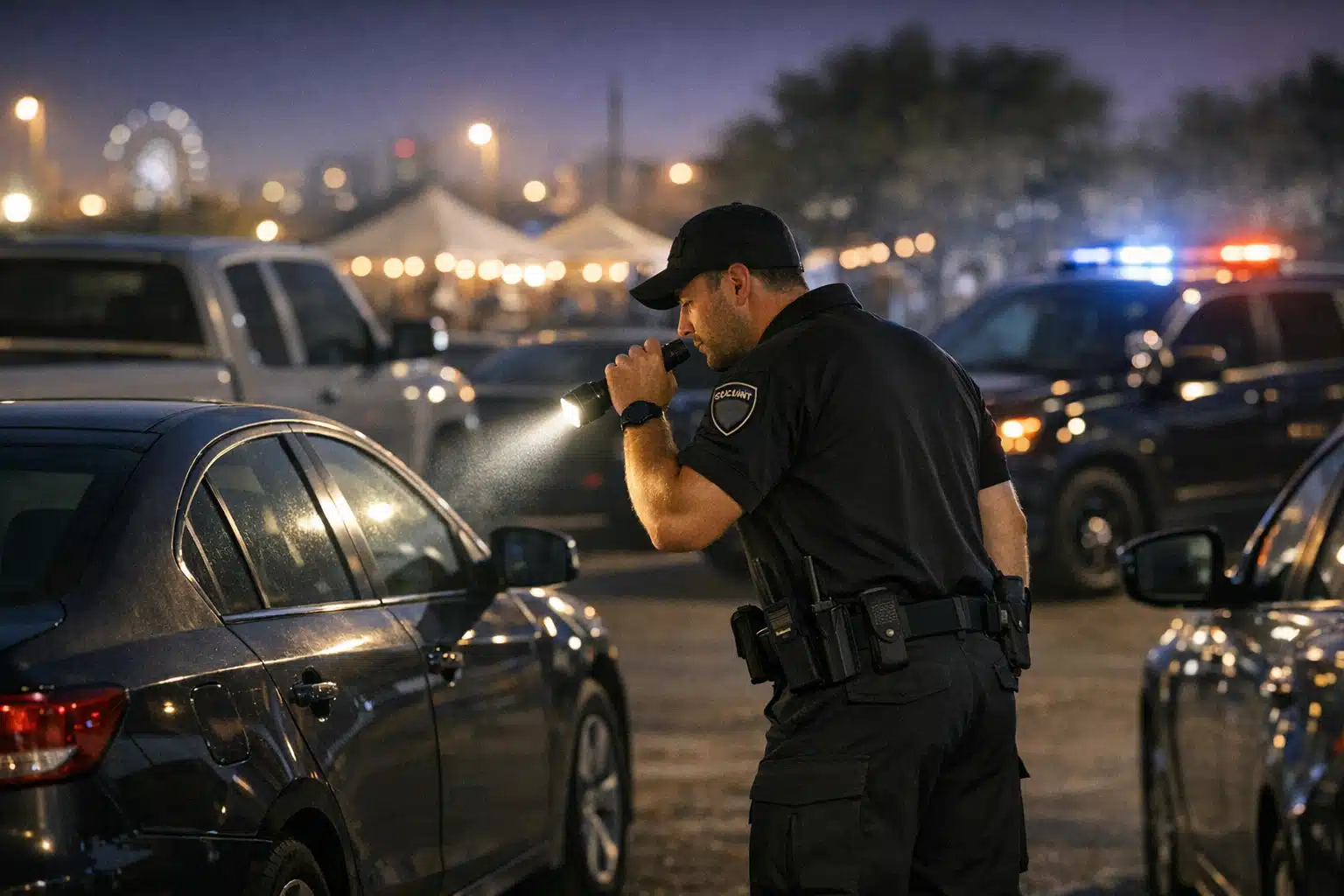
Mobile patrols enhance security for Dallas outdoor events by providing flexible, visible coverage across large venues like Fair Park festivals and Deep Ellum block parties. Security officers in marked vehicles or on foot can quickly respond to incidents, monitor multiple entry points, deter criminal activity, and adapt their routes based on crowd movement and changing conditions throughout the event.
Why Outdoor Events in Dallas Need Movement, Not Just Posts
Dallas hosts hundreds of outdoor gatherings each year, from Fair Park festivals to Deep Ellum block parties and corporate campus functions.
Open-air venues create security gaps that stationary guards cannot cover alone. Mobile patrols fill those gaps by moving with the crowd, the parking overflow, and the shifting risk points.
Dallas property crime data shows theft spikes around large gatherings, especially in unmonitored parking areas. A fixed guard at the main gate does little for a truck being broken into three rows back.
This post breaks down how mobile patrols adjust to real outdoor event conditions in Dallas, and how to plan coverage that matches your venue.
What Mobile Patrols Actually Do at an Outdoor Event
Mobile patrols are trained officers who move across a defined area on foot, by vehicle, or by cart on a rotating schedule.
They cover ground that a single post cannot. At a 15-acre outdoor venue, one stationary guard sees maybe 5% of the property at any moment.
A patrol unit checks the whole footprint on a loop. That difference matters when incidents happen away from the stage or entrance.
Areas Mobile Patrols Cover That Fixed Posts Miss
- Parking lots and overflow fields where vehicle break-ins cluster
- Perimeter fence lines where gate-crashers slip in
- Vendor and equipment staging zones holding cash and inventory
- Restroom and quiet corners where altercations start unseen
- Emergency access routes that must stay clear for fire and EMS
How Mobile Patrols Adjust to Changing Event Conditions
Outdoor events shift by the hour, and static plans break down fast. Mobile patrols reroute based on what the event is doing right now.
During load-in, patrols focus on vendor trucks and equipment. During peak crowd hours, they shift to entry lines and beverage areas. At close, they concentrate on parking lots as attendees leave.
A Real Dallas Scenario
Picture a Saturday food festival at a Dallas park with 4,000 attendees. Weather turns, and rain pushes everyone toward covered tents at once.
A fixed-post plan leaves the emptied main field unwatched and the crowded tents understaffed. A mobile patrol lead redeploys officers in minutes.
Two units move to the tent chokepoints. One holds the now-quiet field to watch abandoned vendor stock. This is coverage that reads the situation instead of following a static map.
Dynamic Adjustments Patrols Make
- Crowd flow shifts — patrols follow density as it moves
- Weather changes — coverage tightens around shelter points
- Alcohol service windows — extra units near bars at peak pour times
- VIP or talent arrivals — temporary escort and buffer zones
- End-of-event exodus — parking and rideshare zone priority
Response Time: The Local Advantage in Dallas
Response time decides whether a small problem stays small. In a spread-out Dallas venue, distance is the enemy.
A mobile officer already circulating cuts arrival time to seconds. A guard locked to a distant post may take minutes to reach the same spot on foot.
For a medical event or a fight near the exits, that gap changes the result. Patrols positioned across the grounds close the distance before it becomes a liability.
Why Dallas Geography Makes This Matter
Many Dallas outdoor venues sit on large parcels with poor sightlines and long walking distances. Fair Park, White Rock area events, and suburban campus grounds all share this trait.
Officers on carts or in marked vehicles cover these spans quickly. They reach a far parking lot in under a minute instead of five.
Building an Event Security Plan Around Mobile Patrols
Strong event security starts with mapping your venue before the crowd arrives. Every plan should match officer placement to actual risk points.
Steps to Plan Patrol Coverage for a Dallas Event
- Walk the site and mark entries, exits, blind spots, and cash points
- Estimate peak attendance and identify chokepoints at that volume
- Set patrol loops that hit every high-risk zone on a timed cycle
- Assign a patrol lead who can redeploy units on the fly
- Coordinate with Dallas police and EMS on access lanes and contacts
- Brief officers on the specific crowd and known local concerns
A written plan means nothing if no one can adjust it live. The patrol lead role keeps the plan responsive to the actual event.
Mobile Patrols Combined With Remote Video
Mobile patrols work harder when paired with remote video monitoring. Cameras watch the whole grounds; patrols respond to what the cameras catch.
A monitored camera flags a group climbing a fence line. The remote operator radios the nearest patrol unit, who intercepts within seconds.
This pairing stretches your coverage without doubling your officer count. It suits large Dallas venues where budgets and sightlines both run tight.

 Posted on Google
On-Site Guards, Mobile Patrols, or Both?
Different event zones call for different coverage types. Matching the right method to each area controls cost and closes gaps.
When Fixed Posts Make Sense
- Main entry and ticket checkpoints
- Cash-handling and box office stations
- Restricted backstage or VIP access doors
When Mobile Patrols Make Sense
- Large parking and overflow areas
- Long perimeter fence lines
- Multi-zone venues with spread-out activity
- Events where crowd location shifts across hours
Most Dallas outdoor events need a mix. Fixed posts lock down known choke points. Mobile patrols handle everything that moves.
Local Regulations and Coordination
Texas requires security officers to hold licensing under the Texas Department of Public Safety Private Security Program. Verify that any provider staffs licensed officers.
Large Dallas events may need coordination with the city on permits, road closures, and off-duty police presence. Patrol teams should know how to work alongside sworn officers on-site.
A provider familiar with Dallas venues already knows these steps. That local knowledge shortens planning and prevents day-of surprises.
What This Means for Your Next Dallas Event
Mobile patrols give outdoor events the coverage that fixed posts alone cannot match. They move with the crowd, cut response times across large grounds, and adjust as conditions change.
Paired with remote video and a few fixed posts, patrols form a plan that reads your event in real time. Twin City Security Dallas builds patrol plans around your venue, crowd size, and local risk points.
Call or text 972‑385‑1144, email Dallas@twincitysecurity.com, or visit https://www.twincitysecuritydallas.com for a Dallas event security assessment.
Sources
- Dallas Police Department – Crime Statistics
- Texas Department of Public Safety – Private Security Program
- Cybersecurity and Infrastructure Security Agency – Securing Public Gatherings
Dallas hosts hundreds of outdoor events each year, and open-air venues create security gaps that stationary guards cannot cover alone. Mobile patrols fill these gaps by moving with crowds, monitoring parking areas, and adjusting to shifting conditions in real time.
- Mobile patrols cover areas fixed posts miss - including parking lots, perimeter fence lines, vendor zones, and emergency access routes. A patrol unit can check an entire 15-acre venue on a loop while a stationary guard sees only about 5% at any moment.
- Patrols adjust dynamically as events change - shifting focus during load-in, peak hours, weather changes, and end-of-event exodus. A patrol lead can redeploy officers in minutes when conditions shift.
- Combining mobile patrols with remote video monitoring stretches coverage without doubling officer count. Cameras watch the grounds while patrols respond to what cameras catch within seconds.