
How to Conduct a Security Vulnerability Assessment for Your Dallas Business
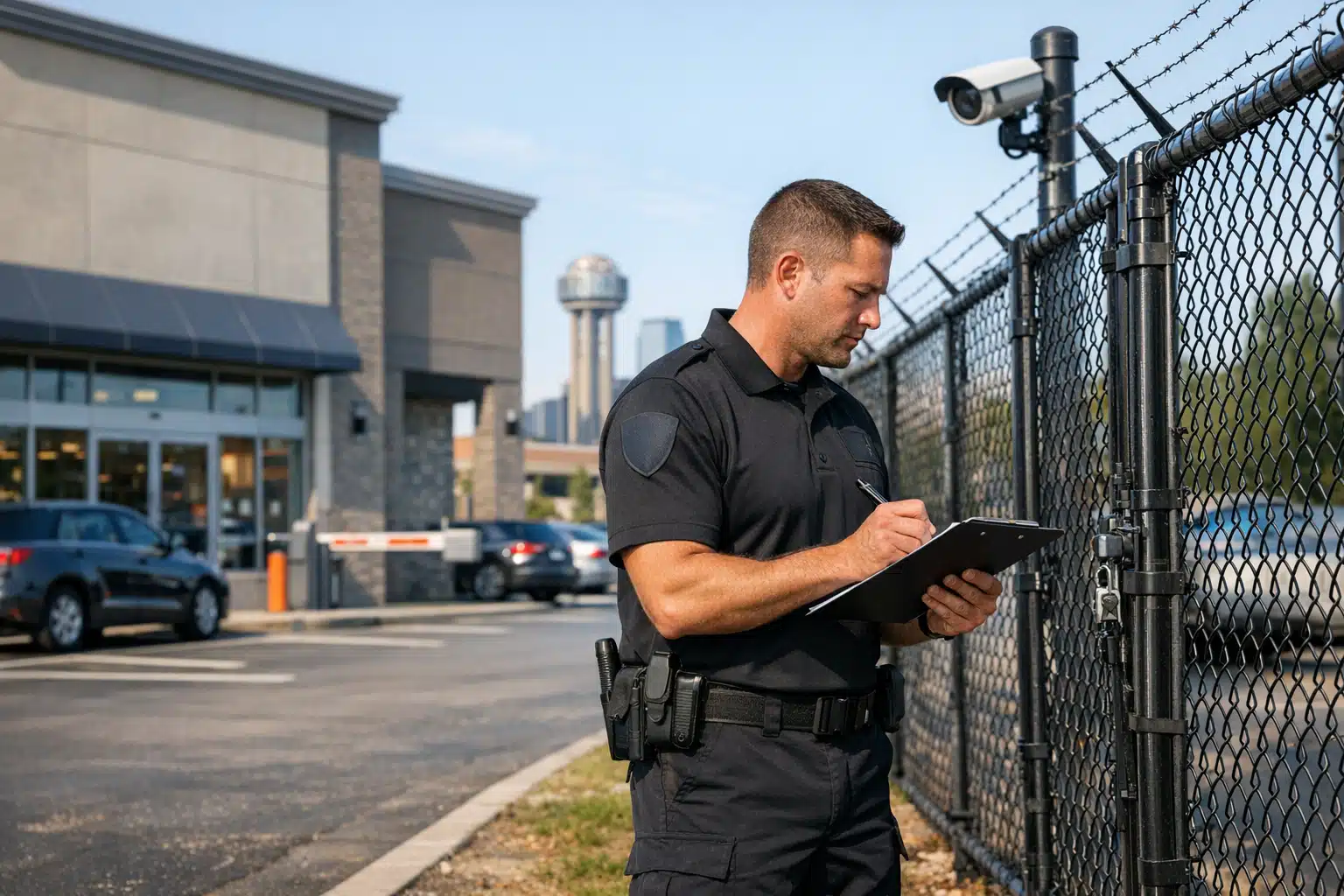
A security vulnerability assessment involves evaluating your property to identify weak points before criminals can exploit them. Start by reviewing entry points, lighting, access controls, and surveillance coverage. Walk the perimeter during different times of day, document gaps in protection, and prioritize fixes based on risk level and budget to strengthen your overall security posture.
Dallas reported over 40,000 property crimes in a recent year, according to city police data. Retail theft, construction site break-ins, and after-hours trespassing hit local businesses hard. A security assessment gives you a clear picture of where your Dallas property is exposed before criminals find those gaps first. This post walks you through the exact steps to evaluate your own site, spot weak points, and decide what protection fits your budget.
What a Security Assessment Actually Measures
A security assessment is a structured review of your property’s physical and operational weak points. It maps how someone could enter, steal, or cause harm without being seen or stopped.
The review covers three layers:
- Perimeter — fences, gates, parking lots, and exterior lighting.
- Building envelope — doors, windows, loading docks, and roof access.
- Interior and operations — cash handling, key control, and staff procedures.
Each layer either slows an intruder or fails silently. Your job is to find which layers fail on your specific property.
Why Dallas Business Owners Cannot Skip This
Dallas covers wide commercial corridors with uneven police coverage. Response times in outer districts stretch longer than downtown.
Construction crews across DFW lose copper wire, tools, and equipment to organized theft rings. A single assessment catches the entry points those crews leave open overnight.
How to Conduct a Security Assessment Step by Step
Follow this order to evaluate your Dallas property. Do it during daylight first, then repeat after dark.

- Walk your perimeter as an intruder would. Start at the farthest fence line. Note every gap, low spot, or unlocked gate.
- Test every exterior door. Check if locks engage fully. Look for propped doors near break rooms and loading bays.
- Map your lighting. Stand in dark corners at night. Any spot where you can hide is a spot a thief can too.
- Inventory your cameras. Confirm each one records, covers a real target, and has no blind spots at entrances.
- Review access control. Count how many keys and badges exist. Track who holds them and who left the company still holding them.
- Check response gaps. Time how long an alarm takes to reach a live person who can act.
Write down every finding. Photos work better than memory when you compare sites later.
Grade Each Weak Point by Risk
Not every gap deserves the same attention. Rank each finding using two questions.
- How likely is exploitation? An unlocked back gate facing an alley scores high.
- How costly is the loss? A server room or equipment yard raises the stakes fast.
Focus your first dollars on high-likelihood, high-cost gaps. A construction site with $200,000 in copper needs coverage before a low-traffic side entrance.
Common Vulnerabilities We Find on Dallas Properties
Certain problems repeat across the businesses our team reviews. Recognizing them speeds up your own assessment.
Apartment Communities
Gate arms broken and left open for weeks are the top issue. Tailgating at pedestrian gates ranks second.
Poor lighting near mail centers and pool areas invites loitering. Residents report packages stolen from these exact blind spots.
Construction Sites
Temporary fencing with loose panels gives crews false confidence. Thieves peel back one panel and load a truck in minutes.
Job trailers left unmonitored overnight lose generators and tools first. Remote video surveillance covers these hours when no crew is present.
Retail and Office
Rear loading doors propped for ventilation top the list. Employees create the gap without meaning to.
Cameras aimed at ceilings or blocked by shelving record nothing useful. A quick lens check during your walk fixes this.
On-Site Guards vs. Remote Video Surveillance
Your assessment tells you where you need coverage. The next question is how to cover it affordably.
On-site guards handle live confrontation, access control, and patrols. They stop incidents in progress and greet visitors.
Remote video surveillance watches multiple zones from a monitoring center. Trained operators speak through on-site speakers to warn off trespassers.
Cost and Fit Comparison
- Choose guards when you need physical presence, event crowd control, or daytime lobby coverage.
- Choose remote surveillance when you protect large yards, vacant hours, or several sites at once for less than round-the-clock guards.
- Combine both when a construction site needs daytime access control and overnight video coverage.
Many Dallas construction managers pair a daytime guard with night video. The mix costs less than two guard shifts and covers the theft window.

 Posted on Google
Turn Your Findings Into an Action Plan
An assessment means little without follow-through. Convert your notes into three lists.
- Fix now, no cost. Lock the propped door. Trim the bush blocking a camera. Collect keys from former staff.
- Fix soon, low cost. Add motion lights. Repair the gate arm. Reposition a camera.
- Plan and budget. Add guard coverage or remote monitoring for the gaps you cannot close alone.
Reassess every quarter. Dallas construction seasons and staff turnover open new gaps constantly.
Track Whether Fixes Work
Log incidents before and after each change. Fewer after-hours alarms mean your new lighting and video work.
Share results with your team and property owners. Measured drops in theft justify the next round of business security spending.
When to Bring in Professional Help
Self-assessment catches the obvious gaps. A trained security reviewer catches the ones you stopped seeing years ago.
Our Dallas team walks properties daily. We know which alley entrances draw repeat trespassers and which camera angles hold up in court.
We build a written plan matched to your property, hours, and risk level. That plan protects your business security without paying for coverage you do not need.
Conclusion
A security assessment shows you exactly where your Dallas property is exposed and what to fix first. Walk your perimeter, rank each gap by risk, and match coverage to your real weak points. When you want a second set of eyes or a monitoring quote, contact Twin City Security Dallas at 972‑385‑1144 by phone or text, or email Dallas@twincitysecurity.com.
Sources
- Dallas Police Department – Crime Statistics and Data
- Cybersecurity and Infrastructure Security Agency – Physical Security
- InterNACHI – Construction Site Theft Prevention
A security assessment helps Dallas business owners identify where their property is vulnerable to crime before criminals exploit those gaps. This guide explains how to evaluate your site, rank weak points by risk, and choose the right protection for your budget.
- Walk your perimeter as an intruder would - check fences, gates, locks, lighting, cameras, and access control during both daylight and after dark. Document every finding with photos.
- Rank each vulnerability by likelihood of exploitation and potential cost of loss. Focus spending on high-risk gaps like unlocked gates facing alleys or equipment yards with valuable materials.
- Common issues include broken apartment gate arms, loose construction site fencing, and propped loading doors. Consider pairing daytime guards with overnight remote video surveillance to cover theft windows affordably.