
Dallas Summer Crime Trends: Tailoring Security Solutions for Residential Areas
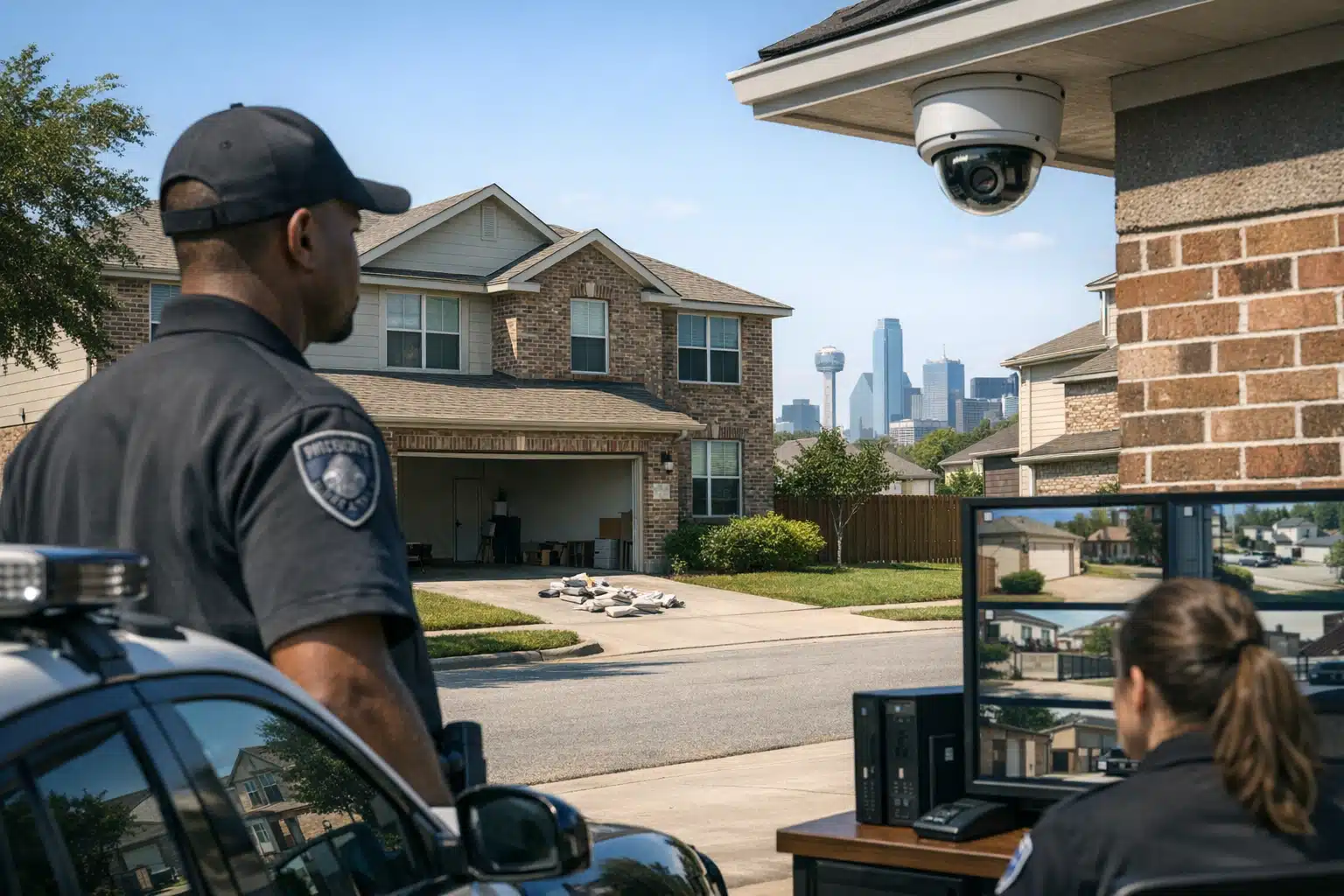
Crime rises in Dallas during summer because warmer weather leads to more opportunities for property offenses. Between June and August, burglaries and vehicle break-ins spike as residents spend more time away from home on vacations, leave windows open for ventilation, and stay outdoors later in the evening - all factors that create openings for criminal activity.
Why Summer Crime Trends Hit Dallas Residential Areas Hardest
Dallas property crime rises during the hottest months of the year. Data from the Dallas Police Department points to more burglaries and vehicle break-ins between June and August than in cooler seasons.
Warm weather changes how people live. Open windows, empty vacation homes, and longer daylight hours all shift the risk picture for residential communities.
Summer crime trends matter to every property manager and homeowner in North Texas. This post breaks down what changes each summer and how to adjust your residential security before problems start.
We work these neighborhoods. The patterns below come from real patrol observations across Dallas apartment communities and gated subdivisions.
What Drives Summer Crime Trends in Dallas Neighborhoods
Several conditions line up during Dallas summers to create opportunity for theft. Knowing the drivers helps you plan defenses that match the threat.
Vacant Homes During Vacation Season
Families leave town for a week or more in July. An empty house with piled-up mail signals an easy target to anyone watching the block.
Burglars study routines. A driveway with no car movement for days tells them the coast is clear.
Extended Daylight and Later Activity
Longer evenings mean more foot traffic and more cover for someone scoping properties. Package thieves and car prowlers blend into busy summer streets.
Heat-Related Habits That Invite Risk
Open garage doors for ventilation and unlocked windows are common in July heat. Both give thieves quick entry points that stay open for hours.
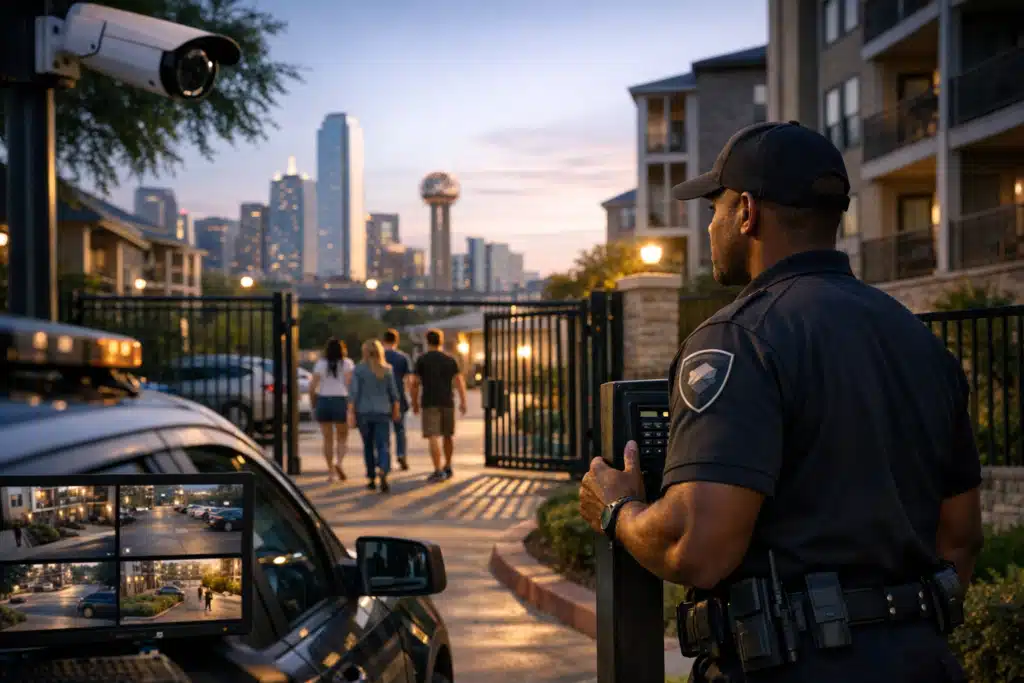
Pool areas and shared amenities draw crowds. Unmonitored gates get propped open, and outsiders slip into gated communities behind residents.
Dallas Summer Crime Trends by Property Type
Risk looks different depending on the property. Below are the patterns we see across the community types we patrol.
Apartment Communities
Parking lots see the most incidents. Vehicle burglaries climb when residents leave valuables visible during weekend outings.
- Catalytic converter theft spikes in open, poorly lit lots.
- Amenity trespassing rises as pools and gyms draw non-residents.
- Package theft increases with more online summer deliveries.
Gated Subdivisions and HOA Communities
Gate tailgating becomes a daily issue. One open gate can undo an entire access-control system.
Vacationing homeowners raise the count of empty houses per block. Break-ins cluster in these low-activity pockets.
Single-Family Rental Clusters
Backyard and side-entry break-ins grow when residents travel. Fence-line entry points get little attention until after a loss.
How On-Site Guards Cut Summer Crime in Residential Areas
On-site security guards stop crime before it happens. A visible presence changes the math for anyone weighing an easy target against getting caught.
Guards do more than stand at a gate. In Dallas summer conditions, their work covers the exact gaps that heat and travel create.
What Our Dallas Guards Focus On in Summer
- Vacation home checks. Guards log which homes have residents away and add them to patrol routes.
- Gate discipline. They stop tailgating and confirm every vehicle belongs.
- Amenity monitoring. Pool and clubhouse areas get regular walk-throughs after hours.
- Parking lot patrols. Foot rounds interrupt catalytic converter and vehicle theft attempts.
- Package staging watch. Guards keep eyes on drop zones during peak delivery windows.
A patrol schedule that shifts with summer risk beats a fixed routine. Predictable guards get worked around. Varied patrols do not.
How Remote Video Surveillance Protects Dallas Homes Overnight
Remote video surveillance is live camera monitoring handled by trained operators off-site. Cameras feed a monitoring center where staff watch for threats in real time.
This matters most during the late-night hours when break-ins peak. Operators spot intruders and respond before a crime finishes.
What Remote Monitoring Adds in Summer
- Voice-down warnings. Operators speak through on-site speakers to scare off trespassers.
- Instant police dispatch. Verified footage speeds up law enforcement response.
- 24/7 coverage. Cameras never take a break during a July heat wave.
- Cost control. Remote coverage costs less than round-the-clock on-site guards for many communities.
For a large apartment lot, cameras cover angles one guard cannot watch at once. Wide coverage catches vehicle prowlers the moment they arrive.

 Posted on Google
On-Site Guards vs Remote Surveillance: Which Fits Your Community?
Both approaches reduce summer crime. The right pick depends on your property size, budget, and risk profile.
When On-Site Guards Make Sense
- Gated entries that need active access control.
- Communities with frequent trespassing or loitering.
- Events, pool parties, or seasonal crowds needing hands-on management.
When Remote Surveillance Makes Sense
- Large parking areas with wide sightlines.
- Overnight coverage on a tighter budget.
- Properties with theft clustered in specific hours.
When to Combine Both
Many Dallas communities pair a daytime guard with overnight camera monitoring. This covers active hours in person and quiet hours by video.
The mix keeps costs reasonable and closes gaps that summer creates around the clock.
A Summer Security Checklist for Dallas Property Managers
Use this list before the season peaks. Each step targets a known summer weakness in residential areas.
- Audit lighting. Replace dead fixtures in lots and walkways before June.
- Trim landscaping. Overgrown summer foliage hides entry points and cameras.
- Test gates and access controls. Fix slow-closing gates that invite tailgating.
- Set a vacation-watch program. Let residents report travel dates for extra patrol attention.
- Review camera coverage. Add angles for pool areas and package rooms.
- Post visible signage. Notices of active monitoring deter opportunists.
- Schedule variable patrols. Avoid predictable timing that thieves can track.
Run this audit in May. Fixing weak points early beats reacting after a break-in.
Why Local Response Time Matters in Dallas
Speed decides whether a threat becomes a loss. A monitoring team that knows Dallas streets and police districts acts faster than a distant call center.
Our operators verify incidents and give responders exact location details. That cuts confusion during a live event and shortens arrival time.
Local guards know which apartment lots draw catalytic converter crews. That firsthand knowledge shapes where and when we patrol.
Protect Your Dallas Community Before Summer Crime Peaks
Summer crime trends put Dallas residential areas at higher risk from June to August, with burglaries and vehicle break-ins leading the rise. Matching on-site guards, remote surveillance, or both to your property closes the gaps that heat and vacation season open.
Twin City Security Dallas can assess your community and build a plan for the months ahead. Call or text 972‑385‑1144, email Dallas@twincitysecurity.com, or visit https://www.twincitysecuritydallas.com for a residential security assessment.
Sources
- Dallas Police Department – Crime Data and Statistics
- Bureau of Justice Statistics – Household Burglary and Property Crime Data
- FBI – Uniform Crime Reporting (UCR) Program
Dallas residential areas experience higher property crime rates during summer months, with burglaries and vehicle break-ins increasing between June and August due to vacant homes, open windows, and extended daylight hours.
- Apartment communities face rising parking lot incidents including vehicle burglaries and catalytic converter theft while gated subdivisions struggle with gate tailgating and break-ins at empty vacation homes.
- On-site security guards provide vacation home checks, gate discipline, amenity monitoring, and variable parking lot patrols to address summer-specific risks.
- Remote video surveillance offers 24/7 coverage with voice-down warnings and instant police dispatch while property managers should audit lighting, test gates, and trim landscaping before peak season.