
Preparing for Summer: Security Tips for Dallas Residential Communities
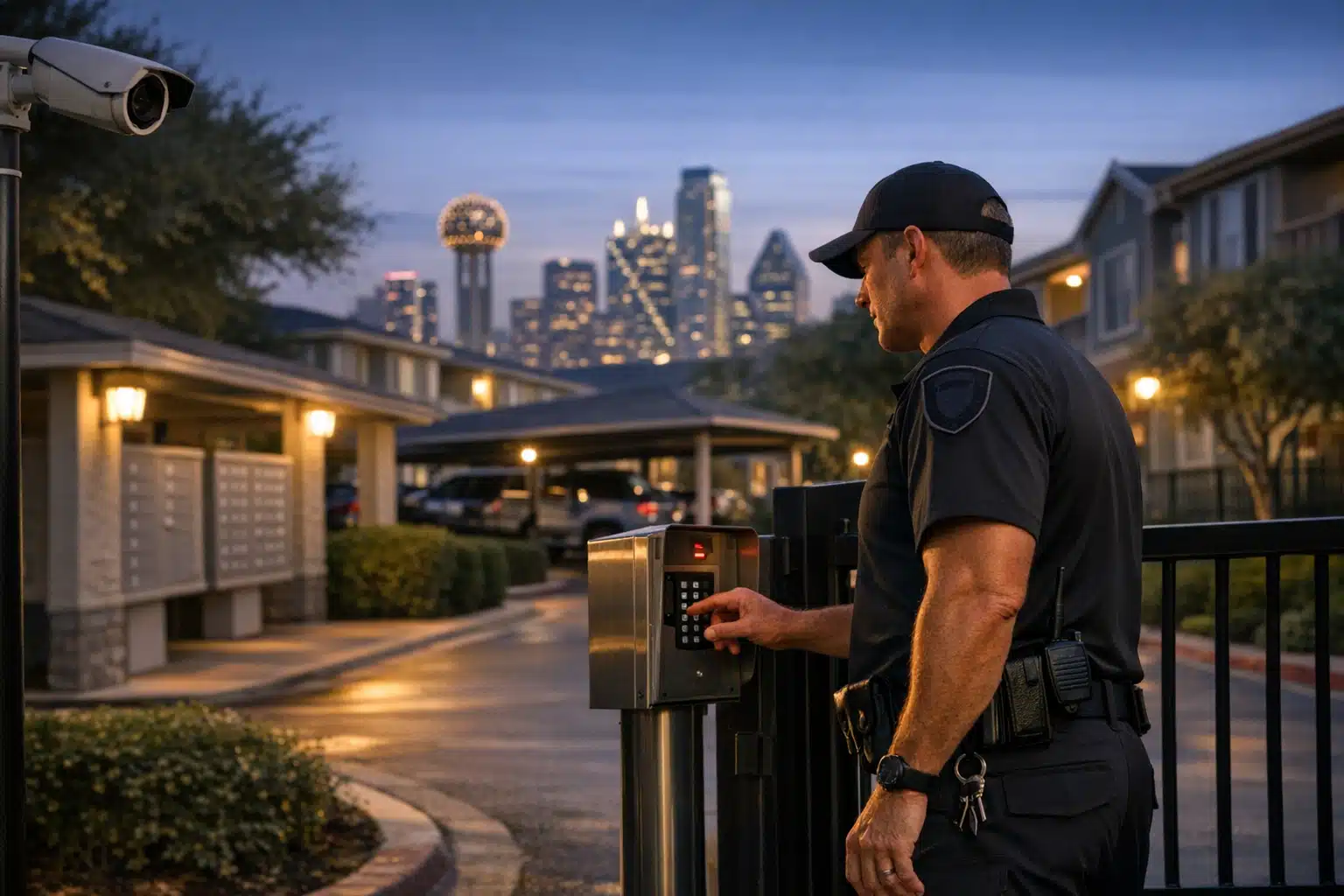
Preparing for summer security in Dallas residential communities involves addressing seasonal risks that peak between June and August. Property managers should focus on longer daylight hours, increased pool deck activity, and gaps created by vacationing tenants. Effective preparation includes identifying where communities typically lose ground and implementing practical steps designed to handle real heat-season threats from trespassers and thieves.
Summer security problems in Dallas residential communities peak between June and August, when longer daylight hours, packed pool decks, and vacationing tenants create predictable gaps for trespassers and thieves. Property managers face a specific mix of seasonal risks that quiet winter months rarely produce. This post breaks down what changes in summer, where Dallas communities lose ground, and the practical steps that hold up against real heat-season activity.
Why Summer Security Risks Spike in Dallas Communities
Dallas summers stretch daylight past 8:30 p.m., which shifts foot traffic and loitering later into the evening. Amenity areas stay active, and access gates cycle open more frequently.
Property crime patterns in Texas show measurable seasonal movement. Warmer months bring more open windows, propped doors, and unattended vehicles.
Three summer conditions drive most incidents at apartment and townhome properties:
- Vacant units and away tenants. Vacation travel leaves apartments dark for days, signaling easy targets.
- Pool and amenity crowds. After-hours pool hopping and unauthorized guests strain access control.
- Package and vehicle theft. Deliveries pile up, and parked cars sit in lots with predictable overnight lulls.
A Dallas property manager who plans for these three patterns removes most of the low-effort opportunities criminals count on.
Summer Security Checklist for Residential Community Managers
Start with a walk of the property at the two times problems happen most: dusk and after midnight. Lighting and access weaknesses look different at those hours than during a 10 a.m. inspection.
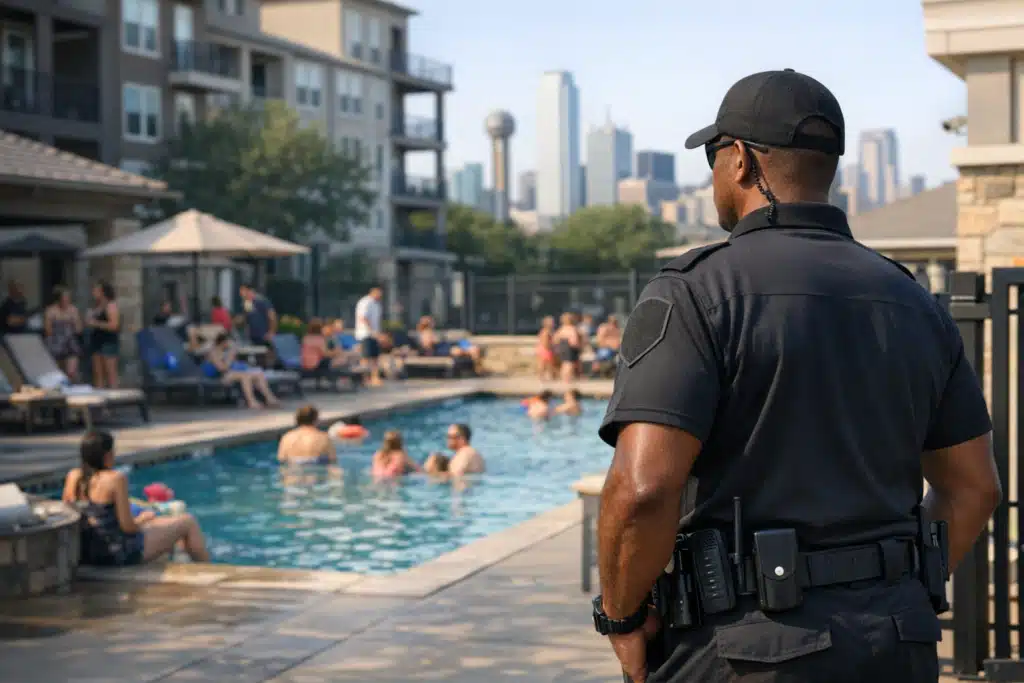
Step-by-Step Summer Prep
- Audit exterior lighting. Replace dead fixtures near mail kiosks, carports, and pool gates before June.
- Test every access gate. Confirm gates close fully and pedestrian gates latch. Broken vehicle gates invite tailgating.
- Trim summer overgrowth. Fast-growing shrubs create hiding spots along ground-floor windows and stairwells.
- Post pool hours and enforce them. Signage alone will not stop after-hours use. Physical or monitored enforcement will.
- Set a vacation-hold protocol. Let tenants report travel dates so patrols can watch flagged units.
Run this list in May. Fixing lighting and gate hardware in advance beats reacting after the first break-in report.
How Remote Video Surveillance Covers Dallas Pool Decks and Parking Lots
Remote video surveillance is live camera monitoring handled by trained agents at an off-site station. Agents watch feeds in real time and respond to activity as it happens.
For summer, this matters most at pool decks and back parking rows. Those areas draw after-hours trouble that a leasing office camera recording to a hard drive never stops.
What Live Monitoring Does That Recorded Footage Cannot
Recorded cameras answer questions after damage is done. Live monitoring interrupts the event.
- Voice-down warnings. Agents speak over on-site speakers when they spot pool hoppers or loiterers.
- Real-time dispatch. Agents call Dallas police or on-site staff the moment activity crosses a line.
- Documented timestamps. Every alert is logged, which supports lease enforcement and insurance claims.
A monitored pool camera that issues a voice warning at 1 a.m. clears trespassers before they ever get in the water.
On-Site Guards vs. Remote Monitoring: Costs for Dallas Communities
Both approaches work. The right choice depends on property size, incident history, and budget.
On-Site Security Guards
An on-site guard gives a physical presence at gates, clubhouses, and patrol routes. Tenants see the guard, and visible deterrence matters at large properties.
Guards cost more per hour than remote coverage. Round-the-clock staffing at a single post runs the highest monthly figure of any option.
Remote Video Monitoring
Remote monitoring covers multiple zones at once for a lower monthly cost than a full guard schedule. One agent station watches pool decks, lots, and entrances together.
The tradeoff is physical presence. Remote agents deter and dispatch, but they cannot physically escort a tenant to a car.
Combining Both for Summer
Many Dallas communities run remote monitoring overnight and add a weekend guard during peak pool hours. This pairing controls cost and puts coverage where summer incidents cluster.
A 300-unit property might staff a guard Friday and Saturday evenings, then rely on monitored cameras the rest of the week.
Managing Amenity Areas During Peak Season
Pools, fitness rooms, and clubhouses generate most warm-weather complaints. Access control and clear rules reduce friction before it starts.
Access Control Steps
- Reset amenity fobs each spring. Deactivate credentials tied to moved-out tenants.
- Cap guest counts in writing. Limit pool guests per unit and post the number at the gate.
- Add a monitored camera at the pool gate. Live coverage stops fence-jumping faster than any sign.
A community that resets fobs and monitors the pool gate cuts unauthorized entry sharply through the hottest months.

 Posted on Google
Protecting Vacant and Vacationing Units
Summer travel leaves units empty for stretches, and thieves read dark windows as opportunity. A simple tenant-reporting habit closes that gap.
Give tenants a quick way to report travel dates. Flag those units for extra patrol attention or camera focus.
Ask departing tenants to:
- Report travel dates to the office.
- Pause package deliveries or reroute to a locker.
- Leave a light on a timer to avoid a dark unit.
These low-cost habits remove the visual cues that draw break-ins at residential communities during vacation weeks.
Building a Summer Security Plan That Holds Up
A summer security plan works when it matches your property’s real incident hours and layout. Generic coverage wastes money on quiet zones and misses the busy ones.
Pull your last two summers of incident logs. Map where and when problems happened, then place coverage on those exact points.
Review the plan again in August. What worked in June may need adjustment as school breaks change foot traffic patterns.
Conclusion
Summer security failures in Dallas communities trace back to predictable gaps: dark amenity areas, propped gates, and unwatched vacant units. Fixing lighting and access in May, then layering live monitoring or guards over your worst incident hours, stops most problems before they start. Twin City Security Dallas provides on-site guards and remote video monitoring built around your property’s real risk hours.
Call or text 972‑385‑1144, email Dallas@twincitysecurity.com, or visit https://www.twincitysecuritydallas.com for a Dallas community security assessment.
Sources
- FBI – Uniform Crime Reporting Program
- Dallas Police Department – Crime Information and Statistics
- Bureau of Justice Statistics – Property Crime
Summer security problems in Dallas residential communities peak from June through August, when longer daylight hours, crowded pool areas, and vacationing tenants create opportunities for trespassers and thieves.
- Property managers should audit exterior lighting, test access gates, trim overgrowth, and enforce pool hours before June to address common summer vulnerabilities.
- Remote video monitoring with live agents can issue voice warnings and dispatch police in real time, while on-site guards provide physical presence - many properties combine both approaches for peak season coverage.
- Tenants traveling should report dates to management, pause package deliveries, and use light timers to avoid signaling empty units to potential thieves.