Choosing Between Armed and Unarmed Security for Dallas Events
Picking the Right Security Starts With Your Event Type
Dallas hosts thousands of public and private events each year, from corporate galas in Uptown to music festivals at Fair Park. Each one carries a different risk profile.
Choosing armed security versus unarmed officers changes your cost, your liability, and the message you send to guests. Many event organizers pick wrong because they guess instead of measuring real risk.
This post gives you a decision framework based on event type, crowd size, and what Dallas crime data says about your venue. By the end, you can match the right officer type to your event with confidence.
Armed Security vs. Unarmed Security: The Practical Difference
Armed security officers carry a firearm and hold a Level III or Level IV license from the Texas Department of Public Safety. Unarmed officers hold a Level II non-commissioned license and carry no firearm.
The difference goes beyond the weapon. It changes response capability, deterrence, insurance requirements, and how guests feel.
What Unarmed Officers Do Best
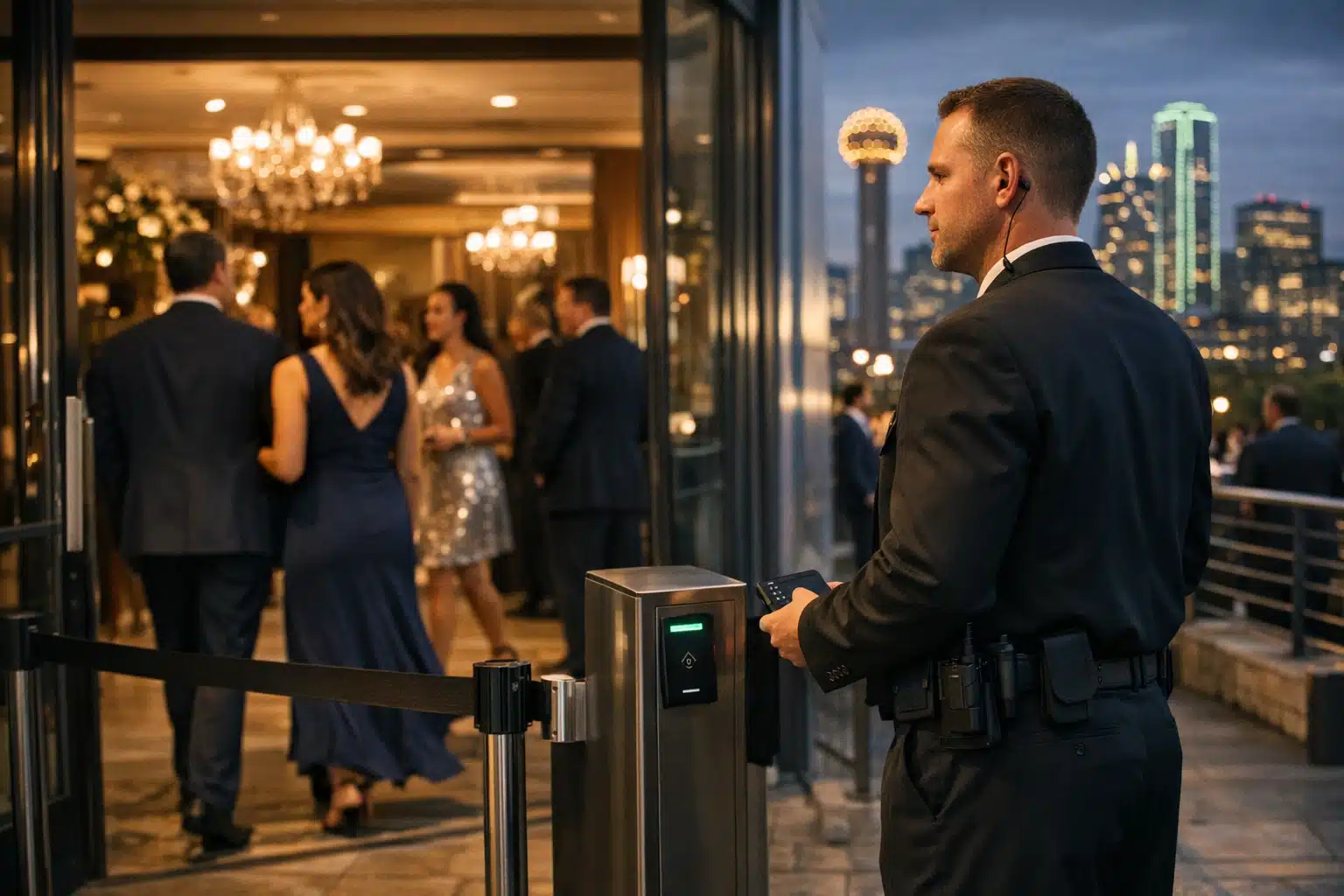
- Access control at entrances and VIP areas
- Crowd flow management and wayfinding
- Visible deterrence for low-risk gatherings
- Incident reporting and first response until police arrive
- Ejecting disruptive guests at smaller venues
Unarmed officers fit events where the main concerns are order and presence, not armed threats.
What Armed Officers Add
- Deterrence against high-value or high-threat targets
- Protection for cash handling and ticket revenue
- Capability to respond to armed confrontation
- Executive protection for VIPs and public figures
Armed officers carry more weight in situations where the stakes justify a firearm on site.
A Risk-Based Framework for Dallas Event Security
To decide between armed and unarmed event security, score your event across five risk areas. Rate each one low, medium, or high.
- Crowd size. Under 200 guests leans unarmed. Over 1,000 pushes toward armed coverage at key points.
- Cash and valuables. Ticket sales, bar revenue, jewelry, or electronics raise the case for armed officers.
- Venue location. Check the Dallas Police crime data for the patrol beat around your site.
- Guest profile. Public figures, political events, or controversial topics raise threat levels.
- Alcohol service. Open bars increase the odds of conflict and aggression.
If you score high on two or more areas, armed coverage deserves serious weight. Mostly low scores point to an unarmed team.
Example: A Corporate Awards Dinner Downtown
Picture a 300-person awards dinner at a downtown hotel. No cash handled, no public controversy, controlled guest list, moderate bar service.
This event scores low on four of five areas. An unarmed team handling access and floor presence fits the risk. Armed officers would add cost without matching a real threat.
Example: An Outdoor Music Festival at Fair Park
Now picture a 5,000-person festival with on-site cash bars and ticket booths. Large crowd, heavy alcohol, open venue, revenue on hand.
This event scores high on size, cash, and alcohol. A mixed team makes sense here. Unarmed officers manage crowd flow while armed officers cover cash points and perimeter response.
Example: A Political Fundraiser With a Public Figure
A private fundraiser hosting an elected official carries elevated threat regardless of crowd size. Armed officers trained in executive protection fit this event.
The guest profile alone justifies the decision. Threat level, not headcount, drives the choice here.
Why Local Response Time Matters in Dallas
Dallas Police response times vary widely by patrol division and call priority. Non-emergency calls can wait far longer than many organizers expect.
On-site officers close that gap. They act in seconds, not minutes, during an incident.
For a large event in a higher-crime beat, that head start matters. Armed officers extend what your on-site team can handle before police arrive.
Texas Licensing and Insurance Realities
Armed officers in Texas must hold a commissioned license from the Texas Department of Public Safety Private Security Program. They complete firearms training and ongoing qualification.
This affects you in two ways:
- Cost. Armed officers bill at higher hourly rates than unarmed officers.
- Insurance. Some venues and policies require specific coverage levels for armed personnel.
Ask your venue about its armed-officer policy early. Fair Park, convention spaces, and hotels sometimes set their own rules.

 Posted on Google
How to Build the Right Event Security Plan
Follow these steps to match officer type to your Dallas event.
- Map your venue. Identify entrances, cash points, VIP zones, and blind spots.
- Score your five risk areas. Use the framework above honestly.
- Check the local crime data. Pull stats for your venue’s patrol beat.
- Confirm venue rules. Verify armed-officer and insurance requirements.
- Decide your mix. Many Dallas events use a blended team, not all-armed or all-unarmed.
- Set posts and staffing ratios. A common starting point is one officer per 100 guests, adjusted for risk.
A blended team gives you flexibility. You place armed officers where threats concentrate and unarmed officers where presence matters most.
When Remote Video Surveillance Supports Event Security
Remote video surveillance adds a second set of eyes for parking lots, perimeters, and overflow areas. Trained operators watch live feeds and alert on-site officers to problems.
For multi-day setups or large footprints, this coverage stretches your on-site team further. It works well for construction-style event builds and festival grounds left unattended overnight.
Common Mistakes Dallas Organizers Make
Avoid these errors when planning event coverage.
- Defaulting to all-armed because it feels safer, then overspending.
- Defaulting to all-unarmed at a high-cash, high-crowd event.
- Ignoring the venue’s patrol beat crime history.
- Understaffing entrances, which creates bottlenecks and conflict.
- Booking too late, leaving no time to license and brief officers.
Each mistake traces back to skipping the risk assessment. The framework above prevents most of them.
Summary and Next Steps
Match your officer type to measured risk, not instinct. Unarmed teams fit controlled, low-cash events, and armed coverage fits high-crowd, high-value, or high-threat situations. Many Dallas events work best with a blended team shaped around the venue.
Twin City Security Dallas can assess your event and recommend the right officer mix for your risk level. Call or text 972‑385‑1144, email Dallas@twincitysecurity.com, or visit https://www.twincitysecuritydallas.com for an event security quote.
Sources