
The Benefits of Integrating Mobile Patrols with Remote Surveillance in Dallas
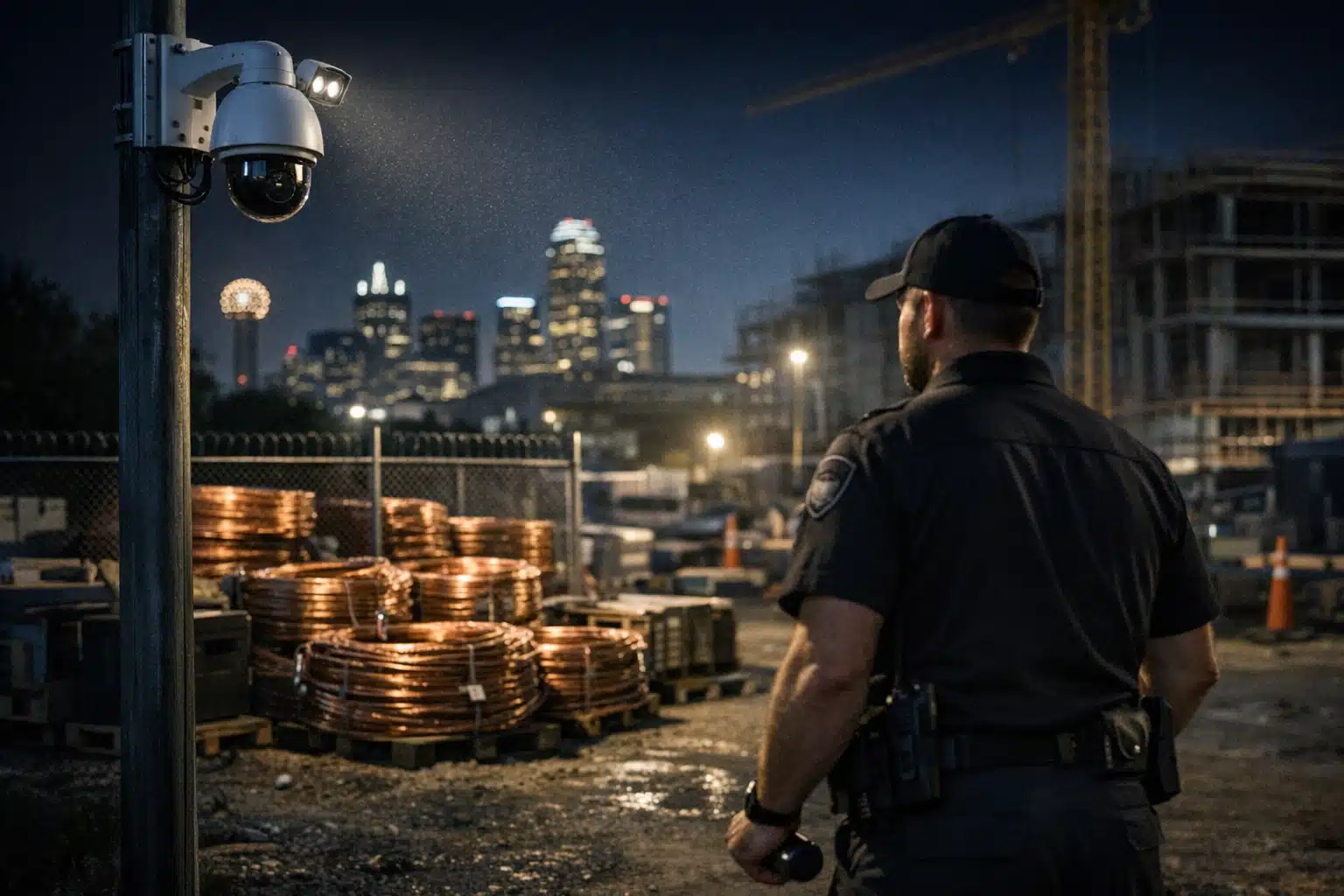
Integrating mobile patrols with remote surveillance in Dallas creates a layered security approach that combines real-time video monitoring with physical response capabilities. This combination allows security teams to detect suspicious activity through cameras and dispatch patrol officers immediately. The strategy reduces response times, deters criminals more effectively, and provides cost-efficient coverage for high-risk areas like construction sites, vacant lots, and parking facilities.
Why Dallas Properties Need More Than One Layer of Security
Dallas reported over 60,000 property crime offenses in a recent year, according to city crime data. Vacant lots, construction sites, and apartment parking areas absorb a large share of that risk.
Mobile patrols and remote surveillance each solve part of this problem. Used together, they cover the gaps a single method leaves open.
This article breaks down how the two methods reinforce each other. You get faster verification, wider coverage, and lower cost per protected acre across Dallas properties.
What Mobile Patrols and Remote Surveillance Actually Do
Mobile patrols are marked security vehicles that move between locations on scheduled and randomized routes. Officers inspect gates, lighting, entry points, and report physical issues in real time.
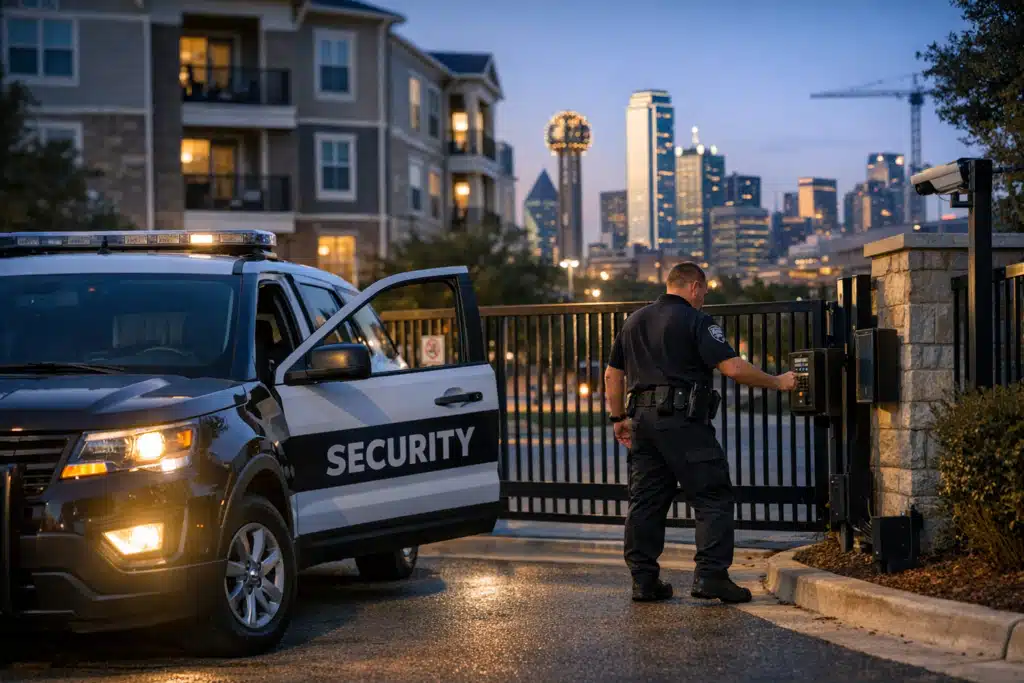
Remote surveillance is live camera monitoring handled by trained operators off-site. Operators watch feeds, flag suspicious activity, and trigger a response before a crime finishes.
The gap each method leaves alone
- Cameras alone record events but cannot physically confront an intruder.
- Patrols alone cover a site every 30 to 60 minutes, leaving windows between passes.
- Static guards cost more and watch one fixed point, not the full perimeter.
A camera sees the person cutting a fence. A patrol vehicle reaches them. Neither achieves that outcome working alone.
How Integrated Mobile Patrols Speed Up Response in Dallas
The integrated model works on a verify-then-dispatch sequence. Operators confirm a live threat on camera, then send the nearest patrol unit.
A real scenario on a North Dallas construction site
A camera flags movement near a copper wire staging area at 2:14 a.m. The remote operator confirms two people loading a truck.
The operator radios the patrol unit already two blocks away on its route. The vehicle arrives in under four minutes, lights active.
The suspects flee before loading finishes. No wire lost, no arrest paperwork, no insurance claim.
Why verification matters for police calls
Dallas police prioritize verified alarm calls over unverified ones. A live operator eyewitness account moves your call up the queue.
False alarms drain response resources. Camera verification cuts false dispatches and keeps officers focused on real events.
Cost Comparison: On-Site Guards vs. the Integrated Model
A single stationary guard covers roughly one entry point per shift. Full perimeter coverage on a large site can require four or more guards.
The integrated model shifts most watching to remote operators and dispatches patrols on demand. This lowers labor cost per protected acre.
How the math works for a 10-acre Dallas site
- All static guards: Multiple posts running 24/7 drive the highest monthly cost.
- Cameras only: Cheaper, but no live response and weak deterrence at night.
- Mobile patrols plus remote surveillance: One patrol route covers several sites, and operators watch all cameras at once.
Property managers running multiple Dallas locations gain the most. One patrol vehicle can service several nearby buildings on a rotating schedule.
Best Uses for Integrated Security Across Dallas
Some property types benefit more than others from the combined method. Large footprints and after-hours vacancy raise the value.
Construction sites
Copper, tools, and equipment vanish overnight from unsecured lots. Cameras catch the approach, and patrols stop the loading.
Dallas construction activity peaks in warm months, raising theft exposure. Randomized patrol timing prevents thieves from learning a fixed schedule.
Apartment communities
Parking areas and mail rooms draw break-ins and package theft. Operators watch cameras overnight, and patrols handle noise complaints and trespassers.
Event venues
Crowd flow and parking lots need eyes and feet at once. Cameras track entry gates while patrols move across the grounds.

 Posted on Google
How to Build an Integrated Security Plan for Your Dallas Property
To combine both methods effectively, follow these steps in order.
- Map your risk zones. Identify entry points, dark corners, and high-value storage areas.
- Place cameras for verification, not just recording. Cover approach paths so operators see intruders early.
- Set randomized patrol routes. Vary timing so no one predicts the next pass.
- Define a dispatch protocol. Agree on what triggers a patrol response versus a police call.
- Review incident logs monthly. Adjust camera angles and patrol frequency based on real events.
Questions to ask before you hire
- How fast can a patrol unit reach my site after a camera alert?
- Are operators watching my cameras live or reviewing after the fact?
- How are patrol routes randomized to avoid predictable gaps?
- Are officers licensed under Texas Department of Public Safety rules?
Texas Licensing and Compliance Notes
Security officers and companies in Texas fall under the Private Security Bureau. This agency sits within the Texas Department of Public Safety.
Always confirm your provider holds active state licensing. Ask for the company license number and officer registration status.
Licensed patrol officers carry authority that unmonitored cameras cannot match. Pairing both keeps your Dallas property covered and compliant.
Measuring Results After Integration
Track a few numbers to confirm the model works for your site. These figures tell you whether coverage improved.
- Average response time from camera alert to patrol arrival.
- Verified incidents stopped before loss occurred.
- Reduction in theft claims across a full quarter.
- Police call accuracy as fewer false alarms are logged.
Most Dallas sites see the sharpest drop in overnight theft within the first 90 days. The deterrent effect grows once thieves notice active patrols.
Conclusion
Mobile patrols give you feet on the ground, and remote surveillance gives you eyes everywhere. Together they verify threats fast and stop losses across large Dallas properties at lower cost than static guards alone.
Twin City Security Dallas builds integrated patrol and monitoring plans for construction sites, apartments, and event venues. Call or text 972‑385‑1144, email Dallas@twincitysecurity.com, or visit https://www.twincitysecuritydallas.com for a Dallas security assessment.
Sources
- Dallas Police Department – Crime Statistics and Reporting
- Texas Department of Public Safety – Private Security Bureau
- FBI – Uniform Crime Reporting and Property Crime Data
Combining mobile patrols with remote surveillance provides Dallas properties with faster threat verification, wider coverage, and lower costs compared to static guards alone. This integrated approach addresses the city's high property crime rate by closing gaps that either method leaves when used independently.
- Dallas reported over 60,000 property crime offenses in a recent year, with vacant lots, construction sites, and apartment parking areas facing high risk. Cameras alone cannot confront intruders, while patrols leave 30 to 60 minute gaps between passes.
- The integrated model uses a verify-then-dispatch sequence where remote operators confirm threats on camera before sending nearby patrol units. Dallas police prioritize verified alarm calls, making this approach more effective for response.
- Construction sites, apartment communities, and event venues benefit most from combined security. Property managers with multiple locations gain efficiency since one patrol vehicle can service several nearby buildings on rotating schedules.