
Strategies for Preventing Crime in Dallas Business Parks
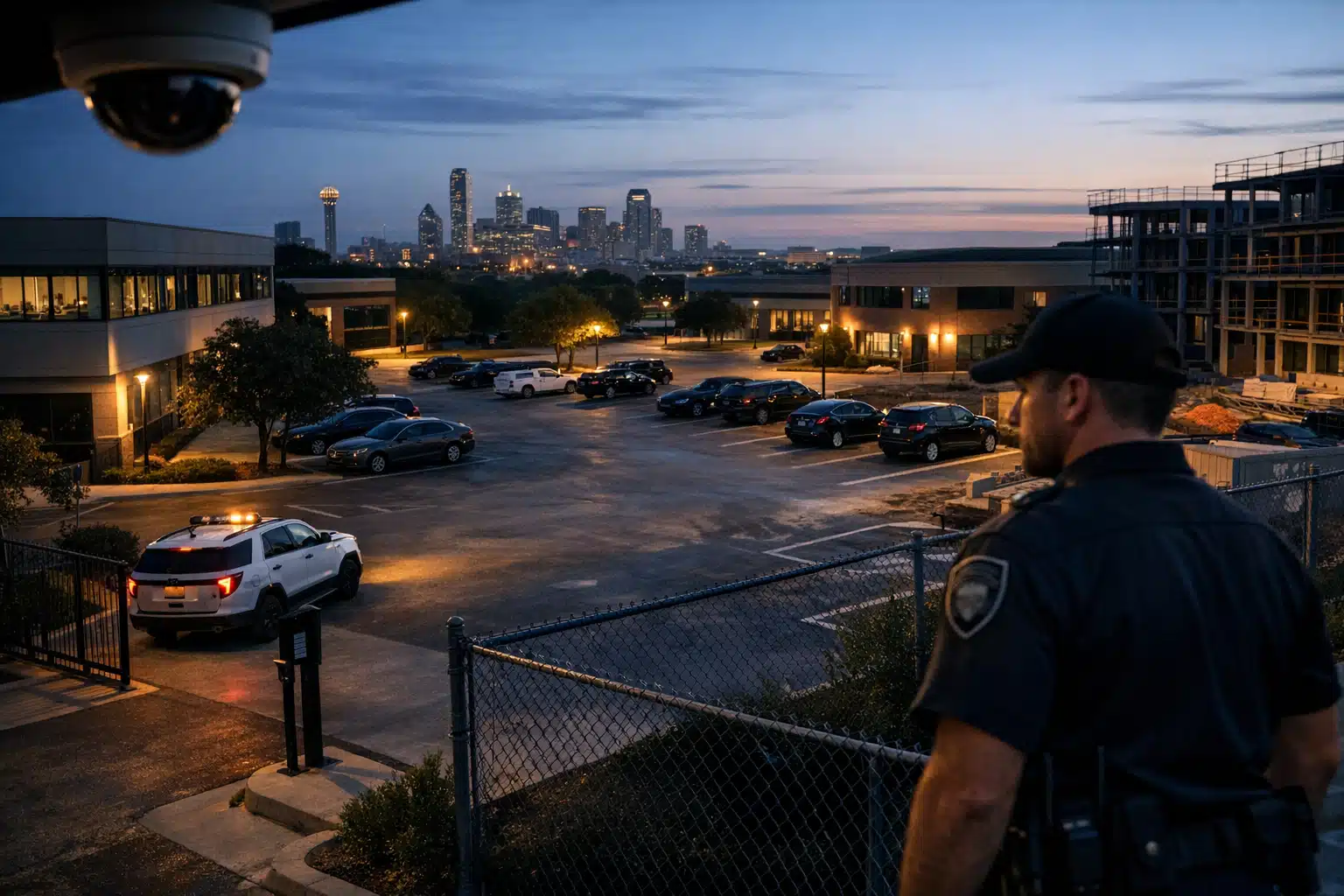
Preventing crime in Dallas business parks requires a layered approach that addresses shared spaces between buildings. Effective strategies include installing surveillance cameras at parking lots and loading zones, improving lighting in common areas, coordinating security patrols among tenants, controlling access points with gates or key cards, and establishing communication networks between neighboring businesses to report suspicious activity quickly.
Dallas business parks face a problem most downtown offices do not: shared space with few eyes watching it. The DFW region reported over 200,000 property crime offenses in recent years, and multi-tenant commercial parks are easy marks. Strong business park security closes the gaps between buildings, parking lots, and after-hours loading zones. This post breaks down practical crime prevention strategies built for the layout and communal nature of Dallas business parks.
Why Business Parks Face Different Security Risks
Business parks spread tenants across multiple buildings on a single shared property. That layout creates security gaps a single-tenant office never deals with.
Each tenant assumes someone else watches the common areas. No one does. Thieves know this.
Common Weak Points in Dallas Business Parks
- Shared parking lots with low lighting after 7 p.m.
- Loading docks and rear alleys hidden from street view
- Unmonitored common walkways between buildings
- Vacant or between-lease suites with no active occupant
- HVAC units and copper wiring on rooftops and ground pads
Copper and catalytic converter theft remains a steady problem across Dallas commercial zones. Business parks with open rear access see repeat hits.
How Remote Video Surveillance Protects Dallas Business Parks
Remote video surveillance is a camera system monitored live by trained agents off-site. When a camera detects motion after hours, an agent reviews the feed in real time.
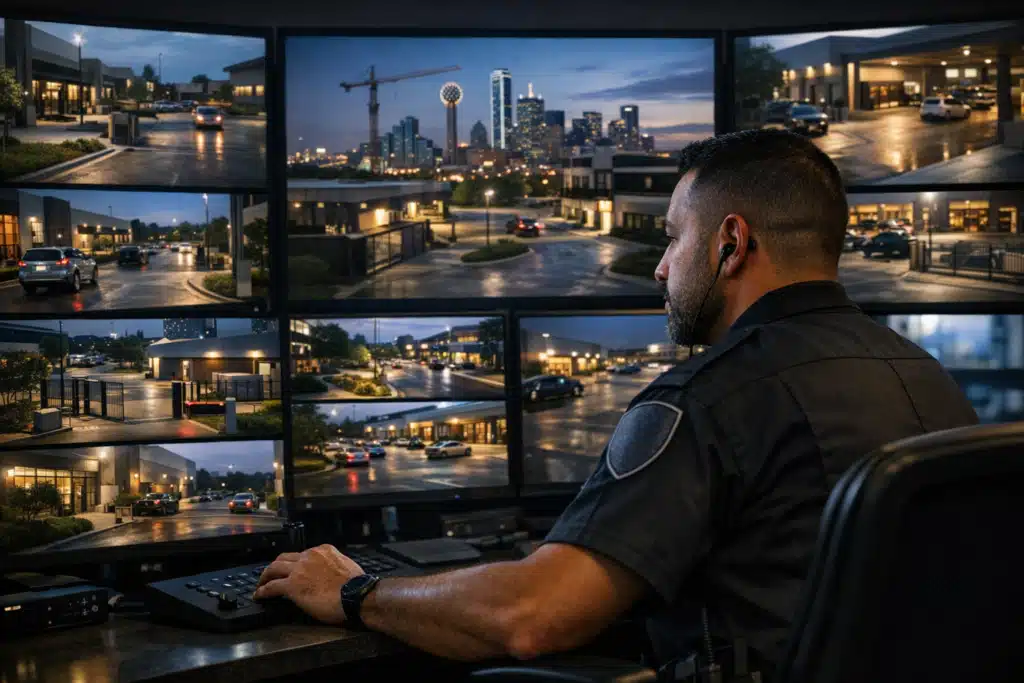
For a multi-building park, this coverage model fits the shared layout. One monitoring center watches every lot, dock, and walkway at once.
What Remote Monitoring Does During an Incident
- Motion triggers an alert at the monitoring center.
- An agent reviews the live feed within seconds.
- If a trespasser is confirmed, the agent issues a voice warning over on-site speakers.
- Most intruders leave once they hear a live human calling them out.
- If they stay, the agent contacts Dallas police with a live, verified report.
Verified alarms get faster police response than standard alarm calls. Dallas officers prioritize confirmed break-ins over unverified sensor trips.
The speaker warning matters more than people expect. A recorded siren gets ignored. A live voice naming someone’s clothing and location ends most attempts fast.
On-Site Guards vs. Remote Monitoring: What Business Parks Should Weigh
Both models work. The right choice depends on your park’s traffic, tenant mix, and budget.
When On-Site Guards Make Sense
On-site guards fit parks with heavy daytime foot traffic or valuable ground-level inventory. A visible uniform deters loitering and handles access questions in person.
- Parks with tenant retail or walk-in customer traffic
- Properties with active vehicle gates needing manual checks
- Sites with recent assault or confrontation incidents
When Remote Monitoring Makes Sense
Remote monitoring fits parks that empty out at night. The risk window is after hours, and cameras cover more ground per dollar.
- Parks with vacant lots and docks after 6 p.m.
- Multi-building sites too large for one guard to patrol
- Owners who want full coverage at a lower monthly cost
The Hybrid Model Most Dallas Parks Choose
Many Dallas business parks run a mix. A daytime guard covers access and tenant questions. Remote cameras take over at night when the property clears out.
This split keeps costs down without leaving night hours exposed. One guard cannot watch six buildings at 2 a.m. Cameras can.
Practical Crime Prevention Steps for Business Park Managers
You can cut risk before hiring any security provider. Start with the physical property.
Step-by-Step Site Hardening
- Audit lighting at every lot entrance, dock, and walkway after dark.
- Trim landscaping blocking camera sightlines or hiding rear doors.
- Cage rooftop HVAC units and ground-pad copper lines.
- Mark vacant suites clearly and check them on a schedule.
- Post visible signage stating the property is monitored.
- Control after-hours access to shared lots with gates or bollards.
Signage works. Studies on commercial burglary show offenders scout for easy targets first. Visible monitoring notices move them to the next property.
Coordinate With Tenants on Shared Responsibility
Shared space needs shared rules. Pull tenants into one plan instead of letting each fend alone.
- Agree on common-area lighting standards across all leases.
- Share one emergency contact list for after-hours incidents.
- Set rules for dumpster, dock, and parking use.
- Report suspicious activity to one central point, not six.
A park where tenants talk catches problems early. A park where they do not becomes a soft target.

How Dallas Crime Patterns Shape Security Planning
Dallas property crime concentrates in predictable windows. Theft from vehicles spikes in parking lots during holiday months. Metal theft rises when copper prices climb.
Business parks near major corridors like I-35, I-635, and US-75 see more drive-up theft. Easy highway access cuts both ways: good for tenants, good for thieves looking for a fast exit.
Timing Your Coverage to Real Risk
Match your security hours to when crime happens. For most Dallas parks, that means 6 p.m. to 6 a.m. and weekends.
Paying for 24-hour guards when the lot is full of workers all day wastes budget. Shift spending to the empty hours instead.
Building a Security Plan for Your Business Park
A working plan matches your park’s real layout to real risk. Generic packages miss the gaps between buildings.
A proper site assessment walks your property after dark. It maps blind spots, tests lighting, and finds the doors and docks a thief would try first.
Twin City Security Dallas builds plans around your park’s specific layout and tenant mix. Our team covers shared lots, loading zones, and walkways with on-site patrols, remote monitoring, or a mix of both.
Conclusion
Business parks fail on shared space no single tenant watches. Closing the gaps between buildings with coordinated lighting, remote cameras, and timed patrols stops most crime before it starts. Combining tenant cooperation with verified monitoring gives Dallas parks coverage that fits their layout and budget.
Ready to secure your Dallas business park? Contact Twin City Security Dallas for a site assessment or monitoring quote. Call or text 972-385-1144, email Dallas@twincitysecurity.com, or visit https://www.twincitysecuritydallas.com.
Sources
- Dallas Police Department – Crime Statistics and Data
- FBI – Uniform Crime Reporting Program
- ASU Center for Problem-Oriented Policing – Commercial Burglary Guides
Dallas business parks face unique security challenges due to shared spaces with limited oversight, making them targets for property crime. Twin City Security Dallas offers tailored solutions combining on-site guards, remote video monitoring, or hybrid approaches based on each park's layout and risk profile.
- Multi-tenant parks have weak points like shared parking lots with poor lighting, hidden loading docks, and unmonitored walkways that thieves exploit when no single tenant takes responsibility for common areas.
- Remote video surveillance with live monitoring allows agents to issue real-time voice warnings and provide verified reports to police - resulting in faster response times than standard alarm calls.
- Property managers can reduce risk through site hardening steps like auditing lighting, caging HVAC units to prevent copper theft, posting monitoring signage, and coordinating security rules across all tenants.