
The Benefits of Remote Video Surveillance for Dallas Construction Sites
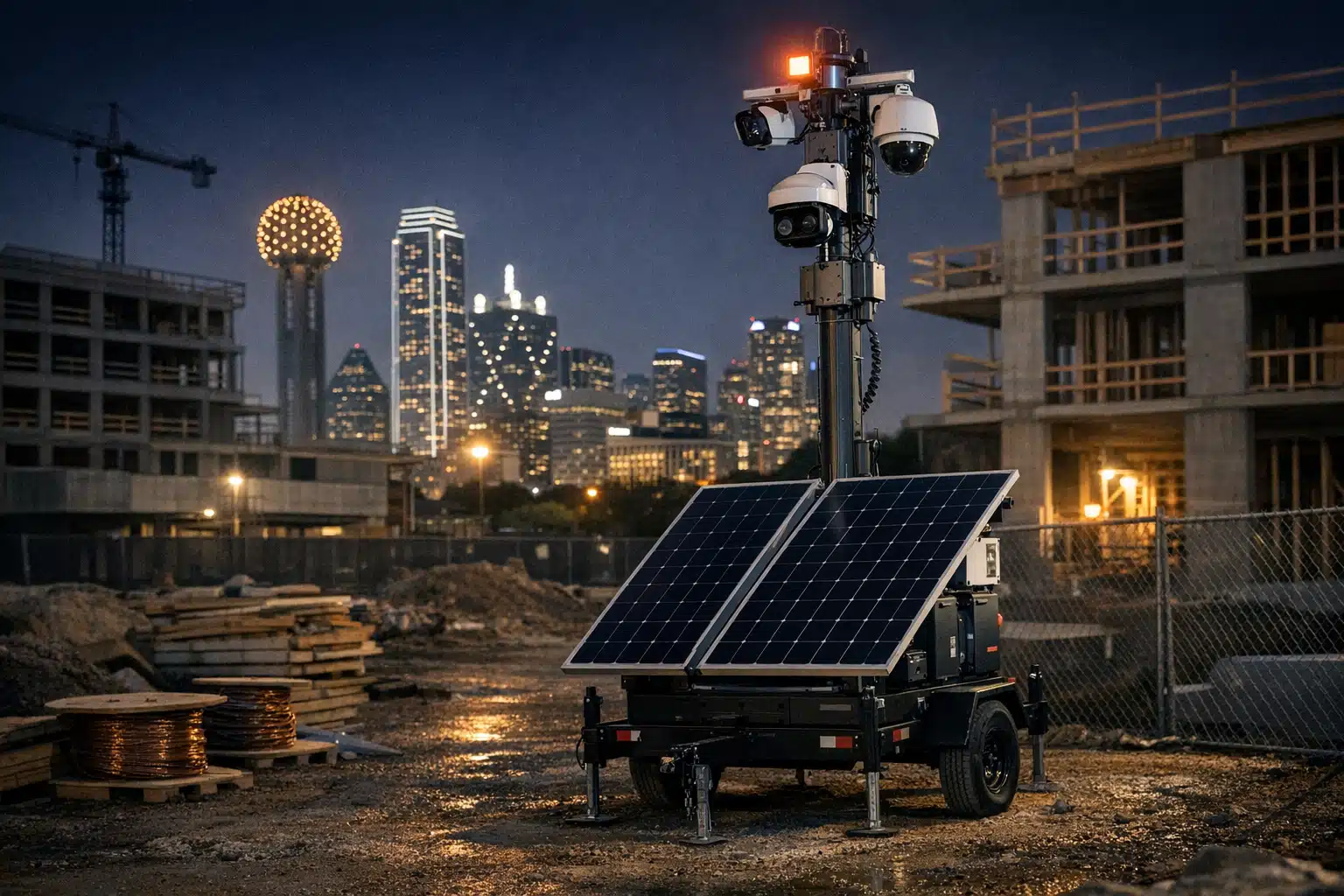
Remote video surveillance is a security system that allows construction managers to monitor job sites from any location using internet-connected cameras. The technology provides real-time viewing and recording of site activity after work hours, offering protection against theft of materials like copper wire, tools, and equipment without requiring physical security guards on-site.
Construction theft costs the U.S. building sector an estimated $1 billion every year, and Dallas job sites sit squarely in the crosshairs. Copper wire, generators, tools, and lumber disappear overnight from sites across Deep Ellum, Frisco-adjacent developments, and the Trinity Groves corridor. Remote video surveillance gives Dallas construction managers a way to watch their sites after the crew clocks out, without paying for a guard to walk the perimeter all night. This post breaks down how the technology works, what it costs compared to on-site guards, and how to set it up on a real job site.
What Remote Video Surveillance Is and How It Works on a Job Site
Remote video surveillance is a system of cameras monitored by trained operators at an off-site command center. Cameras feed live video over cellular or fixed internet. Operators watch high-risk hours and act when something moves.
On an active construction site, the setup usually includes mobile camera towers, motion analytics, and two-way speakers. When a camera detects movement after hours, an operator reviews the footage in seconds.
If the operator sees a trespasser, they trigger a live voice warning over the on-site speaker. Most intruders leave the moment a real person addresses them by description.
The Equipment That Makes It Work
- Solar-powered camera towers — deployable on graded dirt before utilities are connected.
- Infrared and thermal cameras — clear images in total darkness across an open lot.
- AI motion detection — filters out cats, wind, and passing headlights to reduce false alarms.
- Two-way audio speakers — let operators issue live warnings.
- Cellular backup — keeps cameras online when no wired internet exists yet.
How Remote Video Surveillance Prevents Construction Theft in Dallas
Dallas construction sites face their worst losses between 1 a.m. and 5 a.m. Thieves target unfinished structures because perimeters stay open and materials sit exposed. Remote video surveillance closes that window.
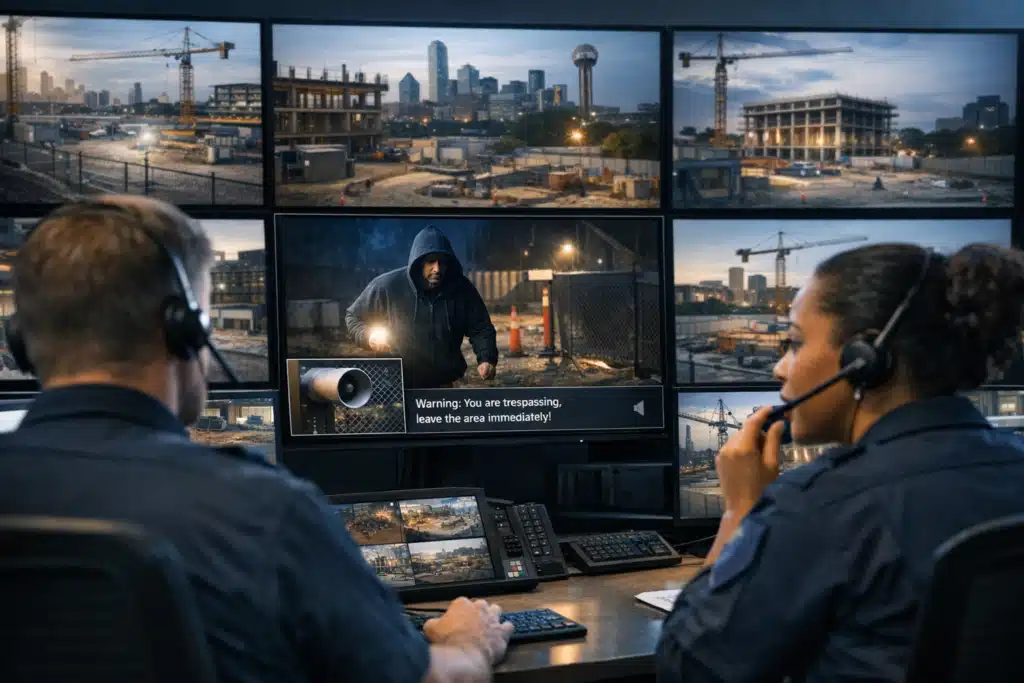
The deterrent works in three stages: detection, voice intervention, and police dispatch. Operators escalate only when needed, which keeps response fast and focused.
A Real Dallas Scenario
Imagine a mid-rise apartment build near the Dallas Design District. Copper and HVAC units arrive on a Friday for Monday installation. That weekend gap is when crews are gone and thieves know it.
With camera towers active, an operator spots a pickup backing toward the material yard at 2:14 a.m. A live voice warning names the truck and its location. The driver pulls away before loading a single item.
That single intervention saves more than the monthly monitoring cost. Stopping one copper theft pays for the system several times over.
Remote Monitoring vs. On-Site Guards: A Cost Comparison
On-site guards and remote monitoring both protect job sites, but the math differs. Understanding the difference helps Dallas managers spend wisely.
On-Site Guard Costs
A single unarmed guard in the Dallas market runs roughly $22 to $35 per hour. Covering nights and weekends means one guard cannot watch every corner of a large lot. A 12-hour overnight shift can exceed $300 per night.
Remote Surveillance Costs
Remote video surveillance spreads one operator’s attention across many cameras and many sites. The fixed monthly rate usually lands well below round-the-clock guard wages. Coverage extends to every camera angle at once, not just where one person stands.
When Each Option Fits
- Use remote surveillance for open lots, after-hours coverage, and material yards.
- Use on-site guards for active gate control, badge checks, and visitor management.
- Combine both on large commercial sites where daytime access control meets overnight monitoring.
Many Dallas projects run guards during work hours and switch to remote monitoring at night. This pairing controls cost without leaving a gap.
Why Local Response Time Matters in Dallas
Response speed decides whether a theft succeeds or fails. A camera that only records footage helps after the loss, not during it.
Live-monitored remote video surveillance triggers action in real time. Operators speak to intruders and call Dallas Police while the event happens. That difference turns a passive recording into active construction security.
The Footage Advantage for Police and Insurance
When a warning fails to stop a determined crew, recorded video becomes evidence. Time-stamped, high-resolution clips help Dallas detectives identify suspects and vehicles. Insurers process claims faster with clear footage of the event.

 Posted on Google
Setting Up Remote Surveillance on a Dallas Construction Site
To protect a job site effectively in Dallas, follow these steps:
- Map the high-value zones. Mark material yards, generator pads, and equipment parking.
- Place towers at choke points. Cover entrances, fence gaps, and street-facing approaches.
- Set monitoring hours. Define when crews leave and when live watching begins.
- Add lighting and signage. Visible cameras and warning signs deter casual thieves.
- Update camera positions as the build grows. Move towers as walls rise and access points shift.
A site that changes weekly needs flexible camera placement. Mobile towers move with the work instead of staying fixed.
Common Mistakes That Leave Dallas Sites Exposed
- Recording-only cameras with no live operator to intervene.
- Blind spots at back fences where thieves cut openings.
- Dead batteries on solar units shaded by new structures.
- No signage, which removes the visible deterrent effect.
What Dallas Construction Managers Should Ask Before Hiring
Before choosing a monitoring provider, ask direct questions. The answers reveal whether the service protects or just records.
- Are cameras monitored live, or only recorded for later review?
- What is the average operator response time to a motion alert?
- Can operators issue live voice warnings on site?
- How fast do towers deploy on a new lot?
- Does the service coordinate directly with Dallas Police dispatch?
A provider that answers these clearly earns your trust. Vague answers signal a passive camera vendor, not a monitoring partner.
Protect Your Dallas Job Site Today
Remote video surveillance stops theft as it happens, costs less than overnight guards, and produces evidence when it matters. For Dallas construction managers, that combination protects budgets and timelines at once. The right setup turns dark, empty hours into watched, defended ones.
Twin City Security Dallas builds monitoring plans around your specific site and schedule. Call or text 972‑385‑1144, email Dallas@twincitysecurity.com, or visit https://www.twincitysecuritydallas.com for a site assessment and monitoring quote.
Sources
- Nationwide – Construction Site Theft Prevention
- National Insurance Crime Bureau – Equipment Theft Reports
- Dallas Police Department – Crime Reporting and Statistics
Remote video surveillance offers Dallas construction sites a cost-effective way to prevent theft during off-hours by using live-monitored cameras, voice warnings, and police dispatch instead of relying solely on on-site guards.
- Construction theft costs the U.S. building sector about $1 billion annually. Dallas sites face the highest risk between 1 a.m. and 5 a.m. when materials sit exposed.
- The system uses solar-powered camera towers, infrared imaging, AI motion detection, and two-way speakers. Operators can issue live warnings and contact police in real time.
- Remote monitoring costs less than overnight guards, who run $22 to $35 per hour in Dallas. Many projects combine daytime guards with nighttime remote surveillance to control costs.