
Why Dallas Businesses Should Consider Mobile Security Solutions
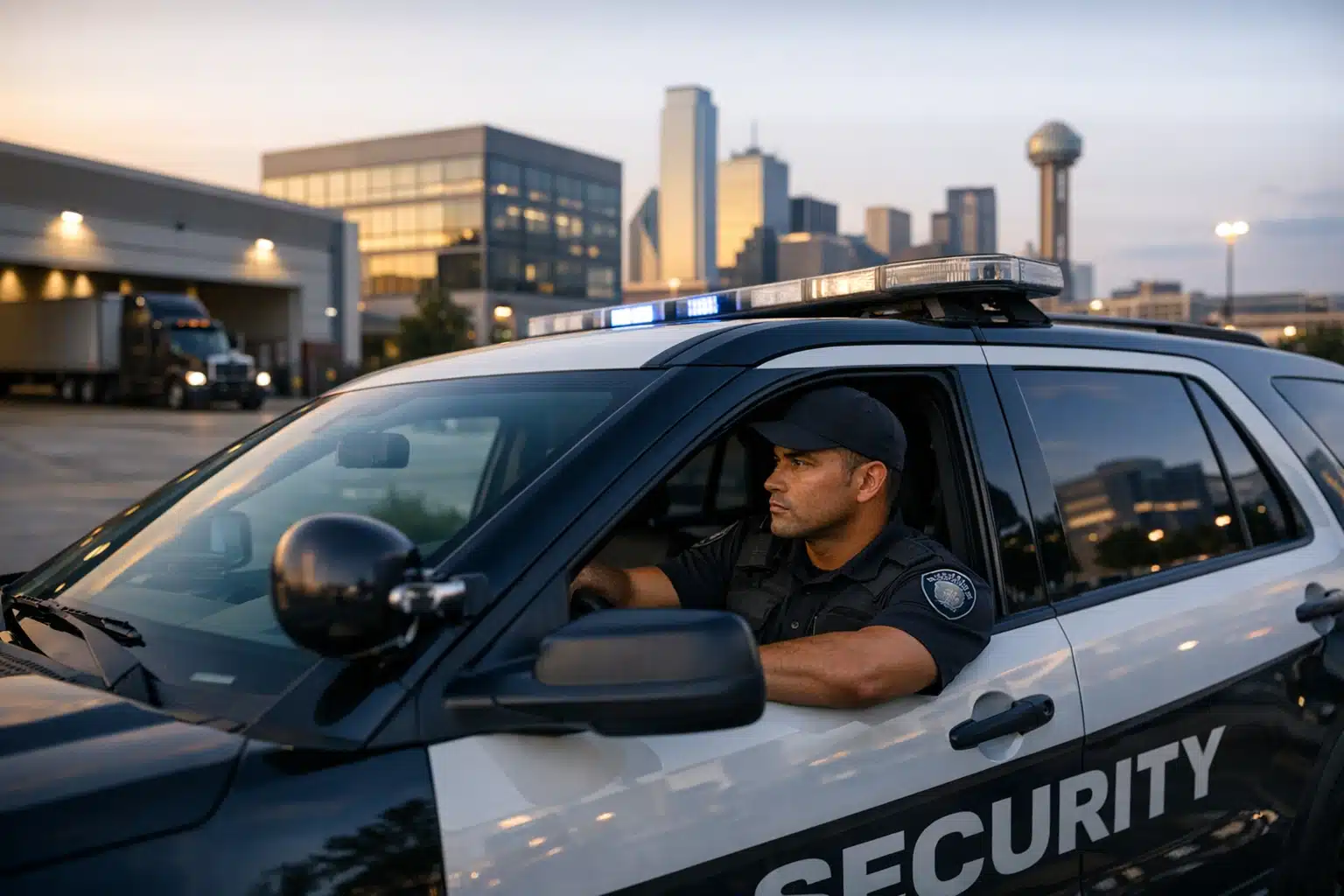
Dallas businesses should consider mobile security solutions because the city experiences over 34,000 property crimes annually, with theft and burglary affecting commercial properties most severely. Unlike stationary guard posts that only monitor fixed locations, mobile security patrols can cover larger areas and detect threats across multiple sites - a key advantage in a sprawling metro area.
Why Fixed Guards Alone No Longer Fit Dallas Properties
Dallas recorded more than 34,000 property crimes in a single recent year, with theft and burglary hitting commercial parcels hardest. Static guard posts miss what happens two lots over. Mobile security covers ground that a stationary post cannot, and that difference matters across a sprawling metro like ours.
A guard fixed at one gate watches one gate. Meanwhile, a copper thief works the back fence line 400 feet away.
This post breaks down how mobile patrols work, what they cost against on-site posts, and where they fit best for Dallas business security.
What Mobile Security Means for a Dallas Property
Mobile security is a marked patrol vehicle and officer moving between checkpoints on a rotating schedule. Instead of one fixed location, an officer covers a route, logs stops, and responds to alarms across a wider footprint.
The model suits properties spread across acreage. It also fits owners who need coverage but cannot justify a 24-hour post.
Core functions of a mobile patrol
- Random rounds that break predictable patterns thieves study
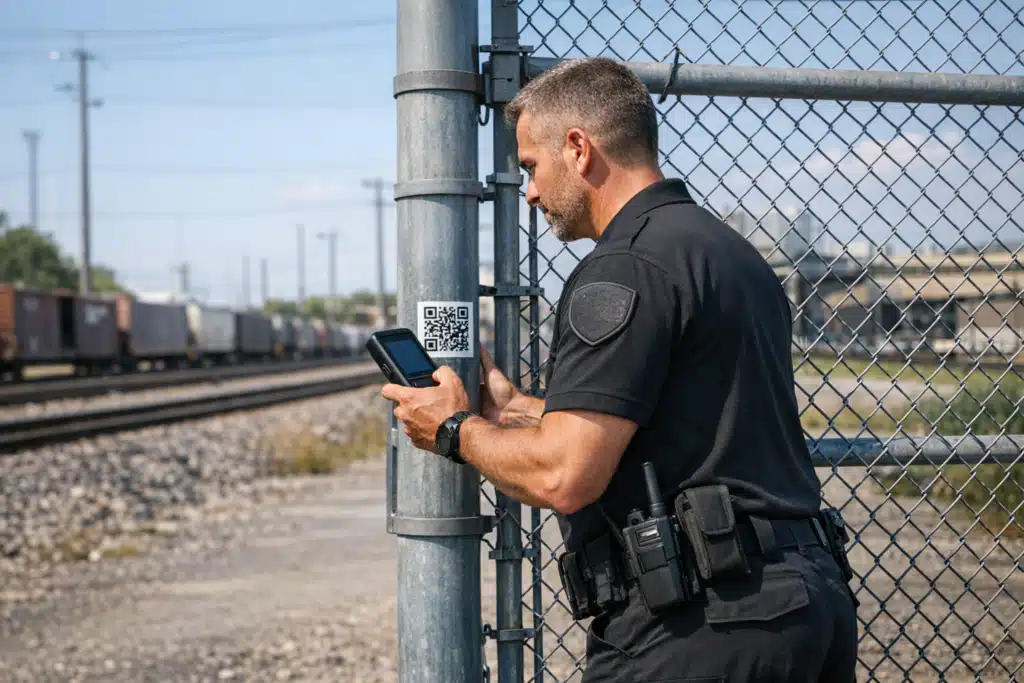
- Checkpoint scans logged by GPS or QR tags for proof of presence
- Alarm response to trigger points between scheduled visits
- Lock and gate checks at open and close
- Written incident reports with time stamps and photos
The randomness matters most. A guard who arrives at 11:00 every night trains criminals to work at 11:15.
How Mobile Patrols Fit Dallas Urban Sites
Dallas properties rarely sit in isolation. A warehouse near Stemmons shares fence lines with rail yards, vacant lots, and other tenants. Foot traffic shifts by the hour.
Mobile units adapt to that movement. An officer adjusts a route when a construction crew leaves material stacked near an open perimeter.
Where flexibility pays off
- Construction sites in Deep Ellum and the Design District, where copper and tools move fast
- Apartment communities with multiple buildings and open parking decks
- Retail strips along Northwest Highway with rear alley exposure
- Event venues that need heavy coverage for hours, then none
- Industrial parks off I-35 with long, dark perimeters
A single mobile officer can hit six of these stops in one shift. That reach is the point.
Mobile Patrol vs On-Site Guard: The Cost Comparison
On-site guards bill for every hour on your property. Mobile patrols split an officer’s time across several clients, which lowers your share of the wage.
Here is how the math plays out for a Dallas commercial site.
On-site fixed post
- One officer covers your property only
- You pay the full hourly rate, around the clock if needed
- A 24/7 single post runs roughly 168 billed hours weekly
- Best for high-risk sites with constant activity
Mobile patrol
- One officer covers your site plus others on a route
- You pay per visit or per assigned patrol block
- Coverage might mean 8 to 12 logged stops nightly
- Best for lower-traffic sites needing visible deterrence
Mobile patrol can cut guard spending by half or more for properties that do not need a constant human presence. The trade-off is coverage gaps between visits.
That gap closes when you pair patrols with remote video monitoring. Cameras watch during the minutes an officer spends elsewhere.
Pairing Mobile Patrols With Remote Video Monitoring
Remote video monitoring is live camera oversight from an off-site operations center. Trained operators watch feeds, verify threats, and dispatch the nearest mobile officer.
This pairing fixes the weakness of patrols working alone. A camera flags motion at 2:40 a.m., and the operator radios the officer three stops away.
How the two systems work together
- Cameras detect movement in a restricted zone
- An operator confirms whether it is a person or an animal
- Verified threats trigger a live voice-down warning
- The mobile officer diverts to the site if the intruder stays
- Dallas police get a verified call, not a blind alarm
Verified alarms matter locally. Dallas assigns lower priority to unverified alarm calls, which means slower response.
A camera-confirmed crime in progress moves up the queue. That verification can shave critical minutes off police arrival.
Response Time Advantages in a Sprawling Metro
Dallas covers roughly 385 square miles. A single fixed guard cannot help a second property miles away.
Mobile units position officers within reach of several sites at once. When an alarm fires, the closest patrol responds rather than a distant post scrambling.
What shortens response on your site
- Route planning that clusters nearby client properties
- GPS dispatch sending the nearest officer, not a random one
- Verified alarms from cameras that skip false triggers
- Local knowledge of Dallas street layouts and traffic patterns
An officer who knows the shortcuts around Central Expressway construction reaches your gate faster. Local routing beats a map app every time.

 Posted on Google
Texas Licensing You Should Confirm Before Hiring
Texas regulates private security under the Department of Public Safety. Any firm running mobile patrols in Dallas must hold a state license.
Verify these points before you sign a contract.
- Company license number issued by Texas DPS
- Officer registration for every patrol employee
- Commissioned status if armed patrols are part of the plan
- Insurance coverage for vehicle and liability claims
Ask for these credentials in writing. A legitimate Dallas provider produces them without hesitation.
Building a Mobile Patrol Plan That Works
Start with your risk map, not a generic package. Every Dallas property has its own weak points.
Steps to design your coverage
- Map your vulnerabilities. Note back fences, loading docks, and dark corners.
- Track your incident history. When and where have problems happened?
- Set patrol frequency. High-risk zones need more logged stops.
- Add camera coverage where patrols cannot watch continuously.
- Review logs weekly. Adjust routes when patterns shift.
A construction site near a rail line needs more night stops than a suburban office park. Your plan should reflect that difference.
Signs your property is a mobile patrol candidate
- Multiple buildings or a large perimeter to cover
- After-hours vacancy with valuable assets on site
- A history of trespassing, dumping, or theft
- A budget that rules out a full-time fixed post
If two or more apply, mobile patrols deserve a serious look. Most Dallas commercial sites check at least one box.
Common Mistakes Dallas Owners Make
Owners sometimes buy the cheapest patrol frequency and expect full protection. Two stops a night leaves a wide window open.
Others skip cameras entirely and rely on patrols alone. That choice ignores the hours between visits.
Avoid these errors
- Predictable timing that lets criminals plan around your rounds
- No reporting review, which hides recurring problems
- Skipping camera backup during coverage gaps
- Hiring unlicensed firms to save a few dollars
The strongest setups combine random patrols, live monitoring, and weekly log review. Each piece covers the others’ blind spots.
Get a Dallas Mobile Security Assessment
Mobile security gives Dallas businesses wide coverage without the cost of a round-the-clock post. Paired with remote video monitoring, it closes gaps and speeds verified response across our sprawling metro.
Twin City Security Dallas designs patrol routes and monitoring plans around your property’s real risks. Call or text 972‑385‑1144, email Dallas@twincitysecurity.com, or visit https://www.twincitysecuritydallas.com for a site assessment and quote.
Sources
- Dallas Police Department – Crime Statistics and Reporting
- Texas Department of Public Safety – Private Security Bureau
- FBI – Uniform Crime Reporting Program
Dallas businesses face high property crime rates, and mobile security patrols offer broader coverage than fixed guard posts at lower cost. Pairing mobile patrols with remote video monitoring creates a stronger deterrent and faster verified response times.
- Dallas recorded over 34,000 property crimes in one recent year, with theft and burglary hitting commercial properties hardest. Mobile patrols cover more ground than stationary guards and use random schedules to prevent criminals from predicting patterns.
- Mobile patrols can cut guard spending by half or more compared to 24/7 fixed posts. They work best for properties with large perimeters, multiple buildings, or after-hours vacancy.
- Combining patrols with live camera monitoring closes coverage gaps between visits. Verified alarms receive higher priority from Dallas police, which can reduce response times.