
How to Implement Effective Safety Drills in Dallas Corporate Offices
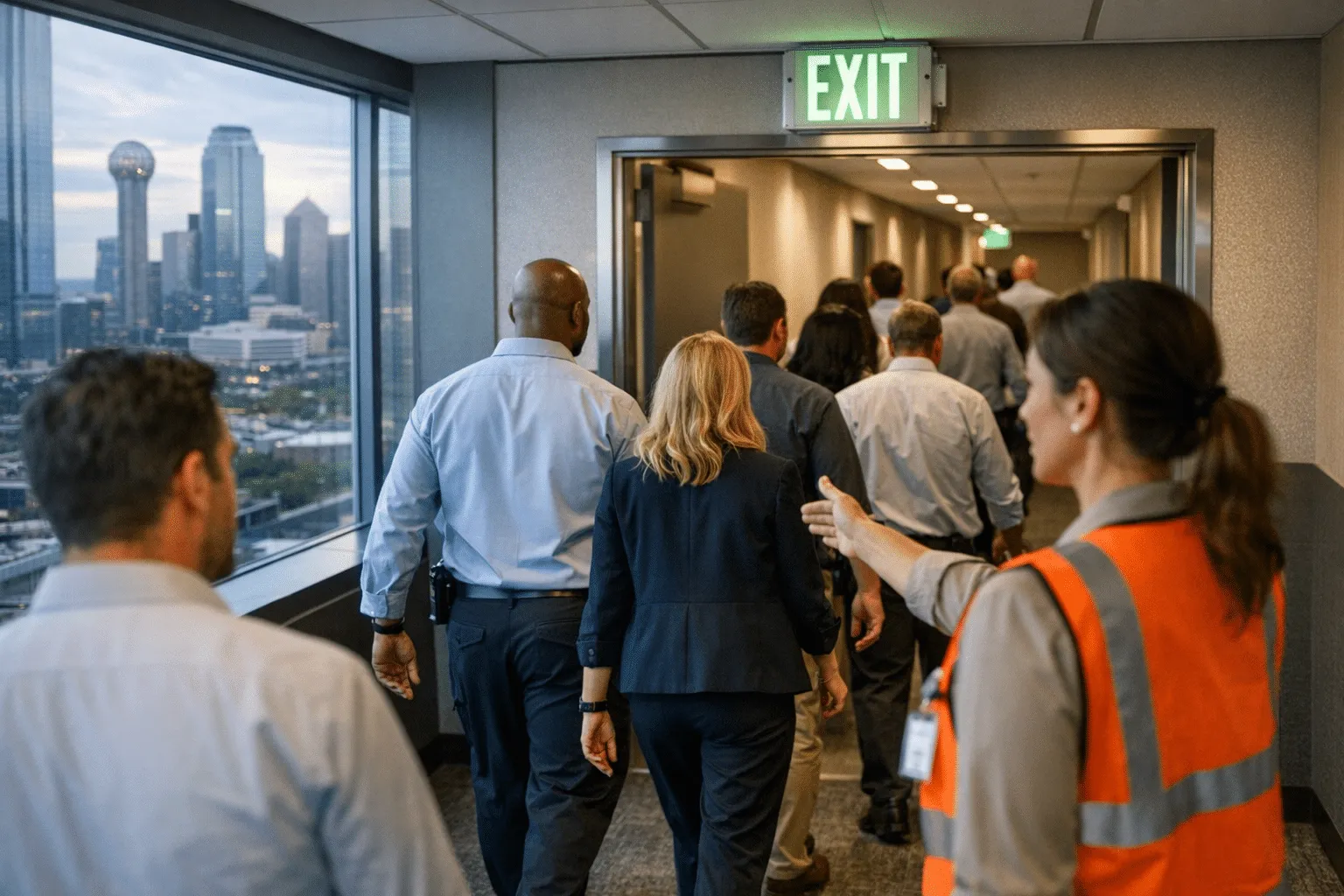
To implement effective safety drills in Dallas corporate offices, start by assessing building-specific risks including severe weather and security threats. Develop clear evacuation routes, assign floor wardens, and schedule quarterly drills covering fire, tornado, and active threat scenarios. Document each drill, gather employee feedback, and update procedures based on performance to maintain workplace readiness.
The Critical Need for Corporate Safety Drills in Dallas
Dallas corporate offices face unique safety challenges that require comprehensive emergency preparedness. From severe weather events like the tornadoes that struck North Texas in recent years to workplace security concerns in downtown business districts, effective corporate safety drills are essential for protecting employees and assets.
Safety drills serve as the foundation of workplace emergency preparedness. They transform theoretical emergency plans into practical, muscle-memory responses that can save lives during real crises.
Dallas businesses must prepare for multiple emergency scenarios including fire, severe weather, medical emergencies, and security threats. Each scenario requires specific drill procedures tailored to the corporate environment.
Essential Types of Safety Drills for Dallas Offices
Modern corporate safety programs require multiple drill types to address various emergency scenarios. Each drill type serves a specific purpose in comprehensive emergency preparedness.
Fire Evacuation Drills
Fire evacuation drills remain the most fundamental safety requirement for corporate offices. These drills should occur monthly and follow specific protocols.
- Test all alarm systems and exit routes
- Practice stairwell evacuation procedures for high-rise buildings
- Designate floor wardens and assembly points
- Time evacuation procedures to identify bottlenecks
- Include wheelchair-accessible evacuation plans
Severe Weather Drills
Dallas offices must prepare for tornado warnings and severe thunderstorms. Weather-related drills protect employees from North Texas’s unpredictable storm patterns.
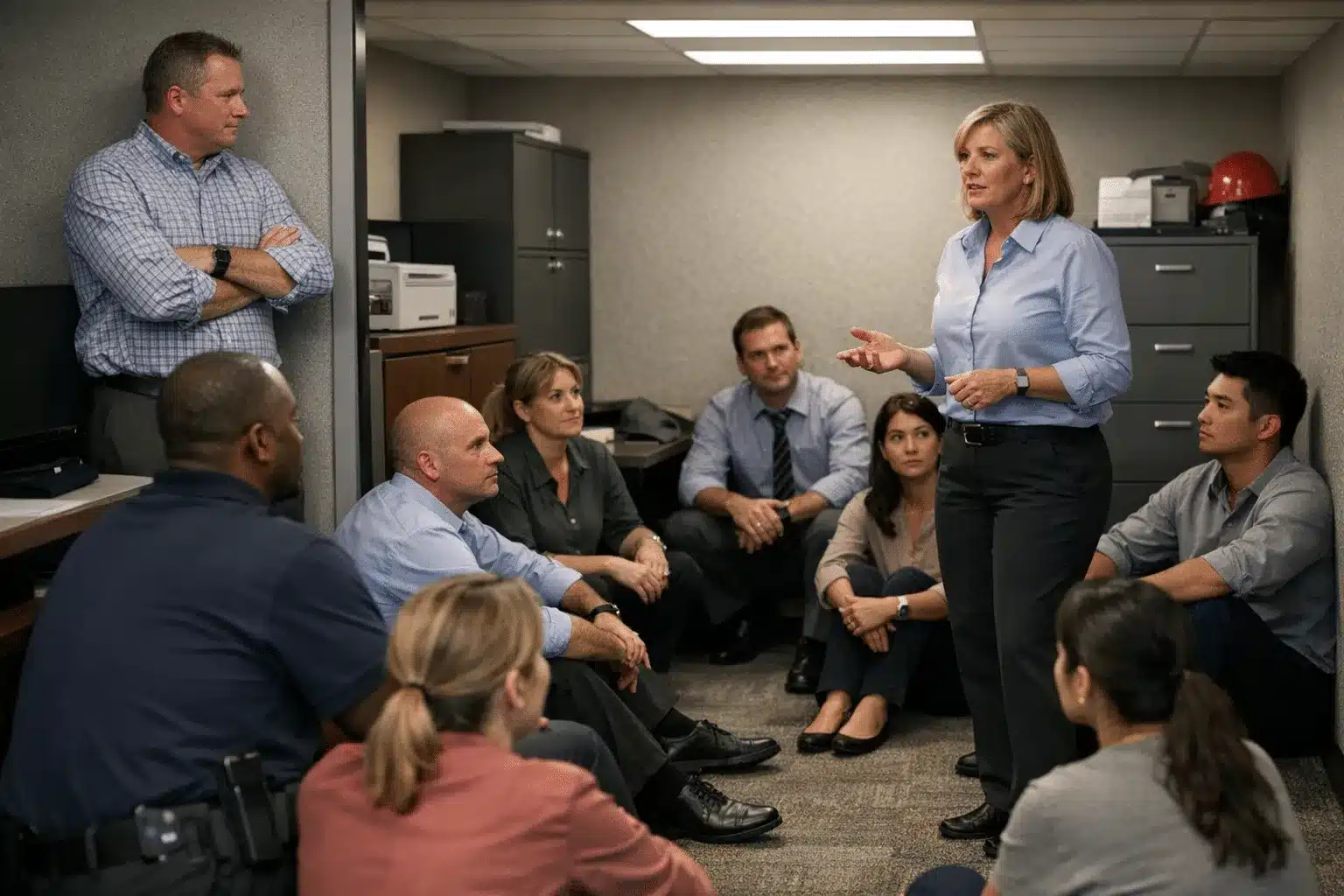
Severe weather drills should direct employees to interior rooms away from windows. Practice moving to designated safe areas within two minutes of receiving weather alerts.
Security Threat Drills
Modern workplace safety includes security threat preparation. These drills address lockdown procedures and suspicious person protocols.
Security drills teach employees when to shelter in place versus evacuate. They practice communication with law enforcement and security personnel during emergencies.
Step-by-Step Implementation of Corporate Safety Drills
Successful drill implementation follows a structured approach that ensures comprehensive coverage and employee participation.
Phase 1: Assessment and Planning
Begin by conducting a thorough risk assessment of your Dallas office location. Identify potential emergency scenarios specific to your building and neighborhood.
- Map all exit routes and emergency equipment locations
- Identify employees with mobility limitations or special needs
- Coordinate with building management and local emergency services
- Establish communication protocols for different emergency types
- Create detailed evacuation maps for each floor
Phase 2: Training and Education
Employee education forms the foundation of effective emergency response. Training should occur before implementing regular drill schedules.
Conduct orientation sessions that explain different emergency scenarios. Cover the specific risks facing Dallas offices including weather threats and security concerns.
Provide hands-on training with fire extinguishers and emergency communication systems. Ensure employees understand their roles during different emergency types.
Phase 3: Drill Execution
Execute drills systematically to build confidence and identify improvement areas. Start with announced drills before progressing to unannounced exercises.
Document response times and employee compliance during each drill. Use this data to refine procedures and address training gaps.
Frequency and Scheduling Best Practices
Effective drill programs balance preparedness with workplace productivity. Proper scheduling ensures compliance while minimizing business disruption.
Monthly Fire Drills
Schedule fire drills monthly on rotating days and times. This prevents employees from anticipating drills and ensures realistic response testing.
Conduct drills during different shifts to include all employees. Document participation rates and response effectiveness.
Quarterly Comprehensive Drills
Run comprehensive emergency scenarios quarterly that combine multiple emergency types. These drills test communication systems and decision-making processes.
Include external partners like building security and local emergency services in quarterly exercises. This coordination improves real-world response capabilities.
Technology Integration for Modern Safety Drills
Modern safety drill programs leverage technology to improve communication and response coordination. Digital systems enhance traditional drill procedures.
Mass Notification Systems
Implement mass notification systems that reach employees through multiple communication channels. These systems send alerts via email, text, and building speakers simultaneously.
Test notification systems during each drill to ensure reliable operation. Verify that messages reach employees in different building areas.
Digital Evacuation Management
Use digital check-in systems at assembly points to account for all employees quickly. Mobile apps can streamline headcount procedures during evacuations.
Digital systems provide real-time data to emergency coordinators. This information helps identify missing employees and coordinate with first responders.
Common Implementation Challenges in Dallas Offices
Dallas corporate environments face specific challenges when implementing comprehensive safety drill programs. Understanding these obstacles helps develop effective solutions.
High-Rise Building Complexities
Downtown Dallas high-rise buildings require specialized evacuation procedures. Stairwell capacity and elevator restrictions complicate emergency planning.
Coordinate with building management to understand shared emergency systems. Practice floor-by-floor evacuation procedures to prevent stairwell overcrowding.
Multi-Tenant Building Coordination
Office buildings with multiple tenants require coordinated emergency planning. Different companies must align their drill schedules and procedures.
Participate in building-wide emergency planning committees. Share resources and coordinate drill timing with other tenants.

 Posted on Google
Measuring Drill Effectiveness and Improvement
Successful drill programs include measurement systems that track improvement and identify areas needing attention.
Key Performance Metrics
Track evacuation times, employee participation rates, and compliance with procedures. Monitor these metrics over time to measure program effectiveness.
- Total evacuation time from alarm to final headcount
- Percentage of employees participating in each drill
- Number of safety violations or procedure deviations
- Response time for emergency coordinators and floor wardens
- Communication system reliability and coverage
Continuous Improvement Process
Conduct debrief sessions after each drill to gather employee feedback. Use this input to refine procedures and address identified problems.
Update emergency plans based on drill results and changing office conditions. Regular plan updates ensure continued effectiveness as businesses evolve.
Integration with Professional Security Services
Professional security providers enhance corporate safety drill programs through expertise and additional resources. Security companies offer specialized knowledge of emergency response procedures.
Professional security services provide trained personnel who can assist during drills and real emergencies. They bring experience with various emergency scenarios and response coordination.
Security providers can conduct independent drill assessments and recommend improvements. Their outside perspective identifies blind spots that internal teams might miss.
Legal Compliance and Documentation Requirements
Dallas offices must maintain proper documentation of safety drill activities for legal compliance and insurance purposes.
Keep detailed records of each drill including dates, participation rates, and identified issues. Document corrective actions taken following drill assessments.
Ensure drill programs meet local fire codes and OSHA requirements. Regular compliance reviews prevent legal issues and potential penalties.
Building Employee Confidence Through Regular Practice
Consistent drill practice builds employee confidence in emergency procedures. Confident employees respond more effectively during real emergencies.
Recognize employees who demonstrate leadership during drills. Positive reinforcement encourages continued participation and emergency preparedness.
Provide feedback on drill performance to help employees improve their response. Constructive guidance builds competence and confidence over time.
Conclusion
Effective corporate safety drills protect Dallas office employees while ensuring business continuity during emergencies. Regular practice, proper planning, and continuous improvement create robust emergency preparedness programs.
Professional security expertise enhances drill effectiveness and provides valuable assessment capabilities. Twin City Security Dallas offers comprehensive emergency planning assistance and security services tailored to corporate office environments.
Contact Twin City Security Dallas at 972-385-1144 for expert guidance on implementing comprehensive safety drill programs that protect your employees and business assets.
Sources
- OSHA – Emergency Preparedness and Response
- NFPA – Life Safety Code
- Ready.gov – Business Emergency Planning
- National Weather Service – Dallas/Fort Worth Severe Weather
Dallas corporate offices face unique safety challenges from severe weather and security concerns, making effective safety drills a foundation for emergency preparedness that can save lives during real crises.
- Fire evacuation drills should occur monthly with rotating schedules, while severe weather drills prepare employees to reach safe areas within two minutes of alerts. Security threat drills teach lockdown procedures and communication with law enforcement.
- Implementation follows three phases - risk assessment and planning, employee training and education, then systematic drill execution starting with announced drills before progressing to unannounced exercises.
- Technology like mass notification systems and digital check-in apps improves response coordination. Track metrics including evacuation times and participation rates to measure effectiveness and drive continuous improvement.