How to Use Technology to Improve Security in Dallas Residential Areas
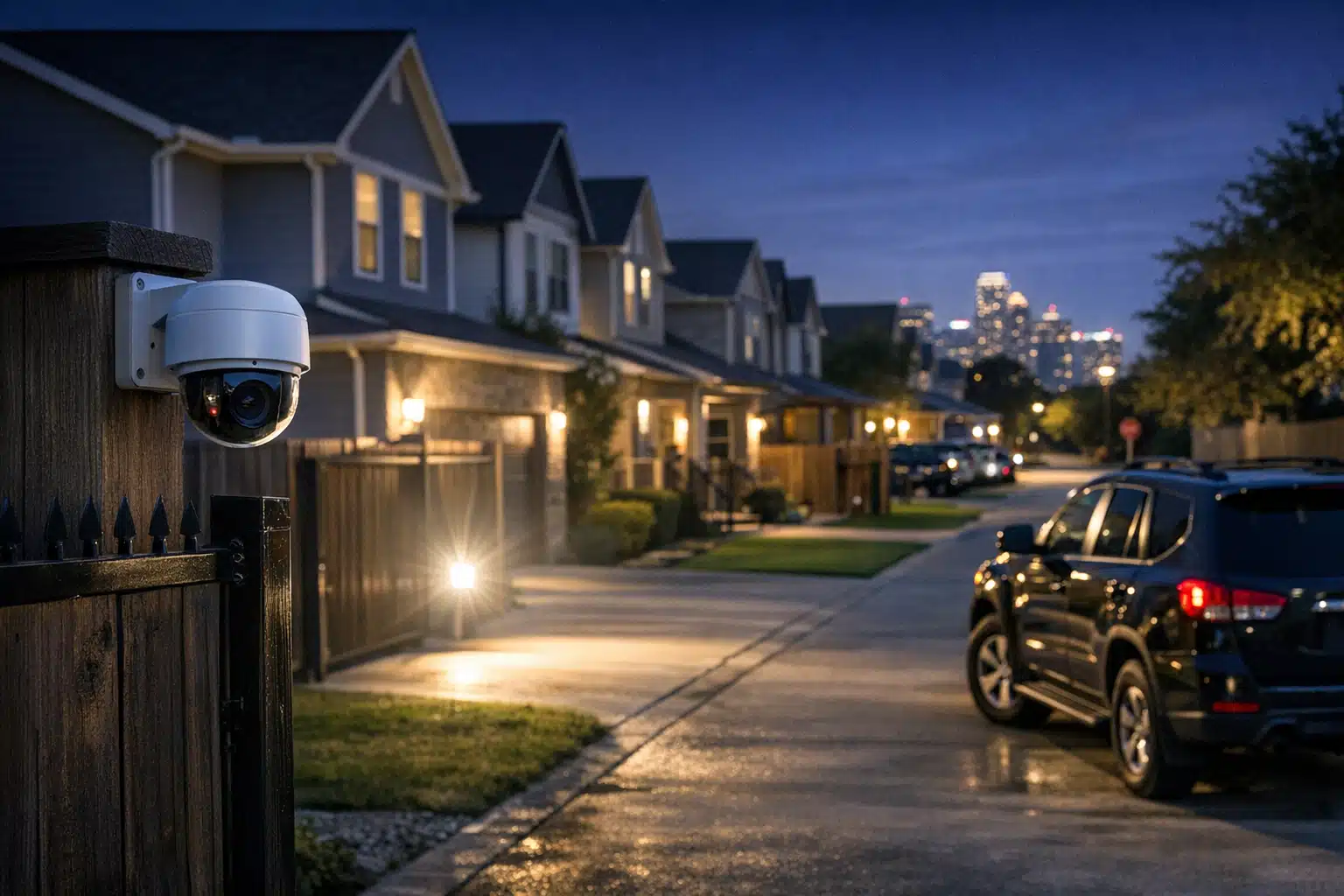
To improve security in Dallas residential areas, property managers and homeowners should implement connected technology solutions rather than relying solely on physical barriers like fences. Effective tools include smart security cameras, video doorbells, motion-activated lighting, alarm systems with mobile alerts, and neighborhood communication apps that help residents share real-time information about suspicious activity.
Dallas recorded more than 20,000 residential burglary and property crime incidents in recent years, with neighborhoods like Oak Cliff, Pleasant Grove, and parts of North Dallas seeing repeat activity. For property managers and homeowners, residential security now depends less on fences and more on connected technology. This post breaks down the exact tools that stop crime in Dallas neighborhoods and how to put them to work.
You will learn which systems prevent break-ins, how remote monitoring cuts response times, and the steps to build a layered setup that fits a single home or a 300-unit apartment community.
Why Technology Changed Residential Security in Dallas
Traditional locks and signage warn intruders. Connected systems catch them. The difference matters in a city where response times vary widely by district.
Dallas Police average response to priority calls can stretch past 8 minutes in some areas. That window gives thieves enough time to clear a garage or empty an apartment unit.
Security technology closes that gap. Cameras with live monitoring, motion sensors, and verified alarm alerts let a trained operator confirm a threat and dispatch help immediately.
Verified Alarms Get Faster Police Response
Dallas has a verified response policy for certain alarm calls. Unverified alarms sit lower on the priority list because false alarms waste officer time.
A monitored camera system provides video verification. When an operator sees an actual person on the property, police treat the call as a crime in progress. That moves your call up the queue.
The Layers of Modern Residential Security
Strong neighborhood protection uses several connected layers. Each one covers the weakness of the last.
Here is how the layers stack for a Dallas home or multifamily property:
- Perimeter detection — motion-activated cameras and sensors at fence lines, driveways, and parking lots.
- Entry control — smart locks, video doorbells, and gate access systems at every entrance.
- Interior coverage — indoor cameras and glass-break or door sensors for backup.
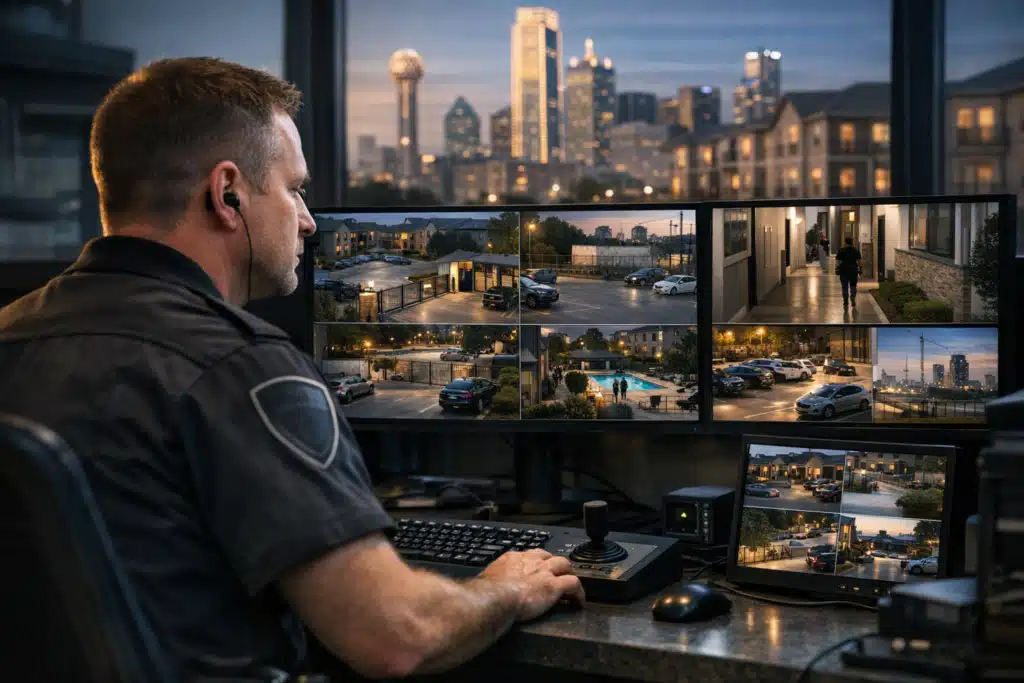
- Live monitoring — a remote operator watching feeds and responding in real time.
- Lighting and deterrence — motion-triggered floodlights paired with visible camera signage.
No single layer stops every intruder. The combination removes easy opportunities.
How Remote Video Surveillance Prevents Crime in Dallas Neighborhoods
Remote video surveillance is a system where cameras stream to off-site operators who watch live and intervene when they spot suspicious activity. It works around the clock without an on-site guard at every corner.
For apartment communities near downtown or along the I-35 corridor, this matters. Parking lots and breezeways are where most incidents happen after dark.
What Operators Actually Do
A monitoring operator does more than record footage. When a camera detects movement in a restricted area, the operator reviews the feed within seconds.
If the person poses a threat, the operator can:
- Activate a live voice-down speaker to warn the intruder they are being watched.
- Trigger strobe lights to disrupt and discourage the activity.
- Call Dallas Police with a verified, real-time description.
- Notify the property manager with timestamped video.
Many intruders leave the moment a voice addresses them by location. That voice-down feature stops crimes before any property is lost.
Cost Compared to On-Site Guards
A single on-site guard covers one post for one shift. Covering a large property around the clock requires multiple guards and higher payroll.
Remote monitoring watches dozens of camera angles at once for a fraction of that cost. For many Dallas communities, a mixed model works best: remote surveillance overnight, with a patrol guard during peak hours.
Smart Access Control for Apartment Communities
Access control decides who enters your property and keeps a record of every entry. It replaces easily copied keys with credentials you can revoke instantly.
For a Dallas apartment manager, this solves tenant turnover headaches. When a resident moves out, you deactivate their code in seconds instead of rekeying locks.
Features That Reduce Break-Ins
- Mobile credentials — residents enter with a phone app, no physical key to lose or steal.
- Visitor logging — every gate and door entry is timestamped and searchable.
- Temporary codes — issue delivery drivers or contractors a code that expires automatically.
- Integration with cameras — link each access event to video for instant verification.
When access data and video work together, investigating an incident takes minutes, not days.
Steps to Build a Residential Security Setup in Dallas
To protect your Dallas property with technology, follow these steps in order:
- Map your vulnerable points. Walk the property at night. Note dark corners, blind spots, and unmonitored entrances.
- Prioritize entries and parking. Most residential crime starts at doors, gates, and vehicles. Cover those first.
- Choose cameras with night clarity. Dallas crime peaks after dark, so infrared and low-light cameras are non-negotiable.
- Add live monitoring. Recorded footage helps after the fact. Live monitoring stops the crime as it happens.
- Connect access control. Replace shared keys with trackable digital credentials.
- Post visible signage. Signs warning of active monitoring deter a large share of opportunistic thieves.
- Review footage monthly. Look for patterns, adjust camera angles, and update access permissions.
This sequence covers the highest-risk areas first and builds outward.

 Posted on Google
Common Mistakes Dallas Property Owners Make
Many setups fail because of avoidable gaps. Here are the ones we see most in the field.
Cameras With No One Watching
Recorded-only cameras give evidence after a loss. They rarely prevent the crime itself. Pairing cameras with live monitoring changes the result.
Ignoring Lighting
Dark parking lots invite theft and vandalism. Motion-triggered lighting paired with cameras removes the cover intruders rely on.
Weak Credential Management
Shared gate codes and uncollected keys let former residents and contractors keep access. Digital credentials you can revoke instantly close that hole.
What This Means for Dallas Property Managers
Residential crime patterns in Dallas shift by season and location. Construction nearby, new tenant turnover, and holiday periods all raise risk.
Technology lets you adapt without hiring more staff. A monitored system scales across one building or an entire community from a single dashboard.
The goal is prevention. Stopping an intruder at the gate protects your residents, lowers insurance claims, and keeps your property reputation strong.
Protect Your Dallas Property Today
Residential security in Dallas works best as a layered system: live remote monitoring, smart access control, and well-lit, camera-covered entry points. Each layer removes an opportunity for crime before it starts.
Twin City Security Dallas designs monitored camera and access systems for homes, apartment communities, and neighborhoods across the metro. Call or text 972‑385‑1144, email Dallas@twincitysecurity.com, or visit https://www.twincitysecuritydallas.com for a Dallas security assessment.
Sources
- Dallas Police Department – Official Website and Crime Data
- FBI – Uniform Crime Reporting (UCR) Program
- Bureau of Justice Statistics – Property Crime Data
Dallas recorded over 20,000 residential burglary and property crime incidents in recent years, making connected technology a key factor in neighborhood security. This guide explains how layered systems - including remote video surveillance, smart access control, and live monitoring - prevent crime more effectively than traditional methods.
- Remote video surveillance allows off-site operators to watch feeds in real time and intervene using voice-down speakers or strobe lights, often stopping intruders before property is lost. Verified alarms with video confirmation receive faster police response than unverified calls.
- Smart access control replaces physical keys with digital credentials that property managers can revoke instantly when tenants move out. Features like mobile entry, visitor logging, and temporary codes reduce break-in opportunities.
- Common mistakes include using cameras without live monitoring, ignoring dark parking areas, and failing to manage access credentials properly. A layered approach covering perimeter detection, entry control, and interior coverage removes easy opportunities for crime.