
How to Choose the Right Security Provider for Dallas Construction Sites
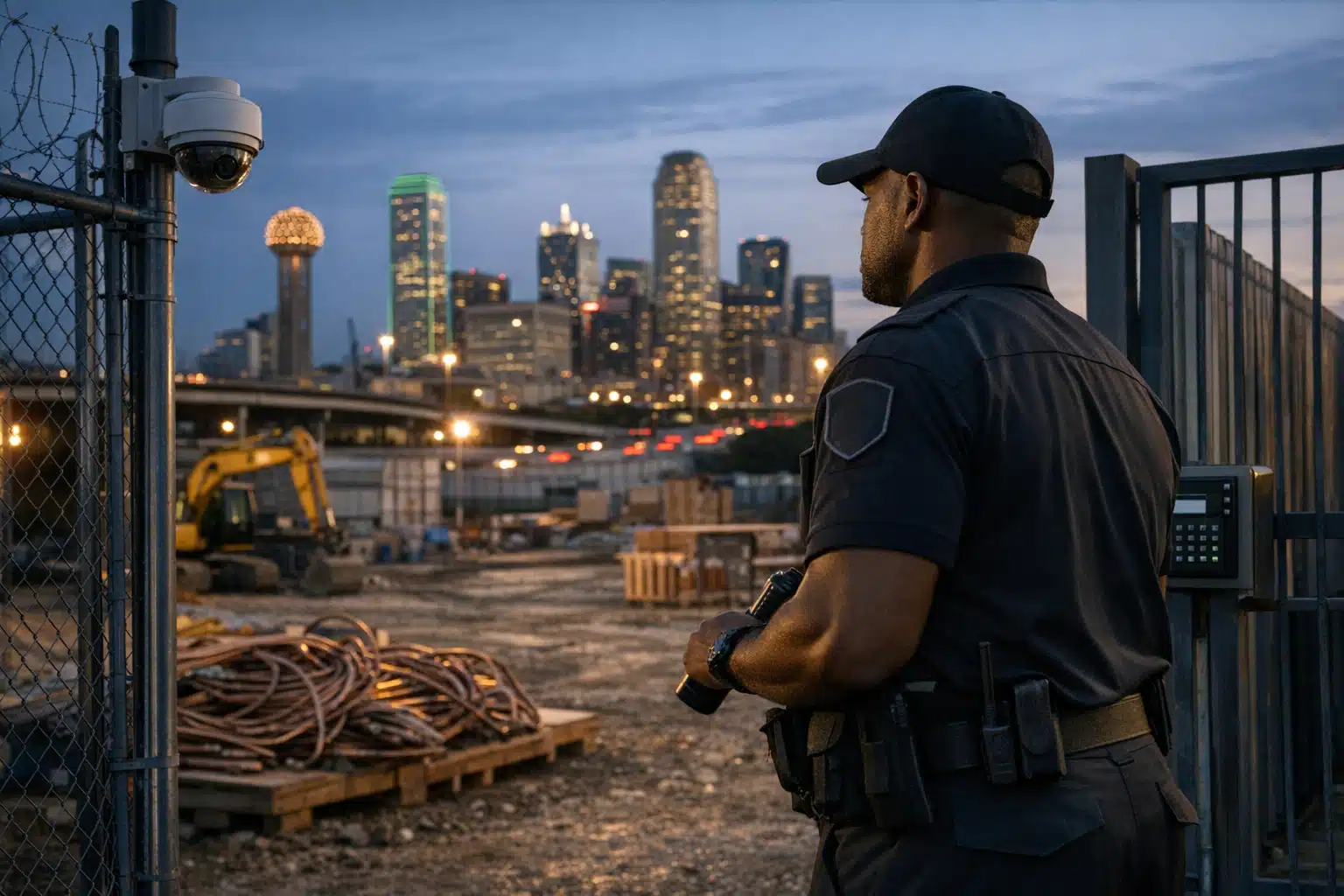
To choose the right security provider for Dallas construction sites, evaluate their experience with construction environments, verify proper licensing and insurance, and confirm they offer services like mobile patrols, access control, and after-hours monitoring. Check references from similar projects, review response time guarantees, and compare pricing structures to find a provider that fits your site's specific risks and budget.
Why Construction Sites in Dallas Face Higher Theft Risk
Dallas construction sites lose thousands of dollars in materials, tools, and copper every month. Open lots, unfinished fencing, and stored equipment make them easy targets after dark.
Copper wiring theft alone costs contractors across Texas millions each year. Prices for scrap metal stay high, and thieves know where fresh builds keep it.
Construction security is the practice of protecting a build site, its materials, and its workers from theft, trespassing, and vandalism. For Dallas projects, that means planning around specific local risks, not generic checklists.
This post breaks down what a construction site manager should check before signing with any provider. The goal is fewer losses, faster response, and less liability on your project.
The Dallas-Specific Risks Your Security Plan Must Address
Dallas construction theft follows patterns. A good provider knows them before you point them out.
Copper and Metal Theft
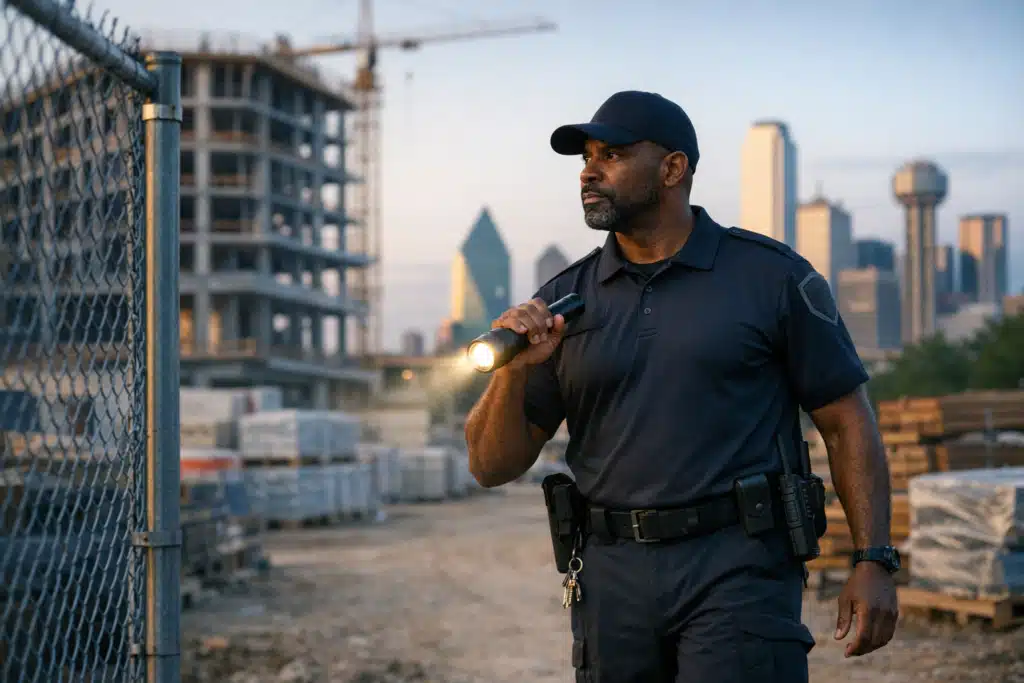
Copper wire, HVAC units, and rebar disappear from framed-out sites overnight. Thieves target properties near major roads like I-35E and US-75 for quick exits.
Ask any provider how they monitor material storage zones after hours. Vague answers are a warning sign.
Equipment and Tool Loss
Skid steers, generators, and compressors get loaded onto trailers in minutes. A single stolen excavator can stall a project for weeks.
Trespassing and Liability
Unsecured Dallas sites attract trespassers, including children drawn to dirt piles and machinery. An injury on your lot becomes your legal problem fast.
Copper Theft During Summer Build Season
Dallas construction peaks from spring into fall. More active sites mean more exposed materials and more opportunity for organized crews working several lots in one night.
On-Site Guards vs. Remote Video Surveillance for Dallas Sites
Both methods protect construction sites. The right choice depends on your budget, site size, and threat level.
On-Site Security Guards
On-site guards patrol the property, check credentials, and respond to problems in person. They deter theft by visible presence alone.
Strengths of on-site guards:
- Physical response to intruders and emergencies
- Access control at gates and material yards
- Deterrence that a camera cannot match up close
- Support for deliveries and subcontractor check-ins
The tradeoff is cost. A single guard covering multiple shifts costs more than camera coverage over the same hours.
Remote Video Surveillance
Remote video surveillance uses cameras monitored live by trained operators off-site. Motion triggers alerts, and operators respond in real time.
Strengths of remote monitoring:
- Lower cost than round-the-clock guards
- Live voice warnings through on-site speakers
- Recorded evidence for police and insurance claims
- Coverage of blind spots across a large lot
When an operator spots movement, they can trigger a spoken warning and call Dallas police. That combination stops many break-ins before anything is taken.
Which One Fits Your Project?
Large open sites near highways benefit from remote cameras plus periodic guard patrols. Smaller high-value sites with active deliveries lean toward on-site staff.
The strongest setups pair both. Cameras watch the perimeter, and a guard handles access and physical response.
How to Choose the Right Dallas Security Provider: A Step-by-Step Method
To pick a construction security partner in Dallas, follow these steps in order.
- Verify Texas licensing. Every guard company in Texas must hold a license from the Texas Department of Public Safety Private Security Program. Ask for the license number.
- Confirm guard training. Ask whether guards are commissioned or non-commissioned and how they handle armed versus unarmed posts.
- Check local response times. A Dallas-based provider reaches your site faster than one dispatching from another metro.
- Review their construction record. Retail and construction security differ. Ask for references from active Dallas build sites.
- Test their reporting. Request a sample daily activity report. Vague logs mean weak accountability.
- Inspect the technology. If remote monitoring is part of the plan, ask about camera resolution, night vision, and live operator staffing.
- Get a written site assessment. A real provider walks your lot before quoting. A price without a walkthrough is a guess.
Questions That Separate a Strong Provider From a Weak One
Use these questions during your first call. The answers reveal experience quickly.
- How do you handle copper theft on framed-out sites specifically?
- What is your average response time to a Dallas site alarm?
- Are your operators monitoring live, or only reviewing footage later?
- How do you coordinate with Dallas police during an active break-in?
- Can you scale coverage as my project phases change?
A provider who answers with specifics has worked Dallas construction before. One who speaks in generalities has not.
Why Local Response Time Matters More Than You Think
Dallas police response times vary by district and call volume. During peak hours, non-emergency calls wait longer.
A monitored camera system with live operators closes that gap. Operators trigger warnings the moment motion registers, not minutes after a theft.
A Dallas security provider based in the metro coordinates faster with local law enforcement. Distance dispatching costs you the minutes that matter.

 Posted on Google
Matching Security Coverage to Your Build Phases
Construction risk changes as the project moves. Your security should shift with it.
Site Prep and Foundation
Heavy equipment sits idle overnight. Focus on perimeter cameras and equipment yard coverage.
Framing and Rough-In
Copper, wiring, and HVAC arrive. This phase draws the most theft. Increase monitoring hours and add active patrols.
Finish and Turnover
Appliances, fixtures, and tools fill the building. Access control tightens as more subcontractors move in and out.
A provider who adjusts coverage by phase saves you money. Paying for peak security during low-risk weeks wastes budget.
Red Flags to Avoid When Hiring
Watch for these warning signs before you sign:
- No proof of Texas DPS licensing
- Quotes given without a site visit
- No written reporting or activity logs
- Cameras marketed as monitored but only recorded
- No references from Dallas construction clients
- Contracts that lock you in past your build timeline
Any one of these should slow you down. Two or more should end the conversation.
What Good Construction Security Costs in Dallas
Pricing depends on hours, site size, and method. Remote monitoring costs less per hour than staffed guards.
A large open lot might use remote cameras overnight and a daytime access guard. A downtown Dallas high-rise build might need full-time posted staff.
Cheapest is rarely safest. One prevented copper theft or equipment loss covers months of monitoring cost.
Protect Your Dallas Project With the Right Partner
The right provider knows Dallas theft patterns, holds proper Texas licensing, and responds fast when your site is hit. Match your coverage to your build phase, and pair cameras with guards where risk runs highest.
Twin City Security Dallas builds construction security plans around your specific site, timeline, and budget. Call or text 972‑385‑1144, email Dallas@twincitysecurity.com, or visit https://www.twincitysecuritydallas.com for a Dallas site assessment.
Sources
- Texas Department of Public Safety – Private Security Program
- Dallas Police Department – Crime Statistics and Reporting
- National Insurance Crime Bureau – Equipment and Metal Theft Data
Dallas construction sites face high theft risk due to open lots, stored equipment, and valuable materials like copper wiring. This guide explains how to evaluate security providers based on licensing, local experience, and response capabilities.
- Copper and metal theft peaks during summer build season, with thieves targeting sites near major highways for quick exits. On-site guards offer physical deterrence while remote video surveillance provides lower-cost live monitoring with recorded evidence.
- When choosing a provider, verify Texas DPS licensing, confirm guard training, check local response times, and request references from active Dallas construction projects. A legitimate provider will walk your site before giving a quote.
- Match security coverage to build phases - framing and rough-in stages draw the most theft due to copper and HVAC materials. Avoid providers who quote without site visits or lack written reporting systems.