When Should Dallas Businesses Upgrade Their Security Systems?
Dallas businesses should upgrade their security systems when they notice warning signs like outdated equipment over a decade old, recent break-ins in their area, or gaps in coverage that current technology could address. With over 100,000 property crimes reported annually in Dallas, proactive upgrades help prevent losses rather than responding after theft has already occurred.
Dallas reported over 100,000 property crimes in a recent year, with commercial burglaries hitting warehouses, retail strips, and construction sites hardest. Many owners wait until after a break-in to upgrade security systems that were installed a decade ago. By then, the loss is already recorded. This post explains the warning signs that tell Dallas businesses it is time to modernize, and what current technology can catch that older setups miss.
Warning Signs It Is Time to Upgrade Security Systems
Certain patterns signal that your current setup no longer matches your risk level. If you recognize two or more of the signs below, an assessment makes sense.
1. Your Cameras Cannot Identify a Face at Night
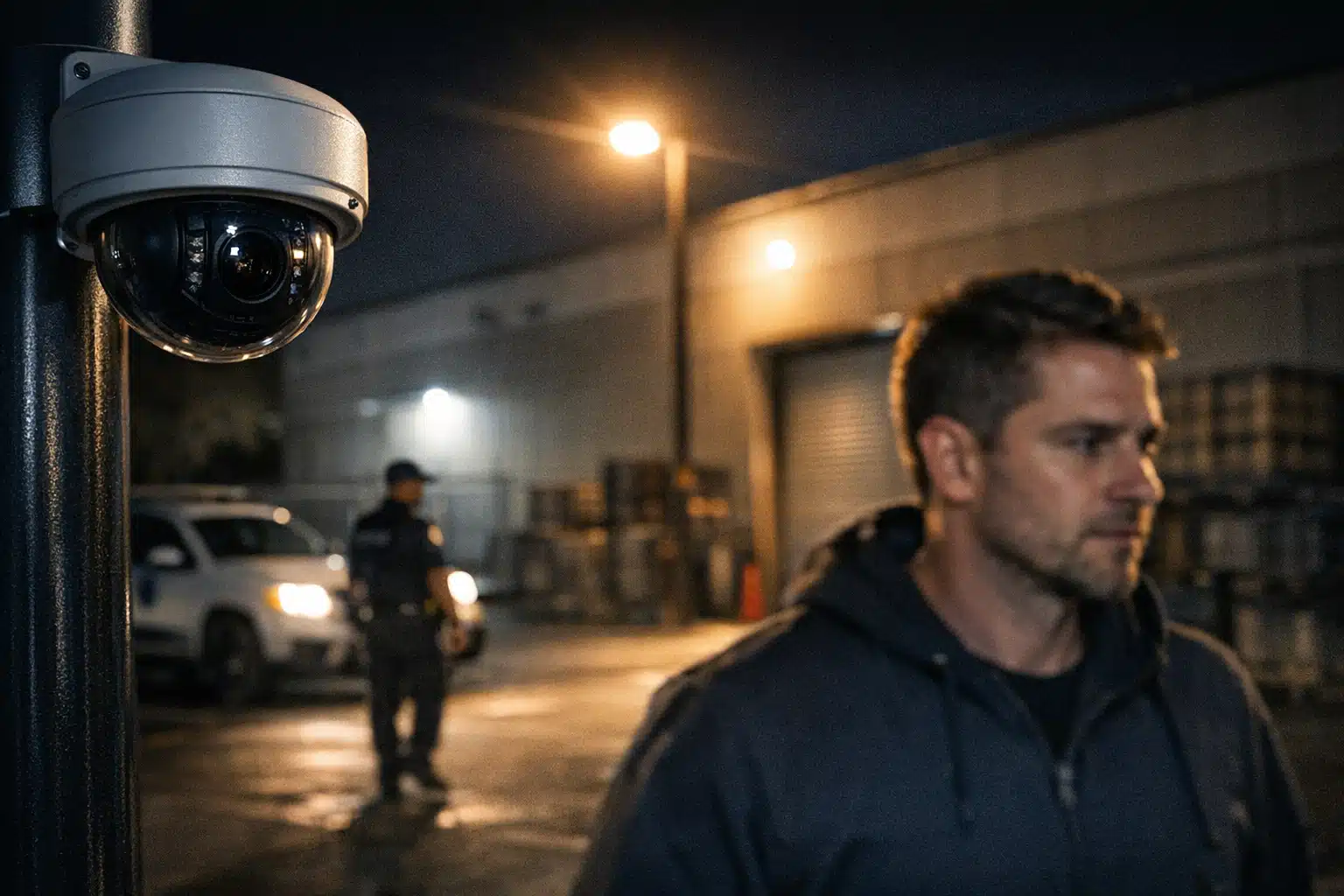
Older analog cameras record grainy footage that police cannot use. A blurry figure in a hoodie leads nowhere.
Modern IP cameras capture clear images in low light. They read license plates and facial features across a parking lot. If your footage has never helped identify a suspect, that is a direct problem.
2. You Have Had a Break-In or Attempted Entry
One incident predicts another. Thieves talk, and soft targets get revisited within weeks.
A break-in at a Northwest Dallas warehouse rarely stays isolated. Nearby properties on the same block see follow-up attempts. After any incident, your setup needs review.
3. Your System Only Records — It Does Not Alert
Recording footage helps after a crime. It does nothing to stop one in progress.
This is the biggest shift in recent years. Live monitoring with real-time alerts moves security from cleanup to prevention. If nobody watches your feed as events happen, you are paying for evidence, not protection.
4. You Are Paying for Guards Who Sit in One Spot
On-site guards matter for many Dallas businesses. But a single guard cannot watch 20 acres of a construction lay-down yard.
Remote video surveillance covers ground that a stationary post cannot. Pairing the two costs less than adding a second and third guard shift.
How Dallas Crime Trends Change the Math
Local patterns should drive your decision, not generic advice. Dallas has specific pressure points.
Construction Site Theft Peaks in Summer
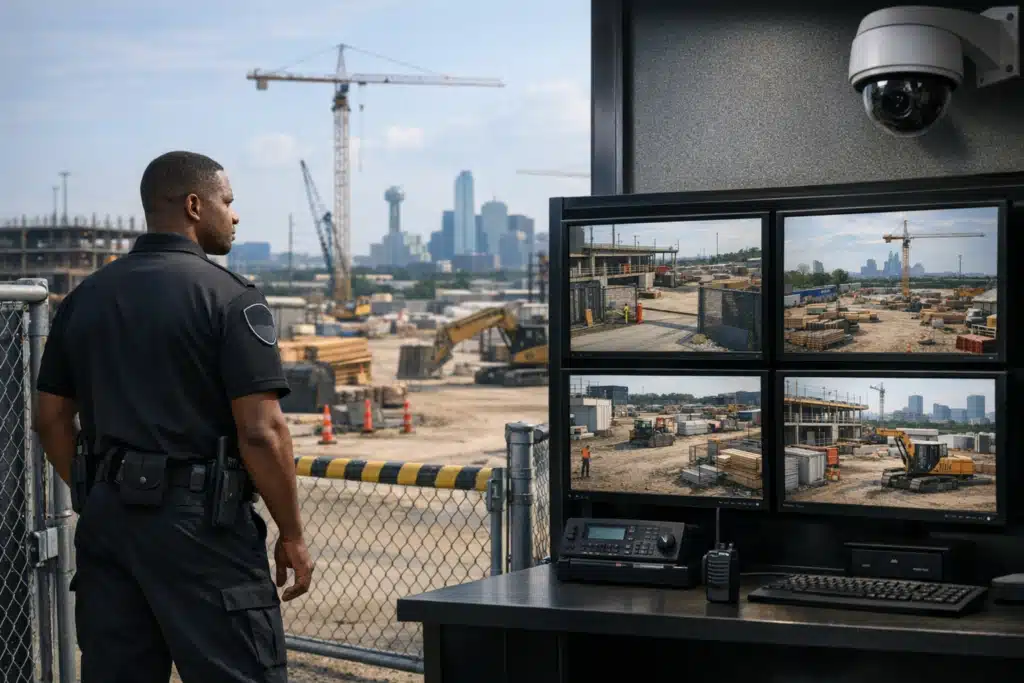
Copper wire, tools, and heavy equipment vanish from active Dallas job sites during long summer build seasons. Thieves target sites between Friday evening and Monday morning.
Remote surveillance is a monitoring method where trained operators watch live camera feeds and trigger a response when they detect intruders. On a construction site, operators can:
- Issue a live voice warning over on-site speakers
- Confirm the threat with visual evidence before calling police
- Cut false-alarm police charges that come from motion-only alarms
Retail and Strip Centers Face After-Hours Entry
Smash-and-grab attempts hit Dallas retail corridors along major roads. Groups move fast and leave before an alarm-only system produces a human response.
A monitored camera catches the approach, not just the entry. Operators see people casing a storefront and act before glass breaks.
Apartment Communities Deal With Package and Vehicle Crime
Dallas property managers report steady vehicle burglaries and package theft in parking areas and mail rooms. Residents blame management when nothing changes.
Clear camera coverage at entry gates and mailboxes gives managers real answers. It also lowers the turnover that follows repeated crime complaints.
On-Site Guards vs. Remote Monitoring: A Cost Comparison
Dallas businesses ask which method fits their budget. The answer depends on property size and hours of risk.
When On-Site Guards Make Sense
- Event venues that need crowd control and a visible presence
- Lobbies and front desks that require access checks
- Sites where a physical response must happen in seconds
When Remote Monitoring Wins on Cost
- Large outdoor areas like storage yards and parking lots
- Overnight hours when foot traffic drops to zero
- Multiple locations that one monitoring center can cover at once
A single overnight guard shift costs far more per month than remote monitoring for the same hours. For wide-open sites, cameras cover more ground per dollar. Many Dallas businesses run both: guards during peak hours and remote monitoring overnight.
Steps to Upgrade Security Systems the Right Way
To modernize your setup without wasting money, follow this order:
- Map your loss history. List every incident, near-miss, and blind spot from the past two years.
- Walk the property at night. Most weaknesses hide in poor lighting and dark corners after dark.
- Rank your zones by risk. Entry points, cash areas, and equipment storage come first.
- Choose prevention over records. Prioritize live monitoring and voice-down capability over passive recording.
- Test response times. Ask how fast an operator reacts to a triggered alert.
- Review footage clarity. Confirm the system reads faces and plates in real conditions.
This order stops you from buying cameras that point at the wrong things. It ties every dollar to a known risk.

 Posted on Google
Technology That Older Systems Cannot Match
Security tools have changed in ways that matter for Dallas properties.
AI-Assisted Detection
Newer cameras separate a person from a stray cat or a windblown bag. This cuts the false alerts that made older motion sensors useless.
Two-Way Audio
Operators speak directly to intruders. A live voice naming what someone is wearing sends most trespassers running before police arrive.
Remote Access for Managers
Property managers check live feeds from a phone. A manager overseeing three Dallas apartment communities monitors all of them without driving between sites.
What Waiting Actually Costs
Delaying an upgrade carries a price beyond stolen goods. Insurance carriers raise premiums after repeat claims. Tenants leave communities that feel unsafe.
Construction firms lose project days when equipment disappears mid-build. A single stolen skid steer can stall a Dallas job for a week. The upgrade nearly always costs less than one serious loss.
Conclusion
Upgrade your security when your cameras fail at night, when incidents repeat, or when your system only records instead of preventing. Dallas crime patterns hit construction sites, retail strips, and apartment communities in predictable ways you can plan against. Twin City Security Dallas assesses your property and builds a monitoring plan matched to your real risk.
Call or text 972‑385‑1144, or email Dallas@twincitysecurity.com for a Dallas security assessment or monitoring quote.
Sources
- Dallas Police Department – Crime Statistics
- FBI – Uniform Crime Reporting Program
- CISA – Physical Security
Dallas businesses should upgrade their security systems when cameras fail to capture clear footage at night, after break-ins occur, or when systems only record without providing real-time alerts. Local crime patterns affecting construction sites, retail strips, and apartment communities make proactive upgrades more cost-effective than waiting for losses.
- Older analog cameras produce grainy footage that police cannot use, while modern IP cameras capture clear images of faces and license plates in low light conditions.
- Remote video monitoring with live operators can issue voice warnings and confirm threats before calling police - shifting security from cleanup to prevention.
- A single overnight guard shift costs more per month than remote monitoring for the same hours, and many Dallas businesses combine both methods for full coverage.