
The Role of Security Guards in Dallas Manufacturing Facilities
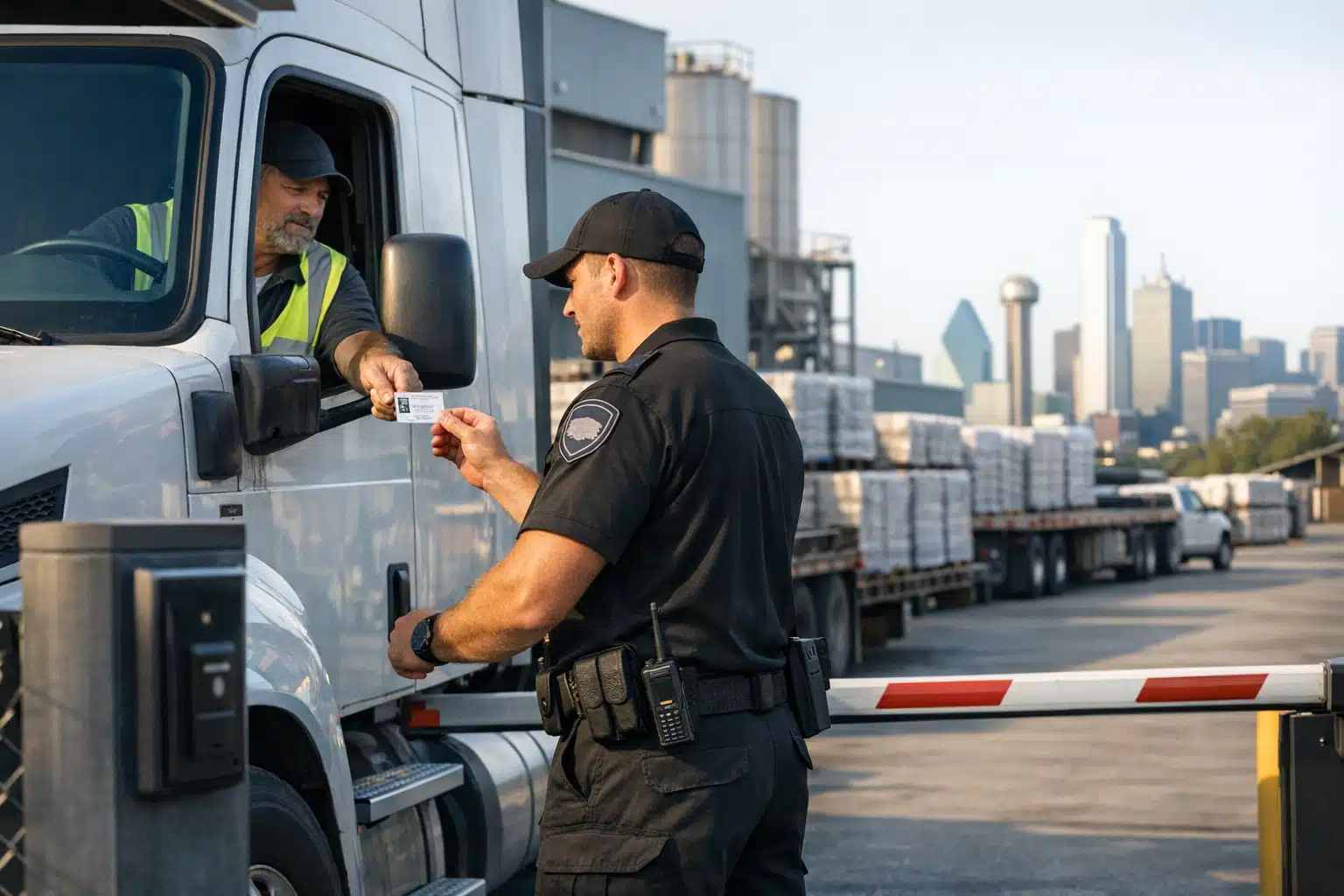
Dallas County recorded more than 100,000 property crime offenses in recent reporting years, and manufacturing sites sit squarely in the crosshairs. Facilities packed with copper wiring, raw metals, forklifts, and finished inventory attract organized theft rings across North Texas. Trained security guards give Dallas manufacturers a physical barrier that cameras alone cannot match.
This post breaks down what manufacturing plants face, how guards address those risks, and how to decide what coverage fits your site.
Why Manufacturing Facilities Face Different Security Risks
Manufacturing security is not the same as guarding a retail store or office lobby. The threats are bigger, the sites are larger, and the losses hit harder.
A single stolen CNC machine or spool of copper can cost tens of thousands of dollars. Downtime from a break-in can stall production for days.
Common Threats at Dallas Plants
- Metal and copper theft — scrap value makes wiring, piping, and raw stock prime targets.
- Equipment and tool loss — forklifts, welders, and hand tools disappear during shift gaps.
- Cargo and inventory theft — loading docks are hit during off-hours and shift changes.
- Trespassing and vandalism — vacant lots and fence lines invite after-hours entry.
- Internal theft — employees and contractors account for a share of inventory shrinkage.
Dallas plants near industrial corridors like the Trinity River bottoms and the I-35 freight routes see heavier foot and vehicle traffic. That raises exposure at night and on weekends.
How Security Guards Protect Manufacturing Sites
Security guards do more than stand at a gate. On a manufacturing site, they act as the first response to theft, safety hazards, and access violations.
A guard walking a plant floor spots a propped door or a stranger near the dock before a camera operator ever flags it. Presence alone deters most opportunistic crime.
Access Control at Gates and Docks
Guards verify every driver, vendor, and delivery against a schedule. They log truck arrivals, check trailer seals, and stop unscheduled vehicles at the perimeter.
This matters most at loading docks, where cargo theft happens fast during shift transitions.
Perimeter and Interior Patrols
A guard on foot or in a vehicle covers ground cameras miss. Patrols check fence lines, chemical storage, fuel tanks, and equipment yards on set rounds.
Randomized patrol timing keeps would-be thieves from predicting gaps.
Employee and Contractor Screening
Guards manage badge access and visitor sign-in. They flag contractors carrying tools out at odd hours and reduce internal shrinkage.
Emergency and Safety Response
Manufacturing floors carry fire, chemical, and machinery risks. A trained guard can trigger evacuations, direct first responders, and document incidents for OSHA and insurance claims.
On-Site Guards vs. Remote Video Surveillance
Both approaches reduce risk, but they work best in different situations. Many Dallas manufacturers combine the two.
When On-Site Guards Make Sense
- Active loading docks with frequent deliveries
- Sites with high-value metals or equipment on the ground
- Facilities needing access control at manned gates
- Plants requiring immediate physical response
When Remote Video Surveillance Fits
- Large fenced yards with few entry points
- After-hours coverage when the plant is closed
- Budget-conscious sites needing wide camera coverage
- Locations where cameras flag threats for live operators to verify
Remote video surveillance uses live operators who watch feeds and speak through on-site speakers. Operators can warn off intruders and dispatch police in real time.
The strongest setup pairs guards for daytime access control with remote monitoring overnight. This keeps coverage constant without staffing a full night crew.
Cost Comparison for Dallas Manufacturers
Budget drives most security decisions. Here is how the two stack up for a typical plant.
- On-site guards — higher hourly cost, but direct physical response and access control. Best for peak-risk hours and manned entry points.
- Remote surveillance — lower per-hour cost across wide areas. Best for overnight and unmanned zones.
- Hybrid model — guards by day, cameras and operators by night. Balances cost against constant coverage.
A mid-size Dallas plant often spends less with a hybrid model than with round-the-clock guard staffing. The savings come from replacing overnight guard hours with monitored cameras.
How to Set Up Manufacturing Security in Dallas
To protect a plant effectively in Dallas, follow these steps:
- Map your risk zones. Identify docks, metal storage, fuel points, and blind spots along fence lines.
- Set your coverage hours. Match staffing to shift changes and off-hours when theft peaks.
- Choose your mix. Assign guards to manned points and cameras to open yards.
- Write clear post orders. Define patrol routes, log requirements, and escalation steps.
- Review incident logs monthly. Adjust patrols based on where problems appear.
Local response time gives Dallas plants an edge. Guards already on-site cut the gap between an alarm and action to seconds instead of minutes.

 Posted on Google
What to Ask Before Hiring Security Guards
Not every guard firm understands manufacturing security. Ask the right questions before you sign.
- Are your guards licensed under Texas DPS Private Security regulations?
- Do guards have training in industrial safety and OSHA reporting?
- Can you supply detailed patrol logs and incident reports?
- How fast can you scale staffing for expansions or seasonal demand?
- Do you offer remote monitoring to pair with on-site coverage?
Texas requires guards to hold licenses through the Department of Public Safety. Verify credentials before hiring any firm.
Why Dallas Manufacturers Choose Twin City Security Dallas
Twin City Security Dallas staffs licensed guards trained for industrial sites across the metro. Our teams handle gate access, dock oversight, patrols, and incident documentation.
We pair on-site guards with remote video surveillance to keep costs down without leaving coverage gaps. Every plant gets a site assessment before we set post orders.
Protect Your Plant Before the Next Break-In
Manufacturing facilities carry high-value assets that draw organized theft across Dallas. Licensed guards paired with remote monitoring stop losses that cameras alone cannot. The right coverage matches your risk zones, shift hours, and budget.
Contact Twin City Security Dallas for a site assessment or monitoring quote. Call or text 972‑385‑1144, email Dallas@twincitysecurity.com, or visit https://www.twincitysecuritydallas.com.
Sources
- Texas Department of Public Safety – Private Security Bureau
- FBI – Uniform Crime Reporting Program
- OSHA – Emergency Preparedness and Response