Enhancing Security for Dallas Hospitals with Remote Surveillance
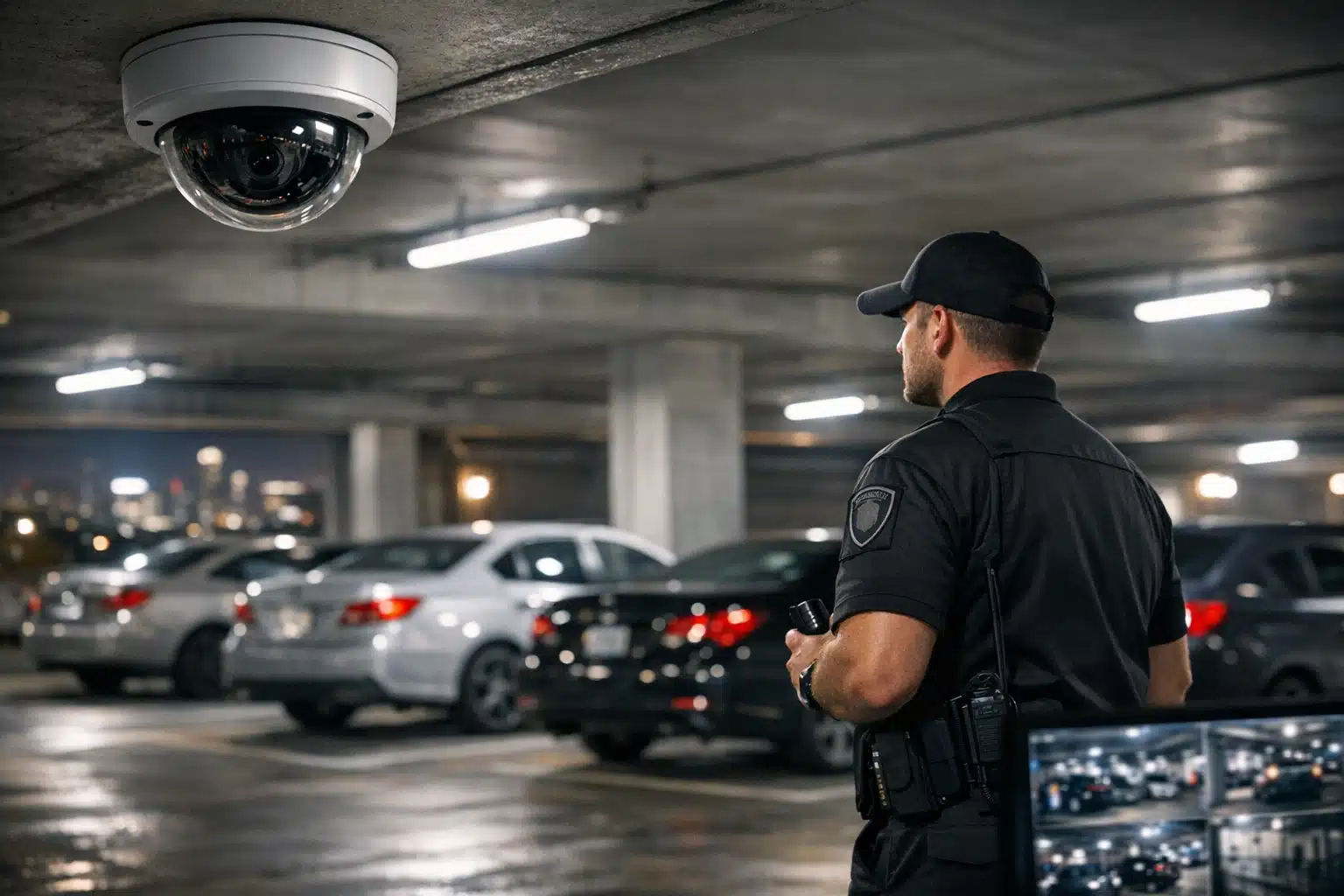
Remote surveillance enhances hospital security by providing 24/7 monitoring of all facility areas without requiring physical presence at every location. Trained operators can watch multiple camera feeds simultaneously, detect suspicious activity in real time, and alert on-site staff or emergency responders immediately. This approach reduces response times and helps protect patients, staff, and valuable medical equipment around the clock.
Why Dallas Hospitals Face Security Pressures Few Other Facilities Do
Hospitals never close. That single fact shapes every healthcare security decision a Dallas facility manager makes.
Emergency rooms stay open at 3 a.m. Parking garages fill and empty around the clock. Pharmacies hold controlled substances behind locked doors.
The Dallas Police Department reported over 40,000 property crime offenses in a recent year. Medical campuses sit inside that same crime map as everyone else.
This post covers how remote surveillance strengthens protection across a hospital campus. It shows what Dallas facility managers should ask before hiring.
What Makes Healthcare Security Different From Other Properties
Healthcare security protects patients, staff, visitors, medications, and records at the same time. Few other properties carry that many competing demands.
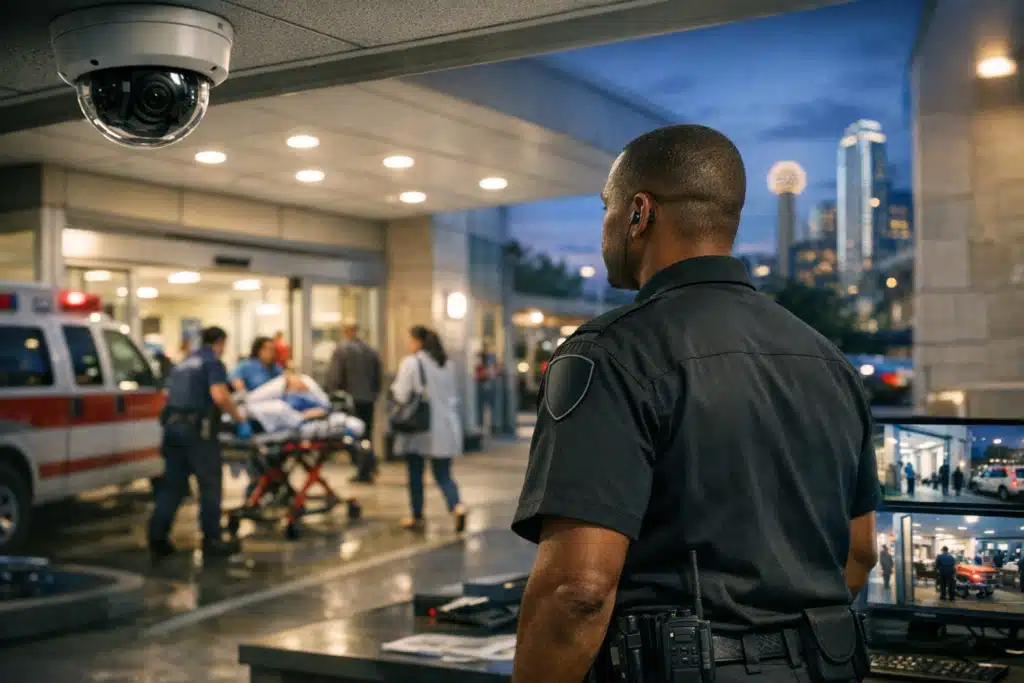
A retail store worries about theft. A hospital worries about theft, patient elopement, infant abduction, workplace violence, and drug diversion.
Federal data backs this up. Healthcare workers face workplace violence at rates far above private sector averages, according to OSHA.
The High-Risk Zones on a Dallas Hospital Campus
Certain areas draw more incidents than others. Camera placement and monitoring should reflect that reality.
- Emergency departments — high tension, intoxicated visitors, and long wait times
- Parking garages and lots — vehicle break-ins and after-dark assaults
- Pharmacy and supply rooms — controlled substances and equipment theft
- Maternity and pediatric wards — infant and child protection concerns
- Loading docks — unmonitored access points for outside foot traffic
- Behavioral health units — patient safety and elopement risk
What Remote Surveillance Is and How It Works for Hospitals
Remote surveillance is a monitoring model where trained operators watch live camera feeds from an off-site command center. They respond to activity in real time.
Cameras stream footage to a monitoring station. Operators verify events, speak through on-site audio, and dispatch help when needed.
For a Dallas hospital, this means a garage stairwell gets watched at 2 a.m. without an officer standing in the cold.
Live Monitoring Versus Recorded Playback
Many hospitals record footage but review it only after something happens. That approach documents crime. It does not stop it.
Live remote monitoring flips the timing. An operator sees loitering near the pharmacy dock and acts before a theft occurs.
How Operators Respond to a Live Event
Response follows a set order when an operator spots suspicious activity:
- Verify the event on live video to confirm a real threat
- Trigger a voice-down warning through on-site speakers
- Alert on-site staff or security officers by radio or phone
- Contact Dallas Police when the situation calls for it
- Save the video clip for reports and any later investigation
Voice-downs matter. A live voice telling an intruder they are being watched ends many incidents on the spot.
Remote Surveillance Versus On-Site Guards: A Cost Breakdown
Facility managers usually ask one question first. Which costs less, cameras or officers?
The honest answer is that most Dallas hospitals need both. The right mix depends on your campus size and risk zones.
Where On-Site Officers Earn Their Cost
Physical presence handles things a camera cannot. An officer de-escalates an agitated ER visitor face to face.
- Physical intervention during violent incidents
- Escorting nurses to their cars after night shifts
- Directing traffic during a mass-casualty arrival
- Access control at staffed entrances
Where Remote Surveillance Earns Its Cost
Cameras cover ground people cannot. One operator watches a dozen locations at once.
- Overnight monitoring of empty garages and perimeters
- Watching low-traffic docks and rooftops
- Covering blind spots between officer patrols
- Reducing hours spent on static, low-activity posts
A common Dallas model uses officers at the ER and main entrance. Remote surveillance then covers garages, docks, and the outer perimeter overnight.
Meeting Compliance and Documentation Needs
Hospitals answer to more oversight than most properties. Accreditation and patient safety rules shape security planning.
The Joint Commission sets environment-of-care standards that include security management. Documented monitoring supports those reviews.
Why Recorded Verification Helps After an Incident
Time-stamped video answers hard questions. Who entered the pharmacy corridor? When did a patient leave the behavioral unit?
Clear footage protects the hospital during liability claims. It also gives Dallas Police usable evidence for arrests.

 Posted on Google
How Local Response Time Changes the Math in Dallas
Remote surveillance shortens the gap between an event and a response. That gap decides whether a crime finishes or gets stopped.
An operator watching live can call Dallas Police the moment a break-in starts. That beats a next-morning review by hours.
A Realistic Dallas Scenario
Picture a medical office building near Medical District Drive at midnight. A person tries car doors in the visitor lot.
A recording-only system captures the plate for later. A live operator issues a voice-down and dispatches police while it happens.
The difference is a prevented break-in versus a filed report. Hospitals feel that difference in insurance claims and staff trust.
Steps to Strengthen Healthcare Security at Your Dallas Facility
Building a stronger program does not require replacing everything at once. Start with your highest-risk zones.
- Map your risk areas — mark ERs, garages, docks, and drug storage
- Audit existing cameras — check coverage, blind spots, and image clarity
- Add live monitoring where footage is only recorded now
- Match officers to interaction points like entrances and the ER
- Install voice-down speakers at garages, docks, and perimeters
- Set an escalation plan that ties operators to on-site staff and police
- Review incident data quarterly and adjust coverage to match trends
This staged method spreads cost over time. It also puts protection where your data shows the most risk.
Questions to Ask Before Hiring a Security Provider
The right provider knows hospital environments, not just cameras. Ask direct questions before signing.
- Do your operators watch feeds live, or only record?
- How fast do you respond after spotting an event?
- Can you coordinate with our on-site officers and staff?
- How do you store footage for compliance reviews?
- Have you worked with Dallas healthcare facilities before?
Strong answers show a provider who understands patient safety, drug security, and accreditation pressure.
Protect Your Dallas Hospital Around the Clock
Healthcare security works best when live monitoring covers the zones officers cannot watch every minute. Remote surveillance closes those overnight and blind-spot gaps across a hospital campus.
Twin City Security Dallas builds coverage plans around your ER, garages, pharmacy, and perimeter. Call or text 972‑385‑1144, email Dallas@twincitysecurity.com, or visit https://www.twincitysecuritydallas.com for a Dallas security assessment.
Sources
- OSHA – Workplace Violence in Healthcare
- The Joint Commission – Standards and Environment of Care
- Dallas Police Department – Crime Statistics
Remote surveillance helps Dallas hospitals address unique security challenges by providing live monitoring of high-risk areas like ERs, parking garages, and pharmacies around the clock.
- Hospitals face complex security demands including patient safety, drug theft prevention, and workplace violence - with healthcare workers experiencing violence at rates above private sector averages according to OSHA.
- Live remote monitoring allows trained operators to watch camera feeds from off-site, issue voice warnings through speakers, and dispatch police in real time - stopping incidents rather than just documenting them.
- A common approach pairs on-site officers at high-interaction areas like ERs with remote surveillance covering garages, docks, and perimeters overnight to balance cost and coverage.