
Understanding Dallas Crime Trends and Their Impact on Businesses

Dallas crime trends reveal a concerning pattern for business owners throughout the metroplex. Commercial property crimes rose by 12% in 2023, with theft and burglary impacting construction sites, retail locations, and office complexes most severely. These increases highlight the need for business owners to evaluate their security measures and consider protective strategies to safeguard their properties and assets.
Dallas crime trends show a troubling pattern for business owners across the metroplex. Commercial property crimes increased by 12% in 2023, with theft and burglary hitting construction sites, retail locations, and office complexes hardest.
Understanding these patterns helps business leaders make informed security decisions. Local crime data reveals when, where, and how criminals target Dallas businesses.
Current Dallas Crime Statistics Affecting Businesses
Dallas Police Department data shows specific crime categories impacting commercial properties most severely. Property crimes account for 65% of all business-related incidents.
Theft and burglary top the list of concerns. Construction equipment theft alone costs Dallas businesses over $2.3 million annually. Retail locations face shoplifting increases of 18% compared to 2022.
Geographic patterns matter for security planning. Downtown Dallas, Deep Ellum, and industrial corridors near I-35 show higher commercial crime rates. Business districts in Plano, Frisco, and North Dallas report lower but growing incident numbers.
Peak Crime Times for Dallas Businesses
Timing analysis reveals clear patterns business owners can address:
- After-hours burglaries: 70% occur between 10 PM and 5 AM
- Construction site theft: Peaks on weekends and holidays
- Retail incidents: Highest during evening rush hours (4-7 PM)
- Vandalism: Concentrates on Friday and Saturday nights
How Dallas Crime Trends Impact Business Operations
Rising crime rates create direct and indirect costs for Dallas businesses. Direct losses include stolen inventory, damaged property, and equipment replacement.
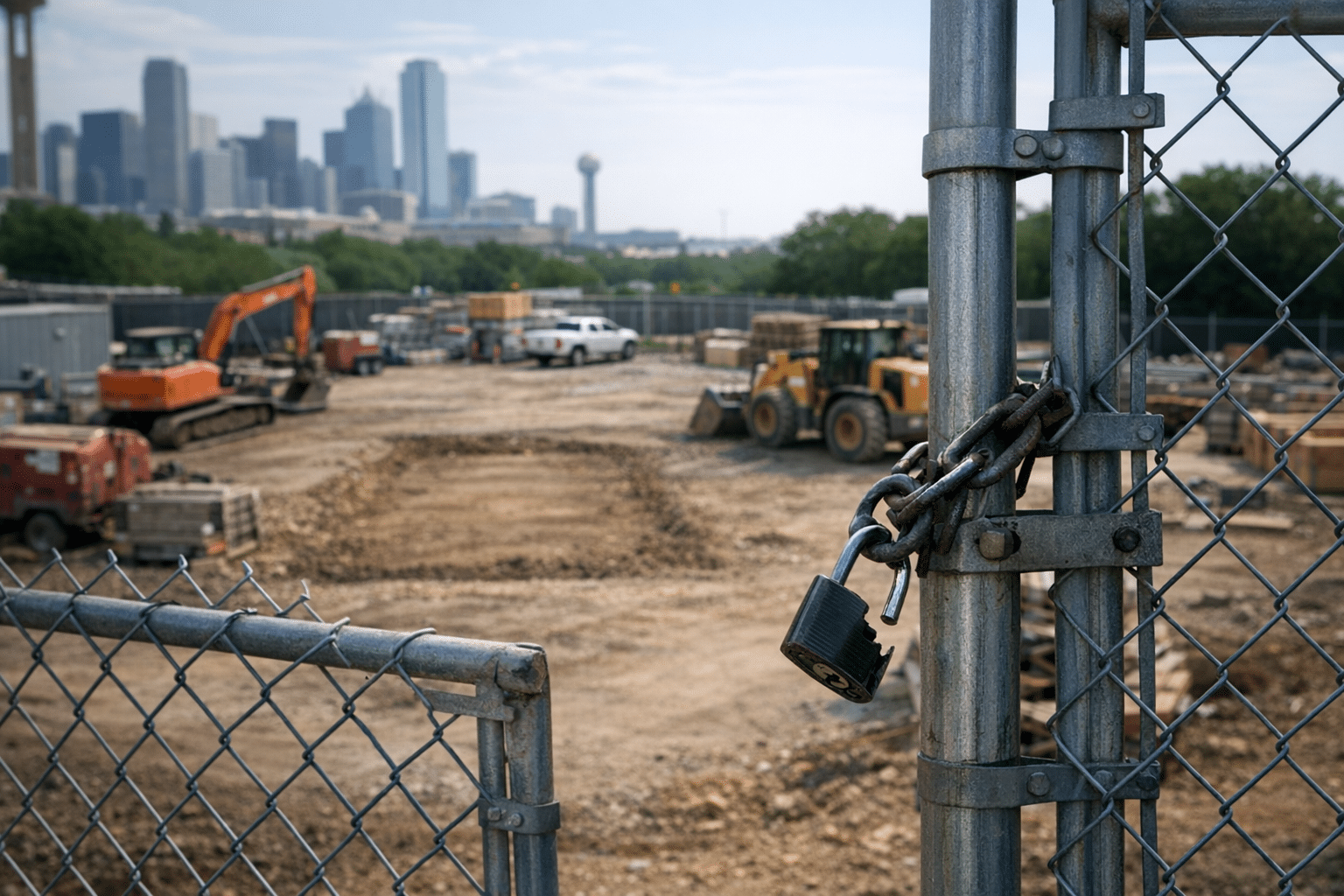
Indirect costs often exceed immediate losses. Business interruption, insurance premium increases, and employee safety concerns compound the business impact significantly.
Financial Consequences of Crime
Dallas businesses report average crime-related costs of $15,000 per incident. Small businesses struggle most with these unexpected expenses.
Insurance claims processing can take weeks or months. Meanwhile, operations suffer from missing equipment, broken windows, or damaged inventory systems.
Employee morale drops when workers feel unsafe. Turnover rates increase 23% at businesses experiencing repeated security incidents.
Industry-Specific Vulnerabilities
Construction companies face equipment theft targeting excavators, generators, and copper materials. Unsecured job sites lose an average of $8,400 worth of tools and materials per incident.
Retail businesses deal with organized shoplifting rings and grab-and-run thefts. High-end electronics, designer clothing, and cosmetics are primary targets.
Office complexes experience break-ins focused on computers, networking equipment, and sensitive documents. HVAC copper theft also affects multi-tenant buildings.
Neighborhood-Specific Crime Patterns in Dallas
Different Dallas areas present unique security challenges for businesses. Understanding local patterns helps target security measures effectively.
Downtown Dallas sees higher foot traffic crimes during business hours. After-hours break-ins target office buildings and ground-floor retail spaces.
The Design District faces warehouse burglaries and truck cargo theft. Large furniture and home goods shipments attract organized theft rings.
Suburban Business Parks
North Dallas business parks in Richardson, Plano, and Addison report different crime patterns. Lower overall rates mask targeted attacks on specific industries.
Technology companies face data theft attempts and equipment burglary. Medical offices deal with pharmaceutical theft and patient information security breaches.
Industrial Corridor Challenges
Areas near I-35, I-20, and I-30 experience higher truck and cargo theft rates. Distribution centers and manufacturing facilities need specialized security approaches.
Metal theft targets HVAC units, electrical wiring, and stored materials. Quick highway access makes these locations attractive to organized theft groups.
Crime Prevention Strategies Based on Local Data
Effective security planning uses Dallas-specific crime data to guide decisions. Generic approaches miss local patterns that matter most.
Layered security works best against evolving criminal tactics. Combining multiple deterrents creates stronger protection than single-point solutions.
Physical Security Improvements
Strategic lighting reduces crime by 35% in poorly lit business areas. Motion-activated LED systems provide cost-effective deterrence.
Perimeter security prevents access to buildings and storage areas. Fencing, gates, and barrier systems stop most opportunistic crimes.
Window and door reinforcement blocks common entry points. Security film, reinforced frames, and upgraded locks delay break-in attempts.
Technology-Based Solutions
Modern security cameras provide 24/7 monitoring capabilities. High-definition systems capture clear evidence for police investigations.
Remote video surveillance combines cameras with live monitoring services. Trained operators can spot suspicious activity and alert authorities immediately.
Access control systems track employee entry and restrict unauthorized areas. Digital logs help identify internal theft and security breaches.

 Posted on Google
When Dallas Businesses Need Professional Security Services
Certain business characteristics indicate higher security needs based on local crime patterns. Location, industry type, and operational hours all factor into risk assessment.
Businesses experiencing repeat incidents benefit most from professional security services. Early intervention prevents escalation to more serious crimes.
Risk Assessment Factors
High-risk businesses share common characteristics in Dallas crime data:
- Cash-intensive operations like restaurants and retail stores
- Valuable inventory including electronics, tools, or luxury goods
- Extended hours or 24/7 operations
- Locations near major highways or transit routes
- Previous security incidents or nearby crime increases
Security Service Options
On-site security guards provide immediate response to incidents and visible deterrence. Uniformed officers prevent most opportunistic crimes through their presence alone.
Remote video monitoring offers cost-effective 24/7 surveillance. Professional monitoring centers watch multiple camera feeds and dispatch help when needed.
Mobile security patrols check properties at irregular intervals. Random timing prevents criminals from predicting security coverage gaps.
Working with Dallas Police and Security Professionals
Collaboration between businesses, security companies, and law enforcement improves crime prevention outcomes. Information sharing helps identify emerging threats.
Dallas Police Department encourages business security partnerships. Crime Prevention Through Environmental Design (CPTED) consultations help identify vulnerabilities.
Reporting and Documentation
Proper incident reporting supports police investigations and insurance claims. Security cameras and written reports provide crucial evidence.
Business watch groups share information about suspicious activity and crime trends. Neighborhood cooperation multiplies individual security investments.
Regular communication with local patrol officers builds relationships that benefit emergency response times.
Future Outlook for Dallas Business Security
Dallas crime trends suggest continued challenges for business security. Population growth and economic development attract both legitimate business and criminal activity.
Technology improvements make security systems more affordable and effective. Smart cameras, AI monitoring, and mobile alerts give small businesses enterprise-level capabilities.
Proactive security planning costs less than reactive responses to crime incidents. Businesses investing in prevention see lower long-term security expenses.
Understanding Dallas crime trends helps business owners make informed security decisions. Local data reveals specific risks and effective countermeasures for different industries and neighborhoods.
Professional security assessment identifies vulnerabilities before criminals exploit them. The business impact of crime extends far beyond immediate losses to affect operations, insurance costs, and employee safety.
Contact Twin City Security Dallas at 972-385-1144 for a customized security assessment based on your location and business type. Our local expertise helps protect Dallas businesses from evolving security threats.
Sources
- Dallas Police Department – Crime Statistics and Reports
- FBI Uniform Crime Reporting – Commercial Crime Data
- Bureau of Justice Statistics – Business Victimization Statistics
Dallas crime trends present challenges for business owners, with commercial property crimes rising 12% in 2023. Property crimes make up 65% of business-related incidents, with theft and burglary affecting construction sites, retail locations, and office complexes most.
- Construction equipment theft costs Dallas businesses over $2.3 million yearly, while retail shoplifting increased 18% compared to 2022. After-hours burglaries happen 70% of the time between 10 PM and 5 AM.
- Businesses report average crime-related costs of $15,000 per incident, with indirect costs like insurance increases and employee turnover often exceeding direct losses.
- Layered security approaches work best, combining physical improvements like strategic lighting with technology solutions such as remote video monitoring and access control systems.